
ePT--the Electronic Newsletter of Pharmaceutical Technology
Earlier this month, the US Food and Drug Administration announced that it will be posting quarterly reports on its website regarding potential drug safety issues.
ePT--the Electronic Newsletter of Pharmaceutical Technology
Earlier this month, the US Food and Drug Administration announced that it will be posting quarterly reports on its website regarding potential drug safety issues.
ePT--the Electronic Newsletter of Pharmaceutical Technology
Researchers from the University of California San Diego, UCÂ Santa Barbara, and MIT have developed nanometer-sized hybrid structures carrying anti-cancer drugs and quantum dot imaging agents.
ePT--the Electronic Newsletter of Pharmaceutical Technology
MannKind and Pfizer (New York) agreed that the former company will help patients who need inhaled insulin switch from Pfizer's "Exubera" medicine to MannKind's "Technosphere Insulin" drug.
ePT--the Electronic Newsletter of Pharmaceutical Technology
The US Food and Drug Administration launched a new website to educate the general public about direct-to-consumer (DTC) advertising of prescription medications.
ePT--the Electronic Newsletter of Pharmaceutical Technology
The US Food and Drug Administration has updated its draft bioequivalence recommendations for several products, and added 66 new draft product-specific guidelines since October 2007.
ePT--the Electronic Newsletter of Pharmaceutical Technology
The European Chemical Industry Council and five national chemical associations representing France, Germany, Italy, Spain, and the United Kingdom, have launched ReachLink. ReachLink is a company founded to help companies participate in the Substance Information Exchange Forum (SIEF), which is designed as an information-sharing vehicle to facilitate companies in meeting requirements under REACH
ePT--the Electronic Newsletter of Pharmaceutical Technology
FDA has issued a Final Rule titled "Amendments to the Current Good Manufacturing Practice Regulations for Finished Pharmaceuticals."
ePT--the Electronic Newsletter of Pharmaceutical Technology
Also, Human Genome Sciences enters pact with Hospira, Zosano Pharma names Gail Schulze chair and CEO, more...
ePT--the Electronic Newsletter of Pharmaceutical Technology
USP announced an interim revision to its monograph for levothyroxine sodium tablets, which will become official in USP 32-NF 27.
ePT--the Electronic Newsletter of Pharmaceutical Technology
Boehringer Ingelheim and and Hisoar (Taizhou, China), a pharmaceutical production company, formed a strategic production alliance in China.
ePT--the Electronic Newsletter of Pharmaceutical Technology
Companies launched 25 new active substances in 2007, a decline of 19% from the previous year, according to a new report from Parexel International.
ePT--the Electronic Newsletter of Pharmaceutical Technology
Also, Novartis stops development on "Aurograb," Zealand Pharma appoints David H. Solomon as CEO, more...
PTSM: Pharmaceutical Technology Sourcing and Management
The US Food and Drug Administration will hold a public meeting this month to gain public input on implementing the recommendations of the Nanotechnology Task Force report, taking another step closer to setting a regulatory framework for nanotechnology for pharmaceuticals and medical devices.
PTSM: Pharmaceutical Technology Sourcing and Management
The pharmaceutical majors deploy green-chemistry strategies to improve the synthesis of active pharmaceutical ingredients and intermediates.

A recent book shows the links between synthesis, catalysis, and environmental protection.
Sterile manufacturing may be the next aspect of pharmaceutical manufacturing to consider in the continuous process paradigm.
Equipment qualification is a critical step in ensuring that a product or service is provided accurately and consistently with regards to manufacturing and testing. The time-saving attribute of adding prerequisites to a qualification program, along with the benefit of gaining the ability to track and trend problem areas, make the addition both worthwhile and cost-effective.
The selection of the chiral stationary phase is an important consideration in separating enantiomers when using high-performance liquid chromatography, supercritical fluid chromatography, and simulated moving bed chromatography.
Differential pricing is making more than just an appearance in Asia's pharma market these days.
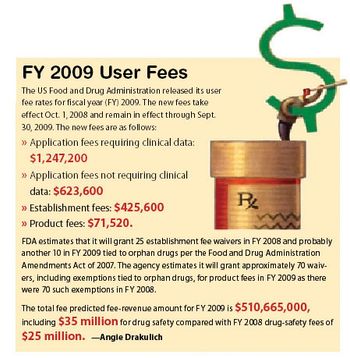
Brief pharmaceutical news items for September 2008.

This year, the employment survey will acknowledge the industry's best employers.

With economics and politics in the way, can we defeat the malaria epidemic before it defeats us?
Operators are hit hard by breakage problems and strike out on FDA inspections.

Are hypersanitation trends a result of scaremongering or a lack of faith in medicine?

Pharmaceutical Technology Europe
It's back to school. Another summer has flown past and here we all meet again, ready to return to work and face the winter with renewed energies. Welcome back!
ePT--the Electronic Newsletter of Pharmaceutical Technology
The US Food and Drug Administration will hold a public hearing Oct. 2, 2008, to obtain input regarding over-the-counter (OTC) cough and cold drugs marketed for pediatric use.
ePT--the Electronic Newsletter of Pharmaceutical Technology
The Healthcare Institute of New Jersey (HINJ) released a new research study showing that New Jersey's life-science industry experienced stable growth in 2007.
ePT--the Electronic Newsletter of Pharmaceutical Technology
The deadline for nominations for the Innovations in Pharma Science Awards is here. Check out http://pharmtech.com/Innovations to nominate your company's work in one of five areas by next week
ePT--the Electronic Newsletter of Pharmaceutical Technology
Also, Shire recalls "Daytrana" patch, Chromatide forms Scientific Advisory Board, more...
ePT--the Electronic Newsletter of Pharmaceutical Technology
FDA has finalized a regulation regarding changes to an approved new drug application (NDA), biologics license application (BLA), or medical device premarket approval applicatin (PMA).