
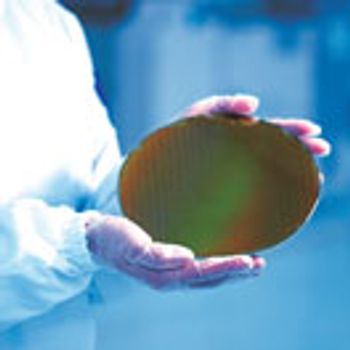
Applying lessons of raw materials’ characterization and supply-chain control from the semiconductor industry allow more rigorous control of the biopharmaceutical manufacturing process.
Applying lessons of raw materials’ characterization and supply-chain control from the semiconductor industry allow more rigorous control of the biopharmaceutical manufacturing process.

Visualization using virtual and mixed reality can aid with biopharma manufacturing facility design and training.

The key is to ensure that excipients only interact with APIs via desired mechanisms.

Spray drying is a versatile and rapid technique that can provide companies with a suitable and scalable option to improve the solubility and bioavailability of drug products.

As regulatory bodies extend the oversight of E&L testing, companies working with drug products need to make provisions on how to best comply with the evolving expectations.

BASF launches digital solutions for the pharma industry during CPhI Worldwide 2019.
Lonza and Cryoport have partnered up to strengthen Lonza’s ‘vein-to-vein’ delivery network by removing supply chain hurdles faced by developers of personalized therapeutics.
Countries and partners have announced commitments to vaccinate 450 million children against polio each year and overcome barriers to reaching all children.
The guidance provides recommendations for the development and quality information that should be included in NDA and ANDA applications.
The agency’s approval of Abrilada (adalimumab-afzb), a biosimilar to Humira, brings the total of approved biosimilars to 25.
A new sucrose product from MilliporeSigma has reduced nanoparticle impurities.
Hovione Technology worked with Harro Höfliger on powder filling of blisters for the reusable Papillon DPI.
Roche’s ADC, Kadcyla, has been recommended for approval in the EU for for the adjuvant treatment of people with HER2-positive early breast cancer with residual invasive disease after neoadjuvant treatment.
Norwegian clinical-stage immunoncology company, Lytix Biopharma, has entered into a clinical collaboration with US-based Iovance Biotherapeutics.
The plant in Singen, Germany will be used for formulation, filling, and packaging of Takeda’s vaccine candidate.
Developers of biosimilars have become dismayed with difficulties in gaining acceptance and reimbursement from the US healthcare system.

As they seek to increase the number of generics available, regulators are requiring that in-vitro and other test data be used for ANDAs, and promoting the concept of biowaivers that would allow such data to replace costly clinical studies.

Research examined the effects of varying excipient and polymer weight in coatings designed to optimize the release of diclofenac sodium. The goal was to release it at night to improve the treatment of rheumatoid arthritis.
Scientists from the University of Texas Medical Branch in Galveston and Profectus BioSciences of New York have developed the candidate quadrivalent VesiculoVax vaccine, an investigational vaccine that protected monkeys against four types of hemorrhagic fever viruses endemic to overlapping regions in Africa.
GE Healthcare Life Sciences will supply Akeso Pharmaceuticals with the FlexFactory platform to accelerate production of antibody drugs in the Guangzhou region.

PATH’s Microarray Patch Center of Excellence aims to accelerate transdermal patch technology for public health needs.

Several factors must be considered when reformulating APIs for pediatric, geriatric, and other specialty patient populations.

Palatability is crucial for adherence and compliance to oral drug regimens.
Intertek has announced that it has expanded its center of excellence for biopharmaceutical services in Manchester, United Kingdom, to support the development of biologics and gene therapies.
Start-up company, SeraNovo, has revealed that it has signed a license agreement with Carna Biosciences to expand the existing collaboration and jointly develop an oral formulation of Carna’s kinase inhibitor with increase bioavailability.