
Shilpa Pharma Lifesciences Limited will launch a new small-molecule CDMO at CPHI Milan in October.
Shilpa Pharma Lifesciences Limited will launch a new small-molecule CDMO at CPHI Milan in October.

The EU is focused on strengthening supply-chain resilience, avoiding medicine shortages, simplifying regulations, and implementing new approach methodologies.
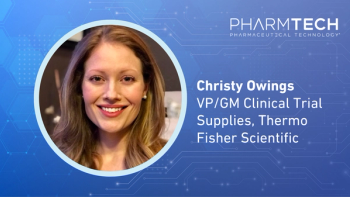
Christy Owings, Thermo Fisher, on how AI complements clinical supply chain expertise, streamlines site logistics, and tracks shifting biotech markets.
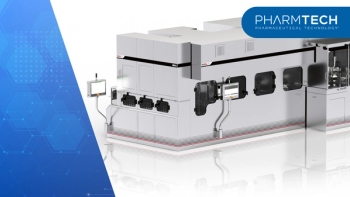
The IMA Pharmaceutical and MedTech divisions will be highlighting the TILE-X fill-finish line, a new VPHP BioIndicator, X-PEN autoinjector platform, and a range of machines from its IMA Active, IMA Life, IMA Safe, and IMA BFB divisions at the CPHI Milan event.
In commercial tablet or capsule operations, validation helps protect the site’s ability to produce, release, and supply product without repeated disruption. This article discusses validation as a technical control system that supports manufacturing continuity.

This article explains the 4 shifts enabling faster, lower-risk, commercially successful biologics technology transfer.
Christy Owings, Thermo Fisher, speaks on why importer of record strategy and vetted local partners are key to reliable clinical trial supply chains.
Silvia Forroova, director of Partnerships & Sustainability at CPHI, and founder of the CPHI Sustainability Collective, provides a preview of the new Sustainability Summit at CPHI Milan 2026.
In a preview of their panel discussion at AAPS PharmSci 360 2026, Alfred Rumondor, PhD, AbbVie, and Swita Singh, PhD, Bristol Myers Squibb, discuss navigating CMC requirements for new modalities and AI’s involvement in CMC.
Christy Owings, Thermo Fisher, discusses how customs delays and import complexity risk clinical trial supply chains in Latin America.

This week saw predictive modeling, microstructure intelligence, a CAR T-cell safety pause, and major licensing deals reshape pharma manufacturing.

The FDA approves zilganersen, the first disease-modifying Alexander disease therapy, offering rare disease developers a trial design and RNA delivery model.
PharmTech spoke with Tara Dougal, event director for pharma at Informa Markets, about what’s new for CPHI Milan this year, including 4 new zones and a Sustainability Summit.
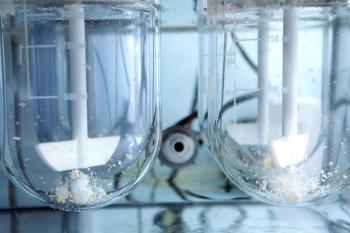
Effective modeling and simulation can reduce physical experimental requirements, ASD development risks, and time to market.

Novartis paused 8 CAR T-cell trials after 3 deaths. Bristol Myers also paused a rival program. What it means for cell therapy developers.
In a preview of their panel discussion at AAPS PharmSci 360 2026, Alfred Rumondor, PhD, AbbVie, and Swita Singh, PhD, Bristol Myers Squibb, discussed how CMC review practices are evolving and what that means for manufacturing strategy.
Novartis licenses Alteogen's ALT-B4 enzyme for subcutaneous drug conversion in a deal worth up to $3.2B, signaling formulation industry shift.
Robert Holt, PhD, associate director, Pharmaceutical Science, digiM Solution, discusses microstructure intelligence in more detail in part 2 of this preview of the company’s keynote presentation at AAPS PharmSci 360.

The finalists for the 2026 CPHI Pharma Awards span 15 categories including API development, digital transformation, manufacturing, supply chain, sustainability, and leadership, with winners revealed October 6 at CPHI Milan.
In part 1 of this 2-part preview of AAPS PharmSci 360’s keynote on predictive drug development, Robert Holt, PhD, associate director, Pharmaceutical Science, digiM Solution, explains microstructure intelligence and how it can enhance how drug developers understand the dosage form.
In August 2026, Heidi Overton was nominated for FDA commission, and a wave of oncology and neuro drugs were approved.
Nitrosamine control is about understanding why nitrosamines form, where they may form, and how to prevent their formation.

Lilly is set to acquire Merida Biosciences for up to $2.875B, gaining a precision autoantibody-degrading platform led by phase 1 candidate MER511.
Four FDA approvals in the areas of HIV, diabetes, autoimmune disease, and COVID-19 vaccines came in a flurry in late August 2026.

This week’s PharmTech.com content covered AI agent authority, hold-time and nitrosamine risk frameworks, biologics formulation, 3D bioprinting, and major oncology and dealmaking news.
In part 2 of his overview on hold times in biopharmaceuticals, Robert Dream details the regulations that govern hold times and how to mitigate risks that can occur during hold times.

As the biologic pipeline diversifies across ADCs, bispecific antibodies, and fusion proteins, formulation science has become the critical discipline bridging molecular complexity and patient-ready therapy.

Agentic AI changes the question from what a model can produce to what a system is allowed to decide.
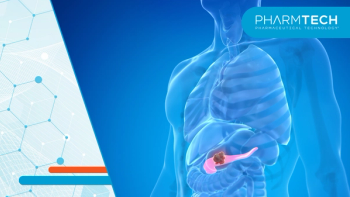
FDA approves Rasonque (daraxonrasib), the first broad RAS-targeted therapy for metastatic pancreatic cancer, validating RAS(ON) inhibition for future drug development.
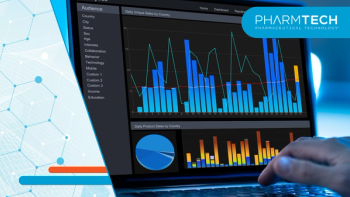
Centrix and University of Sussex launch a data analytics partnership to reduce development risk, rework and delays in early-stage pharma programs.