

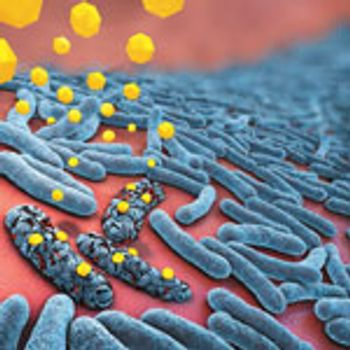
Antibody-based drugs offer new mechanisms of action and greater specificity.
Antibody-based drugs offer new mechanisms of action and greater specificity.

Investigatory work arranged by Swissmedic has revealed that sartan-containing medicines on the Swiss market are safe in respect of NDMA.
Luxembourg-based pharmaceutical group, C2 Pharma (formerly known as Centroflora CMS) successfully validated the manufacturing process for two APIs-digoxin and digoxin micron.
The company will showcase the evolving role of vitamins and lipid APIs in pharmaceutical applications at CPhI Worldwide 2018.
The company will showcase its gelatins for advanced pharmaceutical and biomedical applications at CPhI Worldwide on Oct. 9–11, 2018 in Madrid, Spain.

Existing software tools cannot take into account the complexity of disease.
Thixotropic gels, thermosoftened systems, and self-emulsifying systems have expanded the range of potential excipients for liquid-filled hard capsules (LFHC).
FDA and ICH seek comment on new exposure levels for cadmium in drug products.
Report predicts PAT, NIRS, continuous bioprocessing, and a ‘technological arms race’ could improve biopharma manufacturing efficiencies.

With the right excipients, formulators can control when, where, and how an API is released.
From separation systems to reactor technology, new tools are increasing the feasibility of continuous API production.
ExcipientFest has been acquired by IPEC and rebranded as Excipient World.
Porton will use biocatalyst technologies from Codexis to accelerate API development for clients.

CMOs/CDMOs that are easy to work with, have demonstrated performance track records, and plan for the future are preferred.
This article describes a new, combined, quantitative method for assessing excipient risks that has been developed by the authors as one possible risk evaluation method.
The authors offer recommendations for permissible daily exposures and concentration limits of elemental impurities for dermal drug products.
As part of the deal, J&J’s Janssen will pay an upfront payment of $50 million to research, develop, and commercialize up to six bispecific antibodies.
Bayer will make a $400-million upfront payment to develop and commercialize two anti-cancer compounds in Loxo Oncology’s portfolio.

The use of therapeutic vaccines presents a new way to manage diseases, such as cancer and sexually transmitted diseases.
The companies have established a joint laboratory to develop full continuous processing to manufacture high yields of monoclonal antibodies at reduced costs.
PTSM: Pharmaceutical Technology Sourcing and Management
Alcami will manufacture clinical supply of the API for a drug candidate targeting various hematologics and solid cancers.
Industry experts were honored for business, scientific, and social contributions.

Taste masking increases drug acceptability and medication adherence in pediatric, geriatric, and other special patient populations.
PTSM: Pharmaceutical Technology Sourcing and Management
CDMOs sharpen skills for identifying API potency risks and establishing safety and handling procedures.
AbbVie will pay a $205-million upfront payment and have the option to develop and commercialize two antibody targets globally.