



Industry experts share perspectives on risk assessment and mitigation in excipient manufacture and the excipient supply chain.
Industry experts share perspectives on risk assessment and mitigation in excipient manufacture and the excipient supply chain.

A simple, rapid analytical method for the determination of palladium in pharmaceutical production samples will speed up development and optimization of reactions involving palladium catalysts.
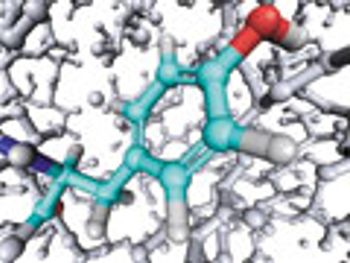
Stapled peptides offer promise to enable cell permeability, binding to therapeutic targets, and modulation of biological pathways.

View companies' outsourcing profiles from PharmTech's 2013 Outsourcing Resources Fast Locator Index in the following categories.
Rx-360, a pharmaceutical industry supply-chain consortium, is advancing approaches between pharmaceutical companies, suppliers, and contract manufacturers to better secure the pharmaceutical supply chain.

Industry groups offered perspectives on the strengths and weaknesses of the European Falsified Medicines Directive.

External manufacturing plays a crucial role in pharmaceutical companies’ supply strategy. The author examines market trends for the captive and merchant global market for active pharmaceutical ingredients and intermediates.
Novel, atom-efficient routes to amides from esters and carboxylic acids for more sustainable manufacturing.
New routes enable the efficient synthesis of enantiopure sulfinamides and structurally and sterically diverse P-chiral phosphine oxides.

Contract service providers expand capabilities in API and finished product manufacturing to meet demand for high-potency drugs.

The US and EU move forward with measures to fortify the pharmaceutical supply chain.
Cocrystals can enable the formulation of solid dosage drugs, but the FDA's final guidelines have left concerns about how their use could impact development timelines, the drug product manufacturing process, and the intellectual property position of products containing cocrystals.

Researchers at the Scripps Research Institute advance heteorcylic chemistry trhough new reagents and reaction-tracking techniques.
A recent study of computer-created and natural proteins suggests the number of sites where small-molecule drugs can bind to proteins is limited, thereby narrowing how to mitigate side effects through drug design.
Microwave spectroscopy overcomes some of the limitations of circular dichroism and vibrational circular dichroism in analyzing enantiomers.
Dynamic testing and advances in shear testing provide better insight into powder physical properties and external variables that affect powder behavior.
Access to extremely low and consistently controlled reaction temperatures can improve product yields and selectivities while also reducing costs.

The rejection by India's Supreme Court on Novartis' Glivec/Gleevec (imatinib mesylate) and other recent case law raise important issues on patent strategies for solid forms.
Solid-state chemistry is an important part of drug development, and public research is advancing the field.
Cocrystals are used to improve the performance of APIs that have non-ideal physiochemical properties by cocrystallizing the API with a second compound that modulates the API to provide a way to improve a drug's bioavailability, stability, and processability.
Because peptoids are relatively easy to synthesize, have tremendous sequence diversity, and are more proteolytically stable than peptides and proteins, they have significant potential for use as APIs, drug-delivery agents, and in numerous biomedical applications.
Access to simpler and more direct methodologies for the incorporation of fluorinated substituents remains an unmet need in pharmaceutical synthesis. An analysis of recent trends in fluorination chemistry.
Continuous flow chemistry offers potential for greater control, improved safety and environmental profiles, and efficient chemical transformations.
Contract API manufacturers proceed with select investment in capacity and service additions.

As the strategic value of emerging markets increase, pharmaceutical companies increase their R&D and manufacturing investments.