



Drug Development
Latest News
Advertisement
Research into Cold Cancers Heating Up
Accurately targeted immunotherapies through reliable neoantigen recognition enable personalized medicine development.

Development of Gamma-Delta T-Cell Therapies
Activation and expansion are essential for success in both autologous and allogeneic therapies.

QbD for Small-Molecule Continuous Process Development
Continuous manufacturing and a quality-by-design development approach are a natural fit.

Latest Videos
Advertisement
More News
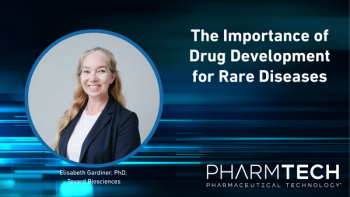
Elisabeth Gardiner, PhD, CSO of Tevard Biosciences, explains some of the challenges associated with the development of treatments for rare diseases.

Trust-based CDMO partnerships are becoming essential to accelerate injectable drug development, manage risk, and ensure resilient biopharma supply.

Industry experts discuss the benefits of utilizing contract development and contract research organizations in drug discovery and development.
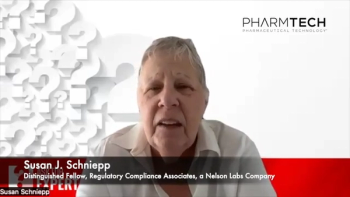
In this episode of Ask the Expert, Susan J. Schniepp, Nelson Labs, and Siegfried Schmitt, Parexel, discuss the benefits of orphan drug development and how a mid-sized company can work with regulators through the pathway to approval.

In part three of this four-part series regarding rare diseases, the authors examine how revenue concentration and accelerating patent cliffs undermine the traditional blockbuster model, whereas orphan drugs offer a structurally different strategy for stabilizing biopharma portfolios through more durable, predictable, and risk-adjusted long-term value creation.
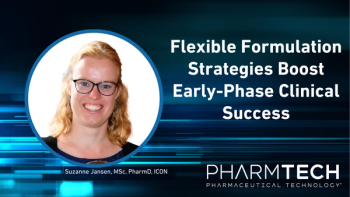
Suzanne Jansen, MSc, PharmD, ICON, says early-phase clinical success depends on flexible, simple formulations that support wide dose ranges, matching placebos, and robust stability.

New disease-modifying agents are being evaluated in the clinic that could change the course of treatment for Alzheimer’s disease patients.
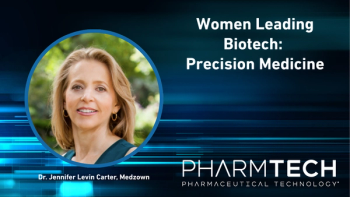
Dr. Jennifer Levin Carter, CEO and founder of Medzown, shares her experience as a CEO in the biotech industry and gives insights on how women can succeed in the pharmaceutical industry.

PharmTech spoke with women working in the pharmaceutical industry about the innovations they are seeing in bio/pharma and the role women play in the development of critical treatments for patients.
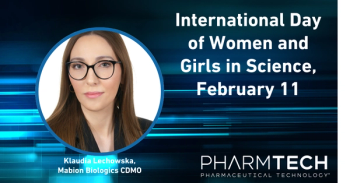
PharmTech spoke with Klaudia Lechowska, Business Development Specialist at Mabion Biologics CDMO, about how women working in STEM fields bring unique perspectives to the important work of rare disease treatment.

Integrated CDMO networks streamline complex drug development across advanced modalities like ADCs.
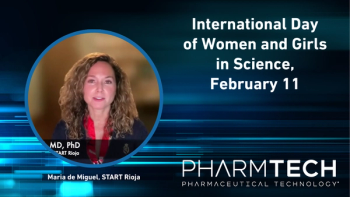
Oncologist Dr. Maria de Miguel, MD, PhD, MBA, Director, Clinical Research for START Rioja, spoke with PharmTech about the importance of STEM education in early phase drug development.

In part two of this four-part series regarding rare diseases, the author examines how economic and structural forces are driving an access gap.

PharmTech spoke with Elisabeth Gardiner, chief scientific officer at Tevard Biosciences, about how hands-on, early exposure to STEM fields can demystify complex concepts.
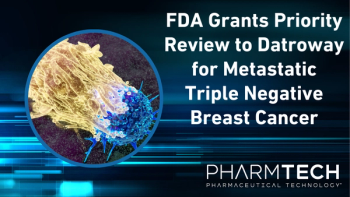
FDA has granted priority review to AstraZeneca's Datroway for the first-line treatment of metastatic TNBC treatment.
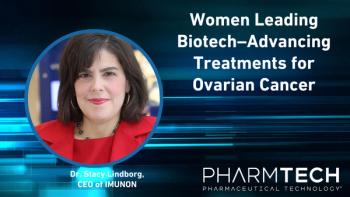
PharmTech spoke with Dr. Stacy Lindborg, president and CEO of IMUNON, about her experience at IMUNON, which is developing a novel DNA-based approach to treat ovarian cancer.

The companies’ “Change the Target. Change What’s Possible” targets the potential of Factor XIa inhibition in the development of treatments for thromboembolic disease.
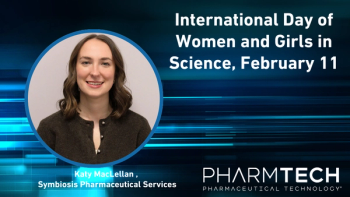
PharmTech spoke with Katy MacLellan, Technical Team leader, Symbiosis Pharmaceutical Services Ltd., about the women in the pharmaceutical industry that inspire her.

Repertoire’s T cell receptor-epitope discovery platform will be used to develop tolerizing therapy development candidates with Eli Lilly and Company.

In part one of this four-part series regarding rare diseases, the author explores how rare disease treatment development evolved from a niche area to a cornerstone of biopharma growth.

Visit PharmTech.com for upcoming coverage of the International Day of Women and Girls in Science on February 11.

The European Commission has approved GSK’s adjuvanted recombinant respiratory syncytial virus vaccine, Arexvy, for use in adults aged 18 years and older.
In a 2026 industry outlook interview, Laine Mello, Ecolab Life Sciences, explains how next-gen therapies, digitalization, and partnerships drive pharma agility.
In a 2026 industry outlook interview, Laine Mello, Ecolab Life Sciences, details how AI and Pharma 4.0 speed up discovery and production while navigating industry hurdles

Proteasome-targeting therapies may eliminate disease-causing proteins in a broad range of diseases.
Advertisement
Advertisement
Trending on Pharmaceutical Technology
1
The FDA Finalizes Rule Recognizing Non-Animal Testing Methods, Building on Year-Long Reduction Push
2
EU Clears AstraZeneca's Trixeo for Asthma, Opening New Manufacturing Demand for Single-Inhaler Triple Therapy
3
PharmTech AI Pulse Check: Fixing AI Slop at the Source
4
Sweden, a Powerhouse for Early Stage Innovation
5