
Drug Development
Latest News
Advertisement
Research into Cold Cancers Heating Up
Accurately targeted immunotherapies through reliable neoantigen recognition enable personalized medicine development.
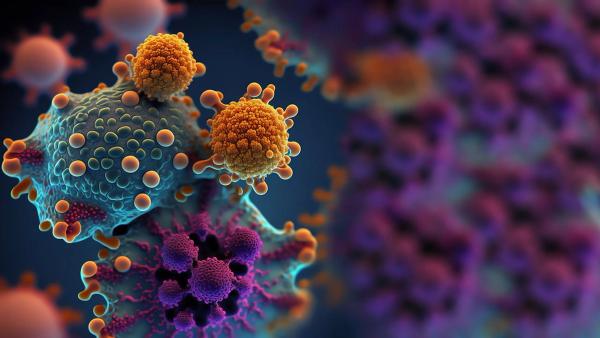
Development of Gamma-Delta T-Cell Therapies
Activation and expansion are essential for success in both autologous and allogeneic therapies.
QbD for Small-Molecule Continuous Process Development
Continuous manufacturing and a quality-by-design development approach are a natural fit.

Latest Videos



Shorts
0:13
Solving Batch Variability Issues
16 days ago
by
Robert Holt, PhD(+1 more)
0:16
What Is Microstructure Intelligence
16 days ago
by
Robert Holt, PhD(+1 more)
0:33
The FDA's Trust Issue With China
23 days ago
by
Zachary Zubulake
0:18
Could the US Ban Chinese Medical Data?
24 days ago
by
Zachary Zubulake
0:21
The End of US Biotech Dominance?
25 days ago
by
Zachary Zubulake
0:21
Where is Onshoring Actually Happening?
a month ago
by
Mike Stenberg(+1 more)
0:20
The Real Bottleneck to AI Adoption
a month ago
by
Remco Munnik(+1 more)
0:24
The Main Takeaway from H1 2026
a month ago
by
Megha Sinha(+1 more)
0:24
The Most Expensive Unsolved Problem in Pharma
2 months ago
by
Megha Sinha(+1 more)
0:21
Is an AI Orchestrator Just a Retitle?
2 months ago
by
Megha Sinha(+1 more)
Advertisement
More News
LEO Pharma acquires dersimelagon from Tanabe Pharma for up to $435M, adding a late-stage oral rare dermatology asset under FDA review.
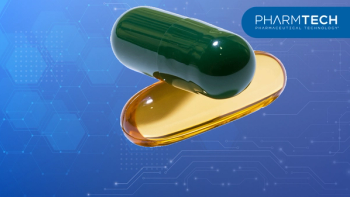
A dual-delivery capsule platform delivers multiple APIs in a single dosage unit, reducing pill burden and simplifying dosing regimens.

FDA approves TAUKLARIFY, a tau PET imaging agent for Alzheimer's, adding a biomarker tool that could shape trial design for drug developers.
Richard Jaenisch, Open Biopharma breaks down AI's real limits in drug discovery, agent security risks, and what workforce readiness looks like by 2028.
Sentynl and Mereo's alvelestat deal for AATD-LD signals early manufacturing collaboration ahead of phase 3, shifting care from IV to oral therapy.
This year’s conference agenda includes more than 260 industry experts, a new Sustainability Summit, and zones targeting AI, cold chain, and labeling.
BMS's Investing $2.3B into its Houston campus signals a shift toward flexible, multi-modal manufacturing.

Venture-based Danish biotechs are driving innovation and gaining traction with investors.
The genetically modified oncolytic viral therapy, used in combination with nivolumab, was approved by the agency after data showed 1 in 4 patients responded to treatment.

The FDA approved the first orexin receptor agonist for narcolepsy type 1, which validates a new mechanism-driven approach shaping CNS drug development and regulatory pathways.

Pathos AI's $2.09 billion license for Alphamab's TNBC drug JSKN016 signals rising cross-border oncology deals and manufacturing coordination demands.

Across development, manufacturing, quality, and outsourcing, the pharma industry is being asked to scale complexity without sacrificing control.
FDA revises draft guidance for 17 generic peptide products, including semaglutide and tirzepatide, updating testing standards ahead of a September comment deadline.
GSK invests £400M ($455 million) in a new Cambridge Biomedical Campus R&D hub, closing Stevenage by 2029 and expanding Ware's manufacturing scale-up capacity.
Pharma manufacturing and development experts reassess their 2026 predictions for the industry and look ahead to the second half of the year.

European biotechs are utilizing AI to identify novel immunoinflammatory targets in respiratory diseases.
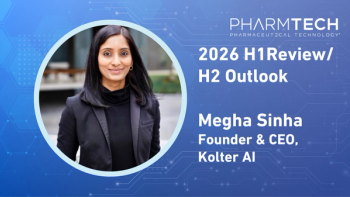
Megha Sinha, Kolter AI explains how Pharma has automated drug discovery and manufacturing AI, but not regulatory execution.
AI is reshaping discovery, manufacturing, and supply chain routing. Manufacturers are investing in capacity and resilience.

FDA advisers vote to allow pharmacy compounding of unapproved peptides BPC-157, KPV, TB-500, MOTs-C despite thin safety data and industry ties.
Campbell Bunce, chief scientific officer at Abzena, provides an update on the momentum in antibody-oligonucleotide conjugates development and the operational pressures shaping CDMO/CRO strategy for the rest of 2026.
Megha Sinha, Kolter AI, discusses how pharma's AI bottleneck shifted from technology to readiness as execution across 60 markets stays manual.
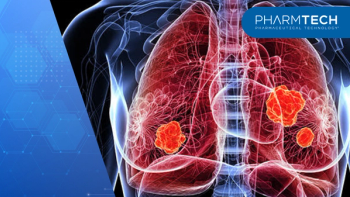
The FDA approval of Jideytro (zidesamtinib) for previously treated ROS1-positive NSCLC has implications for drug developers.
Campbell Bunce, chief scientific officer at Abzena, revisited his 2026 industry predictions on the direction of the biologics and bioconjugate market and gives an update on ADCs.
Megha Sinha, Kolter AI, talks on how orchestrator roles surged in pharma AI, but teams need computed plans, not titles, to close the skills gap.
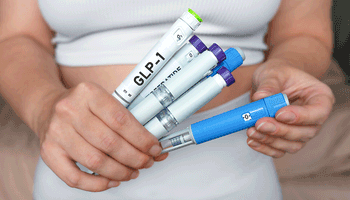
Novo Nordisk Sues Eli Lilly Over Zepbound and Mounjaro Ads, Alleging Omitted GLP-1 Dosing Data
Published: | Updated:
Novo Nordisk’s complaint contends that Lilly's campaigns leave out information about the most effective injectable doses of Wegovy (semaglutide) and Ozempic (semaglutide) currently on the market.
Advertisement
Advertisement