

Manufacturing
Latest News
Advertisement
Review of SUT Adoption in Biopharma Manufacturing
The evolution of therapeutic modalities drives the adoption of single-use technologies.

Why Are Pharmaceutical Companies Reluctant to Adopt Cloud Technologies?
Despite its understandable hesitancy, the pharma industry is facing a need for more widespread adoption of cloud-based solutions.

Automating the Future of Fill/Finish
Given the criticality of fill/finish processes, it is clear that automation is the next technological step.

Latest Videos






Advertisement
More News

The company’s investments in Canada since 2023 have now resulted in the creation, or potential thereof, of 1200 new job positions.
Winners in this year's Pharmapack Awards include both commercial products and innovations that are shaping the future of pharmaceutical packaging.

The collaboration will combine fully automated and digitalized technologies to reduce CGT manufacturing timelines to 2.5 days.
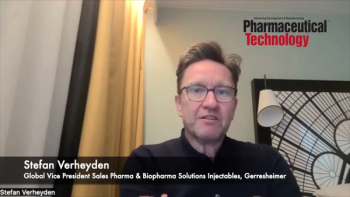
Pharmaceutical Technology® sat down with Stefan Verheyden, Global Vice President Sales Pharma & Biopharma Solutions Injectables at Gerresheimer, to talk about the primary and secondary packaging solutions Gerresheimer and Bormioli Pharma will be showcasing at Pharmapack Europe 2025 in Paris, France from January 22–23.
The 1200-square-meter facility that is planned will enhance analytical development and testing capabilities to support scale-up of products for customers.
Cytiva will combine its CGT manufacturing technologies with Cellular Origins' robotic manufacturing platform.

The company will be featuring its sustainable packaging solutions at the event in Paris on Jan. 22–23, 2025.
The two companies will be exhibiting together after Gerresheimer’s December 2024 acquisition of Bormioli.
The Critical Role of Forced Degradation in Method Development, Manufacturability, and CMC Strategy
ByCatalent
Webcasts
Webinar Date/Time: Wednesday, February 12th at 11:00 AM EST
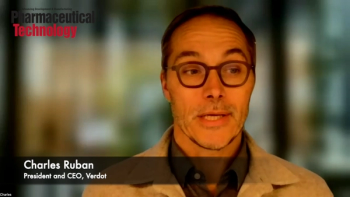
Pharmaceutical Technology® spoke with Charles Ruban, president and CEO, Verdot, about the focus of moving to sustainability practices in pharmaceutical manufacturing.

Production is set to take place at Samsung Biologics’ Songdo, South Korea, site, and the agreement will run through December 2030, subject to change.
This is the latest facility launch for BioDuro, following a kilogram laboratory and compound management center, both on the same site, in October 2024.
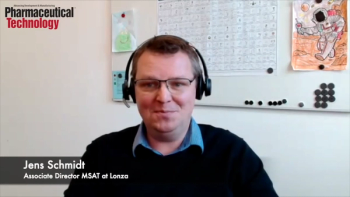
Pharmaceutical Technology chats about the increasing prevalence of challenging APIs in the development pipeline and the hurdles facing formulators and manufacturers as a result of this trend with Jens Schmidt from Lonza.
Through this global alliance, PackGene, Weill Cornell Medicine, and GC4K, an Australian non-profit, intend to deliver a custom-tailored gene therapy solution to treat hereditary spastic paraplegia type 56, a particularly rare neurological disease.

Vanessa Almendro, Elliot Berger, Benjamin McCloud, and Turna Ray go behind the headlines to discuss 2024’s biggest trends in the pharmaceutical industry, as well as the unforeseen outcomes that took us by surprise.

Webcasts
Webinar Date/Time: Wed, Feb 5, 2025 11:00 AM EST
Pharmaceutical Technology chats about continuous processes and regulatory considerations for processing equipment with Christian Dunne from ChargePoint Technology.
In an interview with Pharmaceutical Technology Roger Viney from ICE Pharma highlights the importance of sustainability for the bio/pharma industry and some important future considerations for companies.

Contract development and manufacturing organizations (CDMOs) are more critical than ever as the demand for advanced therapies continues to grow. Here are the CDMOs and service providers that are poised to make the biggest impact on the pharmaceutical industry.

In a discussion on bispecific antibody development, Atul Mohindra, head of Biologics R&D at Lonza, points out the challenges and successes of these molecules as well as the field’s future direction from a CDMO perspective.

Challenges that can prevent sponsors realizing the full potential of managed access programs can be overcome by embracing a just-in-time manufacturing strategy.
The launch of Roche's cobas mass spectrometry solution will bring fully automated mass spec analysis to the clinical lab.
Cytiva's Nicolas Pivet, vice-president and general manager, Technology Solutions, emphasizes how automation benefits process development, particularly in the analytical space.

The companies will use Orexo’s powder-based drug delivery technology to develop mucosal vaccines in an inhaled formulation.
Advertisement
Advertisement
Trending on Pharmaceutical Technology
1
Germany’s Medical Biotechnology Sector is Flourishing
2
MASH and Cardiomyopathy Targets: Why AstraZeneca Chose insitro’s AI
3
First-in-Human Trial Speed: Why FDA Trails China
4
Formulation Strategies for Next-Generation Multiagonists
5