





Quality Assurance/Quality Control
Latest News
Advertisement
Latest Videos

Advertisement
More News

In this first of a four-part series, the authors provide an introduction to a practical approach for establishing specification equivalence. The regulatory basis and compliance examples from FDA observations and warning letters are included to support the need for an effective process.
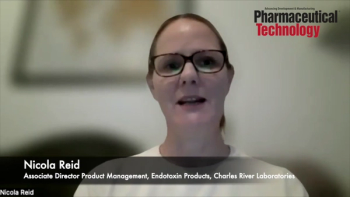
Pharmaceutical Technology® spoke with Nicola Reid, Associate Director Product Management, Endotoxin Products at Charles River Laboratories, to get her perspective on endotoxin testing and USP’s new Chapter <86> Bacterial Endotoxins Test Using Recombinant Reagents.

With so many personnel involved in the development and manufacture of pharmaceuticals, proper training of all staff is key to ensuring a quality product.

The $3.6 million investment will allow the CDMO to boost its advanced labeling, automated visual inspection, and fill/finish capabilities.

Pharmaceutical training programs are enhanced by integrating ICH quality risk management considerations.

Data governance, data integrity, and data quality are all widely used terms, but what do they actually mean and how are they connected?
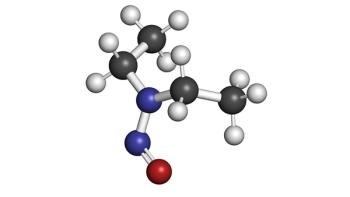
This article presents an overview of FDA’s recent update to the guidance document, Control of Nitrosamine Impurities in Human Drugs.

Shawn Li, principal scientist at Merck & Co., known as MSD outside the Unites States and Canada, talked about the importance of properly characterizing HCPs in the biomanufacturing process.

Zaim Gashi, area sales manager of Steriline, discussed the evolution of aseptic processing equipment in line with current regulatory requirements at CPHI Milan.

Andrew Lewis, PhD, Chief Scientific Officer, Quotient Sciences, discussed the CMC challenges with GLP-1 and oral peptides during CPHI Milan.

Contract organizations offer assistance when managing changes to material suppliers during a product’s lifecycle.

Viral vectors and other complex biologic modalities require more specificity and higher sensitivity to detect and distinguish contaminants.
The growing use of continuous manufacturing in the pharmaceutical industry merits a review of the application of dry cleaning and sanitization methods, especially for non-sterile oral solid drug product manufacturing of dry powders.

Manual and automated inspection technologies have their own advantages and limitations.

The US Pharmacopeia’s Microbiology Expert Committee approved the inclusion of a chapter into the United States Pharmacopeia–National Formulary that allows the use of non-animal-derived reagents for endotoxin testing.

Using one system for test execution and sample management, improving right-first-time, and allowing review by exception can deliver access to key lab data faster.

This paper reflects upon the past 15 years of experience in the application of QRM and KM within the pharmaceutical GMP environment.

Life sciences data sets can be vast and complex to process, but up to now bringing intelligent automation systems up to speed and validating them has felt debilitatingly onerous. Large language models tackle these barriers head on. Ramesh Ramani and RaviKanth Valigari, technology innovators at ArisGlobal, explain.

Here, Pavan Kumar Kunala from Almac Sciences runs through the different types of tests used to analyze drug substances to ensure quality and safety.

A statistical analysis for determining an expiration date can be applied to replicates or their corresponding averages as suggested in industry guidelines.

The final drug product relies on the quality and reliability of the raw materials used in its production.

Lonza’s Joe Garrity and Jerry Jiang discuss the importance of not only automating CGT manufacturing, but also standardizing across processes.

EMA is promoting the use of RWD in decision-making and has started a public consultation to review its draft recommendations.

A combination of rapid sterility methods with the industry standard compendial method should ensure maximum safety.

Determining E&L risk from single-use components can be used to build the level of extractable profiling and PERLs.
Advertisement
Advertisement