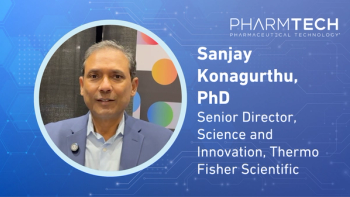
Sanjay Konagurthu, PhD, senior director of Science and Innovation at Thermo Fisher Scientific, explains what teams need to do to ensure the usefulness of AI and what strides have been made with AI in regulatory submissions.
Vibha Jawa, PhD, chief scientific officer at EpiVax, explains why the need for animal studies varies by modality and what it takes for organ-on-chip and other human-relevant models to replace these studies in IND-enabling toxicology work.
Vibha Jawa, PhD, chief scientific officer at EpiVax, spoke with PharmTech at AAPS PharmSci 360 in New Orleans about the use of animal studies in new modalities, such as monoclonal antibodies (mAbs) and antibody-drug conjugates (ADCs), specifically as they pertain to investigation new drug (IND) toxicology. Organ-on-chip and other human-relevant models, as well as new approach methodologies (NAMs), may one day replace animal studies, but Jawa says it depends on the modality. Jawa participated in presentation discussions on animal data during the event.
Jawa stresses that modalities differ sharply. Because mAbs have the most legacy knowledge and the best-understood targets, sponsors with enough of their own data can often run fewer animal studies. That changes, however, for immunomodulatory targets, where unexpected interactions with the immune system may require bringing some animal work back, Jawa says. Gene therapies still need animal models because safety must be assessed comprehensively, including biodistribution and systemic interactions with tissues, not only immunogenicity that ex vivo human models can reproduce. ADCs can draw on antibody experience to reduce testing, but the linker and small-molecule payload carry their own toxicities that in vitro and ex vivo assays may miss, so animal models may still be needed to track analytes and how they degrade.
There is a common myth about microphysiological systems that states that the more sophisticated the model, the more regulators will favor it, Jawa explains. To replace an animal study, she says, a model must answer the specific target-interaction or safety question being asked. Qualification resembles biomarker qualification and centers on context of use. Sponsors should confirm the science is robust and the right cells and receptors are present, that the model captures variability across human donors so results can inform clinical trials, and that benchmarks are relevant and cover all components of the tissue being reproduced.
Vibha Jawa, PhD, chief scientific officer at EpiVax, a bioinformatics company in Providence, Rhode Island, that designs better vaccines and optimizes biologics to reduce immunogenicity risk. Before joining EpiVax, Jawa spent 5 years leading a translational group at Bristol Myers Squibb and earlier worked in translational drug development at Merck and Amgen.