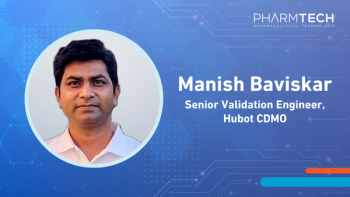
Manish Baviskar, Hubot CDMO, explains which AI skills validation engineers need first and why AI model updates must go through GMP change control.
Manish Baviskar, Hubot CDMO, on ALCOA++ data integrity, model version change control, continuous monitoring, and human sign-off.
At AAPS PharmSci 360 2026, Manish Baviskar, senior validation engineer, Hubot CDMO, leads a Careers 360 session on building AI skills for pharmaceutical manufacturing and validation. He explains why AI-enabled systems strain the assumptions behind conventional computerized system validation.
Baviskar starts with data integrity under ALCOA++. Conventional software works from fixed control code and returns the same output for the same input, so changes are easy to trace. AI models revise their behavior as their data change. He compares this to ChatGPT, which can give a different answer each time you ask. That variability is acceptable when drafting emails or documents, but not on the production floor. “We need to control all that requirements, all that information, to make sure that whatever the input you are providing, you are getting a right output every time,” he says. The
The FDA is still finalizing its AI guidance. Baviskar notes that the agency’s message so far is consistent: a person must review AI-generated data before anyone relies on it. “We can use agentic AI in managing our workflow, but the final decision should be done by some person or maybe a quality or a SME [subject matter expert],” he says. The FDA’s
Most AI in pharma still sits in research rather than GMP operations, Baviskar says. Where it does enter GMP use, he calls for:
Dynamic models need more testing than static, version-locked ones. He also stresses cross-functional fluency. AI developers need to know what documentation GMP requires, including training frequency, dataset size, and how drift and bias will be detected. Lab chemists, validation and equipment engineers, and