Richard Jaenisch examines whether FDA's NAM pathway truly shortens drug pipelines or just shifts the evidentiary burden elsewhere.
In an expansion of his written three-part series for PharmTech, Jason Bryant of ArisGlobal explains the interplay between autonomy and accountability that is essential for AI agents assisting the pharmaceutical industry.
In September 2025, PharmTech®
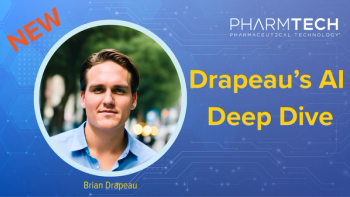
As 2025 turns to 2026, PharmTech® has interviewed Bryant for a video supplement to these articles, which will again be published in three parts. In this first installment, Bryant makes the distinction between autonomy and accountability in AI agents, and how these characteristics must work in tandem. Bryant emphasizes that when it comes to agentic AI’s deployment for pharma, “autonomy isn’t binary.”
“I often see it being paraded around in that sense,” Bryant says. “Really, autonomy lives on a spectrum, and in regulated domains like ours, the design choice is always to have autonomy with accountability. Now, autonomy and accountability, that sounds like a paradox—autonomy without accountability is really chaos. But vice versa, accountability without autonomy can create paralysis.”
Bryant then takes a look ahead at what not only 2026, but also 2027 may bring.
“The design target for us in the next two years is around increasing levels of autonomy,” Bryant says. “That means that agentic AI can plan, that it can adapt, and it will adapt mid-execution, you can watch it changing its approach. It can reflect on the outcomes. It can learn from them, can learn from them in real time, and can do that to refine their approaches while collaborating with other agents to do that.”
The first part of Bryant’s interview can be viewed above.
The three articles written by Bryant are available
Editor's note: This transcript is a lightly edited rendering of the original audio/video content. It may contain errors, informal language, or omissions as spoken in the original recording.
I'm Jason Bryant. I work at ArisGlobal. At ArisGlobal, I'm the senior vice-president for product management of AI. I'm also the general manager of its flagship GenAI product called NavaX.
OpenAI launched Sora 2 not long ago, its video generation model. And I was struck by their CEO Sam Altman's framing, essentially, of AI's purpose, where he said, it's not just about productivity, it's about new possibilities. We're seeing that shift in pharma. We have intelligent autonomy now that really is capable of enabling goal-driven reinvention, to use that term, and it's not just about faster and higher quality versions of today. We're now building toward the second wave, which is really all about agentic AI. And agentic AI here unlocks decision intelligence, and this is true insight. This is different to the sort of things we've seen before with traditional business intelligence techniques and tooling.
Perhaps, if I just take a step back and just describe really a simple definition of agentic AI, it's really about one-goal orientation. So these are agents that work towards a goal, and they do that with its second characteristic, which is autonomy. And autonomy here introduces controllable degrees of freedom inside safe boundaries, and why the agentic AI allows is this new possibilities. As you said, the reinvention. It's not just productivity.
I'll give you two examples in a productivity lens. You might think about resource reduction in the next wave with agentic AI. We're thinking about, well, what about resource optimization? So it's not just a reduction in headcount, it's about how those resources are deployed. Or it's not just about compressing cycle times, which is what you would see with efficiency targets, but also compression of decision times. So you know, as for processes now, agentic AI means that we can adapt workflows dynamically. It means that those workflows can be reprioritized, can escalate based on scenarios. It can offer challenge. It can propose alternatives. And this is where that process reinvention emerges. AI isn't being told prescriptively how to work. It's really adapting its reasoning and its approaches and its actions based on how best to achieve that goal.
Autonomy isn't binary, and I often see it being paraded around in that sense. Really, autonomy lives on a spectrum and in regulated domains like ours. The design choice is always to have autonomy with accountability. Now, autonomy and accountability, that sounds like a paradox. Autonomy without accountability is really chaos, but vice versa. Accountability without autonomy can create paralysis. So we think in terms of bounded autonomies, where you effectively define an envelope, you define constraints, but you give it freedom to move within it. So these are things around limits on scope, certainly guardrails, conditions in which escalations trigger, and that is primarily to a human so if you think about the spectrum of autonomy, think of the lower end of the spectrum. Again, those days are behind us. You have sort of fixed and AI-augmented automation, very valuable, still valuable, increasingly valuable, but relatively narrow.
And the reality now with agentic AI is what I would call fairly narrow-scope agents. So they can interpret intent and they can do some things, but their actions are very tightly bounded. That's what we mean by narrow scope. For example, medical writing in our industry. But looking ahead, the design target for us in the next two years is around increasing levels of autonomy. That means that agentic AI can plan, that it can adapt, and it will adapt mid-execution, you can watch it changing its approach. It can reflect on the outcomes. It can learn from them. Can learn from them in real time, and can do that to refine their approaches while collaborating with other agents to do that.