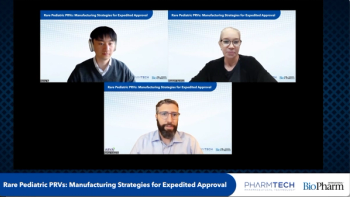
Nate Edwards of Arya Consulting moderates a discussion with Elisabeth Gardiner of Tevard Biosciences and Donny Xu of the RTW Institute about the regulatory and manufacturing hurdles facing rare disease drug developers.
GSK invests £400M ($455 million) in a new Cambridge Biomedical Campus R&D hub, closing Stevenage by 2029 and expanding Ware's manufacturing scale-up capacity.
On July 28, 2026, GSK announced plans to build a new global research and development center on the Cambridge Biomedical Campus in the UK, consolidating operations that will eventually house more than 1,000 scientists in a 300,000-square-foot facility.1 The move is part of a broader £400 million ($455 million) investment over 3 years and includes changes to two other UK sites in Stevenage and Ware.
The Cambridge Biomedical Campus is one of the largest biomedical hubs in Europe, with more than 22,000 people working across research, clinical care, and industry at more than 470 biopharma, biotech, and technology companies.1 GSK already runs several collaborations tied to the campus, including partnerships focused on data-driven discovery, translational immunology, and metabolic science, along with a clinical research unit at Addenbrooke's Hospital.
By placing its own scientists inside that ecosystem, GSK is aiming to shorten the distance between laboratory research and clinical application, a connection company leadership frames as central to the decision.1 Tony Wood, GSK's chief scientific officer, said in a press release,1 "Cambridge has built one of the world's best life sciences ecosystems, with leading universities, hospitals and biotech companies. The campus provides exceptional opportunities for collaboration. With our existing connections and experience, we see this move as a catalyst for faster, bolder medicines discovery by accelerating the science that matters most for GSK's next wave of medicines."
The new site will support research across oncology, respiratory disease, hepatology, vaccines, and HIV, areas GSK has identified as core to its pipeline strategy going forward.1
The Cambridge announcement is notable less for its research footprint than for what happens at Ware.1 GSK plans to upgrade its existing laboratories there and relocate some employees to build what the company describes as a fully integrated drug development and commercial manufacturing scale-up capability. That points to an effort to tighten the handoff between early discovery work and the process development and scale-up functions that determine whether a candidate molecule can be manufactured at commercial volumes.
Site consolidations of this kind also carry workforce implications that extend beyond the company itself.1 A phased relocation from Stevenage by 2029 means contract staff, suppliers, and regional talent pipelines built around that site will need time to adjust, and it adds another data point to a broader pattern of pharmaceutical companies clustering research and early development activity around established biomedical campuses rather than standalone corporate sites.
The investment also reflects continued confidence in the UK as a location for life sciences research.1 GSK already spends more than $2 billion annually on research and development in the country, out of more than $8 billion spent globally each year. Whether the Cambridge site accelerates GSK's pipeline as intended will become clearer over the multi-year build-out, but the decision itself adds to a trend worth watching: research-heavy pharmaceutical companies increasingly treating physical proximity to academic and clinical infrastructure as a competitive input rather than simply a real estate choice.
The Cambridge investment is not an isolated move.2 GSK has also committed $30 billion to research and manufacturing in the United States over five years, including $1.2 billion for new biologics production and digital manufacturing technology across facilities in Pennsylvania, North Carolina, Maryland, and Montana. Together, the two investments point to a strategy of expanding research and manufacturing capacity in select geographies rather than consolidating around a single hub. That pattern suggests parallel capacity-building on both sides of the Atlantic, with the United States positioned to lead GSK's clinical trial volume over the same period.
References