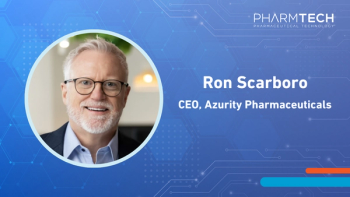
Ron Scarboro, Azurity Pharmaceuticals, explains how cross-functional development, disciplined reformulation, and post-approval metrics can help proven medicines work in everyday use.
Frits Stulp, Implement Consulting, discusses the exciting potential of AI and “trusted regulatory spaces” for drug discovery and delivery.
PharmTech recently spoke with Frits Stulp, Partner Life Sciences, Implement Consulting Group, to get his perspective on trends that shaped pharmaceutical development and manufacturing in 2025 and where things are headed in 2026. In this part 1 of our two-part interview, Stulp—who has more than 25 years of experience in the life sciences sector—emphasizes a shift from purely technical information systems to a focus on the human element within organizational processes. Having spent a decade in the industry before moving into consultancy, Stulp now works with the Denmark-based firm to actively internationalizie its approach to organizational change management and process performance. He is particularly passionate about optimizing the relationship between regulators and the life sciences industry through improved data, technology, and closer cooperation.
A central theme of Stulp's insights is the transition from traditional administrative hurdles to "trusted regulatory spaces," particularly the US-based PRISM research collaboration, which utilizes a secure cloud environment where regulators and industry applicants work side-by-side on license applications. Stulp views this as a vital “partnership for patients,” designed to accelerate the delivery of medical products by fostering faster discussions and transparency while maintaining rigorous regulatory oversight. This collaborative model aims to move beyond the perception of industry as being purely profit-driven, highlighting its role in solving global health issues.
Stulp also highlights AI as a transformative force. While he supports using AI to alleviate the industry’s "administrative burden," he notes that this is not the most exciting application, colorfully remarking that "AI will get bored with us" if limited to such tasks. Instead, the true potential of AI lies in discovery. By analyzing massive datasets—including real-world evidence and existing product information—AI can uncover new therapeutic possibilities. Stulp eagerly anticipates the future, asking, "When can we get new medicines based on the power of AI on existing data?" Achieving this requires balancing innovation with a "safe environment" that protects confidentiality.
Ultimately, these advancements suggest a more integrated ecosystem. Trusted regulatory spaces function like a communal digital workshop where the regulator and the inventor refine a product together in real-time, ensuring safety and efficiency are addressed long before the product reaches the patient.
Editor's note: This transcript is a lightly edited rendering of the original audio/video content. It may contain errors, informal language, or omissions as spoken in the original recording.
Thank you for this opportunity. My name is Frits Stulp. I have been working in life sciences for the past 25 years and a bit. I did work in the industry for 10 years and actually after that I joined consultancy, worked for some big consultancies, had my own consultancy, which I sold at some point.
And over the past year I have been working at a company called Implement Consulting Group, based mostly in Denmark but actively internationalizing: very interesting company. Instead of some of the bigger companies that I've worked for, not so much focused on the information systems landscape, but on the role of the human in the process.
And that means a lot of organizational change management, really looking at process performance and preferably looking at innovation in many of those fields. I have myself been heavily involved over the last 15 years with the relationship between the regulator and the industry and seeing where there are optimizations that we can achieve sometimes through data, sometimes through technology, sometimes just by working better together. And that's what I'm most passionate about and enjoy.
In regulatory affairs over the past decade or so, we've been looking a lot at standardized data. A topic called identification of medicinal products (IDMP) is a topic very close to my heart that I've been heavily involved with, and yes, it's making progress, and yes, we see the first results coming out.
But there's also like a parallel movement going on at the moment, and that has actually been coming from a research collaboration project in the US called PRISM [precision FDA Regulatory Information Service Module]. And it is what is known as trusted regulatory spaces. And in short, it's making a cloud environment in which the regulator and the industry—the applicant for the license—can work much closer together than they've ever done before. It's a secure space. They work together on the same things. They have their discussions faster. And it really is a way to accelerate basically what they're doing as an industry and a regulator to get products to patients. I strongly believe that, a “partnership for patients” is a term I like. You can't just look at the industry as one that's just trying to make money over health issues. No, we're actually trying to solve health issues, and you have to be partners in that by keeping the regulations, keeping us all straight, and at the same time allow and support the innovation that it takes.
Of course, the word AI will come back in some of our conversation. And there is a lot of room for AI in this field, but this trusted regulatory spaces as a concept, I think really is changing the ballgame. A few pilots have taken place, and I'm very curious to see how we can do more in 2026.
Good question. I think I would repeat at least letters AI, like so many people do nowadays. AI is something that I think is extremely intriguing right now. We are in a field—as industry that tries to get products onto the market and keep them on the market—that is very admin heavy because we're a very regulated industry. And that makes it very tempting to apply all sorts of automation, AI-based working on that administrative burden. And I'm totally in favor of that, but it's not the exciting part. Because AI will get bored with us there as well. And actually I think where the real strength is, if you look at all the data that we have on products, both on the market and the ones in development, and you look at the big data, the real-world data that you're getting back from the world, and you start overseeing some of that, I'm expecting a lot of discovery can take place using AI. And that does mean that you have to allow it, and that will be one of the key things that we're looking at. How do you make a safe environment where you do take care of the confidentiality needed, but you still allow for discovery to take place?
So, I think that's where industry is also really looking at to get benefits, not just on the process efficiency side. And that's also what I'm looking forward to. When can we get new medicines based on the power of AI on existing data?