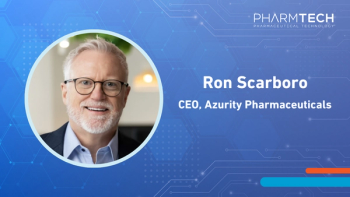
Ron Scarboro, Azurity Pharmaceuticals, explains when formulation robustness justifies added cost and which post-approval quality and supply metrics teams can track.
With a potential US government shutdown looming, Megha Sinha, Kamet Consulting, discusses the impacts on pharma manufacturing and development.
In this part 1 of a 2-part video interview on the impacts of a government shutdown on pharmaceutical manufacturing and development, Megha Sinha, CEO, Kamet Consulting Group, discusses the complex logistical challenges teams face during a resulting FDA shutdown. She clarifies that a shutdown is typically a slowdown rather than a total stop, but one in which predictability drops significantly, creating downstream delays for new submissions and manufacturing changes.
Sinha categorizes the immediate risks to the industry into three specific areas: inspection schedules, agency responsiveness, and backlog behavior. She notes that while mission-critical safety work and core reviews funded by user fees often continue, the "operational glue"—such as meeting coordination and administrative processing—becomes severely constrained. According to Sinha, "The fastest way these type of shutdowns can turn into supply risk is through inspection and response bottlenecks."
For manufacturers and clinical trial sponsors, Sinha says the challenges are often physical rather than administrative:
• Onsite Inspections: Facility readiness and site travel become the primary "gating factors" for approvals.
• Prioritization: Routine inspections are often reduced to prioritize high-risk or "for-cause" activities, leaving those waiting for pre-approval inspections in a state of uncertainty.
• Lot Release: Even for high-priority items like biologics and vaccines, the processing cadence slows as staffing and time become constrained.
The most significant takeaway from Sinha’s analysis is that the end of a shutdown does not mean an immediate return to normal. Sponsors will likely experience a loss of cycle time and friction in regulatory communication that persists long after funding is restored.
As Sinha summarizes, "the net is that the biggest manufacturer risk isn't that the FDA disappears. It's the queue that will start to form, and the recovery period really after reopening can… be as disruptive as the shutdown itself." This backlog creates a "ripple effect" that can impact approval decisions and supply chains for months.
Editor's note: This transcript is a lightly edited rendering of the original audio/video content. It may contain errors, informal language, or omissions as spoken in the original recording.
Hi, I'm Megha Sinha, CEO of Kamet Consulting Group. At Kamet, we support life sciences teams through high-stake changes, so acquisitions and divestiture transformation and technical advisory. I bring 17-plus years across industry and consulting, including eight years at PWC.
Yeah, so I think we need to think slow down, not total stop, but the predictability is going to drop. So, many ongoing reviews that FDA has can continue because that really heavily relies on user fees and carryover funding for core review work. But the really big breakpoint will be that US FDA generally would not accept new fee-bearing submissions during a lapse in appropriations, which will form a queue that can cause downstream delay
For clinical trials, missions critical safety work will continue, but really the non-urgent interaction—so think of, you know, any setups of the meetings, follow up—that can be constrained as the staffing shifts.
And then for manufacturing changes, the risk is really less about the paperwork, but what is really needed to close it out. So, if there is any onsite inspection required, facility readiness verification, site travel, that will become really the gating factor for manufacturers.
So, for approvals really in progress, a short shutdown may be absorbed, but really the shutdown creates this backlog, and that's the effect you'll see after reopening. And you know, I think as you may be seeing in the news, right, there's some bills that are already passing, so there might be still funding available; it's just, you know, which part of the FDA gets that funding, which will be the high-critical items.
So, the fastest way these type of shutdowns can turn into supply risk is through inspection and response bottlenecks. I would really categorize the immediate risk clusters into three pieces. So, it's the inspection schedule, it's the agency responsiveness, and it's the backlog behavior.
First, in case of inspection, in a shutdown scenario, FDA staffing and travel can be constrained. So, the routine inspection may be reduced while the higher-risk or for-cause activity will be prioritized. And this can create uncertainty around pre-approval inspection or follow ups, which can be a critical path for certain approvals and for sure manufacturing changes. So that's going to start to impact the manufacturers who are waiting for that.
Secondly, regulatory communication. So even when the review work is continuing under the user fee carryover, the operational glue—so, think of meeting coordination, really rapid back and forth with the agency, administrative processing—these will all get constrained. So, this is where sponsors will start to feel real friction because you start to lose cycle time and delay in approval decisions.
Third, with respect to lot release and release-related interaction, for certain biologics and vaccines, lot release activities are obviously higher priority than routine work, but because of the staffing issues, the processing cadence can still slow down, because staff and time gets constrained.
So, really the net is that the biggest manufacturer risk isn't that the FDA disappears. It's the queue that will start to form, and the recovery period really after reopening can just be as disruptive as the shutdown itself.