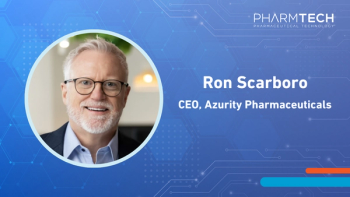
Ron Scarboro, Azurity Pharmaceuticals, explains how cross-functional development, disciplined reformulation, and post-approval metrics can help proven medicines work in everyday use.
PharmTech spoke with Campbell Bunce, chief scientific officer, Abzena to find out which trends in 2025 impacted the industry the most.
Each year, as part of PharmTech’s preparation for the new year, the editors speak with experts in the industry to find out which trends happened in the past year that they think impacted the industry the most and will, they believe, continue into the new year. Campbell Bunce, chief scientific officer at Abzena, pointed to two trends in 2025 that stood out: the influx of novel therapies and onshoring of manufacturing facilities to the United States.
Next-generation biologics, such as bispecifics, fusion proteins, and multi-specifics, have multiple functionalities that provide “more bang for your buck in one molecule”. There have also been more approvals of antibody drug conjugates (ADCs) in the past year, according to Bunce, which creates excitement in the industry.
“But one thing that's particularly exciting, I would say, on the sort of drug type front, is antibody-oligo conjugates [AOCs],” Bunce says. “They're particularly driven by companies like Avidity and Dyne, who are really spearheading these next generation by conjugates, where we're using antibodies to target oligonucleotides into cells that will impact certain sort of disease inducing pathways. We're seeing particular excitement around using these types of drugs for muscular dystrophies.”
Bunce points out Novartis’ acquisition of Avidity Biosciences, a biopharmaceutical company located in San Diego that focuses on drugs that enable RNA delivery to muscle, in October 2025 as an example of the excitement surrounding these therapies. Avidity is pioneering AOCs, according to Novartis, for genetic neuromuscular diseases and will provide programs to advance Novartis’ neuroscience strategy (1).
On the onshoring front, Bunce sees a shift toward manufacturing drugs closer to home. “Onshoring manufacturing capabilities in the US has been something that we've seen significant activity around,” Bunce explains. “Abzena built into the US some years ago, kind of deliberately as a deliberate promise to a shareholder base at the time, and we find ourselves really well positioned to sort of capture a lot of the benefits that we're seeing in that sort of migration of manufacturing into the US, particularly around ADCs.”
Transcript
Editor's note: This transcript is a lightly edited rendering of the original audio/video content. It may contain errors, informal language, or omissions as spoken in the original recording.
My name is Campbell Bunce, I'm the Chief Scientific Officer at Abzena. Abzena is CDMO with significant front end sort of R and D capability that supports discovery, design, the candidate selection for for manufacture. And you know, as a CDMO, we can support that manufacturer through to clinical studies, and we are planning now to build out interface three and commercial capabilities as well. Our focus very much is on biologics and by conjugates. So a lot of what we're seeing these days is, you know, next generation molecules from essentially building on the on the shoulders of the success of antibodies, as well as ADCs, antibody drug conjugates that are going to be extremely successful in cancer. I've been with the business 10 years prior to that, I spent 18 years or so in biotech, and I came to Abzena when we were starting to build out from early R and D capability and into our GMP manufacturing capabilities. And we do that, of course, two territories, one in the UK for the front end R and D services, and two sites in the US and one in Bristol, near Philadelphia, for chemistry and ADC manufacture, and one in San Diego, where we do biologics scale manufacture there as well.
Which trends Did you see or experience in 2025 that you believe impacted the pharmaceutical industry the most?
I think there are two trends in the pharmaceutical industry that we've noticed have an impact on the industry in general. One is the evolution of drugs. Drug development itself, you know, the types of drugs.
So as I mentioned, you know, we're seeing sort of next generation biologics. So bispecifics, fusion proteins, multi specifics that build into the biologic multi functionalities. So you know, bigger bang for your buck in the one molecule. And so we're seeing evolution of those, as well as the continuing excitement around antibody drug conjugates. So a few more approvals over the last year or so in that area, and we are really well positioned to support that, both from the design all the way through to manufacturing, GMP manufacture of those complex molecules, where we're bringing chemistry and sort of biology together. But one thing that's particularly exciting, I would say, on the sort of drug type front, is antibody oligo conjugates. We're seeing a lot of exciting activity. They're particularly driven by, you know, companies like avidity and dying, who are really spearheading these next generation bioconjugates, where we're using antibodies to target oligonucleotides into cells that will impact certain sort of disease inducing pathways. So we're seeing particular excitement around using these types of drugs for muscular dystrophies. And actually that's led to a guest, Novartis recently in the news, acquiring avidity for $12 billion so that's a significant amount of money, which kind of I think, goes to the sort of exciting nature of utilizing this type of approach for difficult to treat disease indications. So that's one thing. The other is, of course, across the geopolitical side of things, where we are seeing a genuine shift towards where folks are looking to manufacture drugs. Big focus in the US, of course. So on shoring manufacturing capabilities in the US has been something that we've seen significant activity around for us at Abzena, you know, this is, you know, part look, but part by design. You know, we built into the US some years ago, kind of deliberately as a deliberate promise to a shareholder base at the time, and we find ourselves really well positioned to sort of capture a lot of the benefits that we're seeing in that sort of migration of manufacturing into the US, particularly around ADCs. And there's not a lot of folks can actually manufacture ADCs to scale,and we're one of those companies that can do that, right?