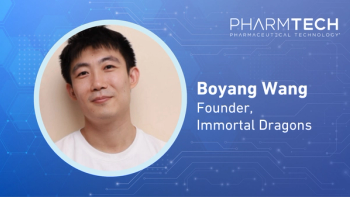
Boyang Wang, Immortal Dragons, explains how FDA’s Expedited IND Pilot and research partners could speed serial steps to first-in-human trials compared to China’s 818 Decree.
In a 2026 industry outlook interview, Laine Mello, Ecolab Life Sciences, details how AI and Pharma 4.0 speed up discovery and production while navigating industry hurdles
Laine Mello, director of Marketing at Ecolab Life Sciences, discusses how AI and Pharma 4.0 are fundamentally reshaping the pharmaceutical landscape in this part 2 of a 3-part interview (check out
The most immediate impact of AI is felt in the research phase, where the timeline for designing molecules has shrunk from months to weeks. Mello emphasizes the magnitude of this shift, stating, AI “is fundamentally changing the timeline for drug discovery, which I think we're all seeing a lot of."
According to Mello, this acceleration extends to the manufacturing floor through:
• Predictive Maintenance: Tools that identify equipment issues before they result in batch failures.
• Real-Time Analytics: Digital monitoring that allows for faster quality decisions and reduces uncertainty.
• Continuous Processing: A move away from batch production that has allowed some facilities to cut production cycles by 30% to 40%.
Beyond AI, Pharma 4.0 technologies like Internet of Things, or IoT, sensors are enabling "predictive manufacturing," which catches process deviations before they become problems. Mello also highlights advancements in chromatography resins that improve purification efficiency, a critical factor for the economic viability of complex biologics. Regarding the strategic shift in production, Mello notes, "The shift from batch processing isn't just about speed, it fundamentally changes how quality control and scale up work."
Despite these advancements, Mello warns that full adoption faces hurdles. Regulatory frameworks are still evolving to address the need for transparency in AI decision making. Additionally, many manufacturers struggle to integrate cutting-edge digital tools with legacy systems that may be more than a decade old, all while managing the rising importance of cybersecurity and data governance.
Editor's note: This transcript is a lightly edited rendering of the original audio/video content. It may contain errors, informal language, or omissions as spoken in the original recording.
I'm Laine Mello. I am the director of Marketing at Ecolab for its bioprocessing business, and I've been in the pharmaceutical industry for around 10 years or so, supporting different marketing organizations, such as Catalan and Ecolab.
Artificial intelligence is fundamentally changing the timeline for drug discovery, which I think we're all seeing a lot of. And we're watching researchers design new molecules in weeks rather than months, which is amazing to see, and it's really helping identify promising candidates with the precision that wasn't possible even two years ago. And so that acceleration has real implications for how quickly therapies can reach patients. And on the manufacturing side, the impact is equally significant. So predictive maintenance tools are catching equipment issues before they cause batch failures. Real-time analytics are enabling faster quality decisions, and even continuous processing is becoming more viableas digital monitoring removes some of that uncertainty that made manufacturers cautious about moving away from batch production. But full adoption isn't straightforward.
Regulatory frameworks are still catching up. There's an understandable need for transparency and how AI makes critical decisions, especially when safety is involved with the patient, and so many facilities are also dealing with the reality of integrating cutting edge digital tools with systems that may be 10,15 years old, and data governance and cyber security aren't solved problems yet. And they can't be afterthoughts when you're dealing with such sensitive manufacturing data, socontinuous manufacturing has been the standout innovation. We've watched facilities cut production cycles by 30% to 40% while actually improving consistency. So the shift from batch processing isn't just about speed, it fundamentally changes how quality control and scale up work. So, once you can run continuously, you start optimizing in ways that weren't even possible before.
The other thing is pharma 4.0 technologies. They're having a broad impact as well. So IoT sensors and AI analytics are enabling what's essentially predictive manufacturing, catching deviations before they even become problems, helping streamline compliance and even reducing the time between production and release. And then the other thing we're seeing too, is in bioprocessing, specifically, advanced chromatography resins are changing process economics. So that means higher capacity resins enable intensified processing, which really translate directly into cost saving and faster throughput. So, for biologic manufacturers dealing with increasingly complex molecules, these improvements in purification efficiency can be the difference between a commercially viable process and one that struggles economically.