
The PharmTech team focused on its coverage of AAPS PharmSci 360 this week, conducting interviews with experts on a range of topics including formulation platforms, AI, amorphous solid dispersions, and animal studies.
Are investigations supporting or hindering performance excellence?
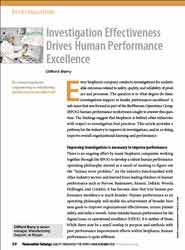
Every biopharm company conducts investigations for undesirable outcomes related to safety, quality, and reliability of product and processes. The question is to what degree do these investigations support or hinder performance excellence?
A sub-team that was formed as part of the BioPhorum Operations Group (BPOG) human performance workstream sought to answer this question. The findings suggest that biopharm is behind other industries with respect to investigation best practices.
This article provides a pathway for the industry to improve its investigations, and in so doing, improve overall organizational learning and performance.
Download Pharmaceutical Technology’s
.
almost 10 years ago
Extending QMS to Contract Partnersalmost 10 years ago
Too Much by Half: Misapplication of the Half-Cycle Approach to Sterilizationalmost 10 years ago
Is Global Regulatory Gridlock Slowing Modernization?almost 10 years ago
Paperless Batch Records for the Massesalmost 10 years ago
Could Greater Transparency Improve Pharmaceutical Quality and Compliance?almost 10 years ago
Ensuring Quality in Pharmaceutical Raw Materialsalmost 10 years ago
Microbiological Testing: Time is of the Essence