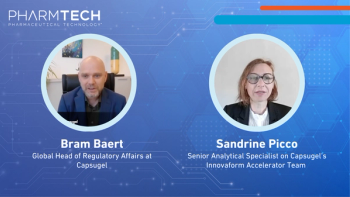
Capsugel's Bram Baert and Sandrine Picco argue that chasing zero nitrite in pharmaceutical excipients is often impractical and costly. They recommend setting scientifically justified, risk-based limits and consistently staying below them.
Raj Puri, chief commercial officer at Argonaut Manufacturing, talks about how navigating the pressure to respond to tariffs with investments and keeping a robust and qualified staff are key moves in the new year.
Tariffs imposed by the United States were a complicated issue that impacted the pharmaceutical industry in 2025, and Raj Puri, chief commercial officer at Argonaut Manufacturing, anticipates that they will continue to be an issue in 2026. Choosing to invest large amounts of money on a new manufacturing site, and/or upgrading an existing facility, becomes more complicated in an unstable geopolitical market. And this complexity can impact time to market.
“I can tell you from personal experience, even having a couple of big projects going on in the background while we're trying to do an expansion has a major impact on timelines,” Puri explains. He points out current major investments announced by the industry in 2025 as an example. “If these investments are implemented, and there's, I think, still a question of whether or not they actually get realized. If they are implemented though, the cost and timelines to build these facilities and acquire the equipment needed to actually make products is going to be extended significantly, and the cost will go up significantly, as well is my expectation. The supply and demand curve is going to be completely disrupted.”
New investment in facilities also brings a need for people with the right experience and knowledge to work with the companies that are expanding their footprint. Finding and retaining the right people to create a long-term, sustainable advantage in the pharma manufacturing market is essential for a contract development and manufacturing organization (CDMO) like Argonaut, Puri stresses.
“Anybody that has sufficient money and time can build a beautiful facility, put in great equipment. What they can't replicate, though, is the staff that run the equipment and the processes that we use to execute our manufacturing. As a midsize CDMO,” Puri says, “we can't always compete with the bigger players in terms of compensation, but what we can offer to our staff is a very dynamic work environment where they have the opportunity to work in different functional areas and progress their careers. For the staff, it's very engaging, because they get to see a lot of different areas and wear many different hats, but as an organization, we also take great benefit, because now we have people that are working together in different functional activities who actually truly understand what it is like to be in the other person's shoes. As an example, somebody that's in operations that has been in quality assurance understands why quality assurance demands certain things. And ideally, somebody that's in quality assurance has been in operations, and they understand some of the challenges on the floor from a manufacturing perspective.”