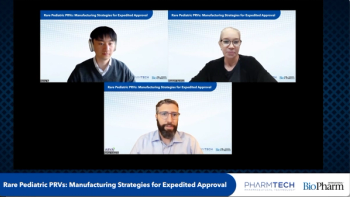
Cole and Jaenisch dig into AI poisoning in pharma manufacturing, how it hides in plain sight, and who should be accountable for catching it.
Merck KGaA optimized cooling by 21% at its Darmstadt site using autonomous AI, aiding sustainability without system changes.
Through the implementation of the etaONE software platform from Etalytics, Merck KGaA’s headquarters in Darmstadt, Germany achieved a 21% reduction in electricity used for cooling within three months.¹ With the program’s ability to autonomously optimize the site’s cooling systems, Merck KGaA has demonstrated that operational costs can be significantly mitigated through the
The ability to improve efficiency without halting operations or modifying physical assets is a significant advantage. The optimization project at the Darmstadt site focused on a cooling system that circulates more than 20 million cubic meters of chilled water annually to support the manufacturing of more than 25,000 products.¹ The optimization logic utilizes a pressure-based system model that replicates the hydraulic behavior of the cooling infrastructure. By tracking pressure levels in real time and evaluating environmental variables, the AI autonomously orchestrates the performance of chillers, cooling towers, and pump systems. The platform transitioned to full autonomous operation within two weeks of an initial test run and has continued to run without disrupting ongoing production processes.
Efficiency gains of this magnitude are critical for meeting aggressive corporate sustainability targets, such as the commitment to a 50% reduction in carbon dioxide emissions by 2030 and full climate neutrality by 2040.¹ This initiative is part of a broader collaboration funded by the German Federal Ministry for Economic Affairs and Climate Action, known as the Energy Intelligence System for smart Cooling Systems in Industrial Buildings project. As a project partner, Merck KGaA provides real-world application scenarios and system data, while Etalytics delivers digital twin models and optimization logic. Beyond immediate energy savings, the partners intend to integrate predictive maintenance use cases, beginning with automated cleaning recommendations for cooling tower filters.
The push for efficiency extends beyond energy management into the foundational hardware that makes high-level computation possible. A €500 million (US$595 million) investment in a semiconductor solutions megasite in Kaohsiung, Taiwan, addresses the surging demand for AI applications² By focusing on thin film technology, which enables materials to be deposited on an atomic level for complex chip architectures, this expansion ensures a resilient supply of materials necessary for next-generation AI chips.
“Our strategy is to stay close to customers and their technology roadmaps. This investment allows us to reinforce our position in one of the world’s most strategically important semiconductor ecosystems,” said Kai Beckmann, deputy chair of the executive board, Merck KGaA in a press release.²
This 150,000-square-meter site, integrates advanced smart manufacturing through digital twin technology to improve precision.² This digital approach supports predictive maintenance and process optimization, paralleling the needs of complex pharmaceutical lines. The facility’s lab-to-fab methodology further enables seamless collaboration between research and large-scale manufacturing.
By strengthening the global semiconductor ecosystem, the company ensures that the digital tools used in drug development can evolve without supply disruptions. These investments, part of a €3 billion (US$3.57 billion) global program, demonstrate how cross-industry technological advancements are essential for maintaining a stable, high-tech supply chain. This focus on hardware resilience serves as a safeguard for the long-term technological roadmaps of the healthcare and life science sectors.
References