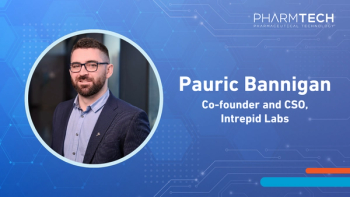
Pauric Bannigan, Intrepid Labs, explains how physics-informed machine learning aids formulation and why regulators still want experimental data.
Vivek Gupta of Duquesne University explains at AAPS PharmSci 360 why device decisions can't wait and why excipient makers must test beyond drug molecules.
At
Gupta’s research focuses on non-invasive routes of delivery, including oral, pulmonary, and inhalation. From that vantage point, he sees one major challenge: building a delivery system that is compliant with the current landscape of delivery devices. Designing a brand-new device is rarely the answer, because it opens up “another Pandora’s box of complications and problems associated with their approval.”
That tension shaped much of the session. Discussion kept returning to the struggle of developing compliant delivery platforms and products for the devices that already exist. Because Gupta moderated a conversation focused largely on injectables, the questions were practical: how do you develop systems that are compatible with injectable devices and human physiology? For teams working on
Gupta’s recommendation is deliberately simple. “Do not consider delivery devices as a problem for tomorrow,” he says. Device considerations, in his view, must be built into the process of developing a dosage form from the start.
His reasoning comes down to what actually reaches the market. “What you are marketing or what is going to get approved is a drug-device combination product,” Gupta explains. Companies are not getting approval for a delivery system on its own, and they are not getting approval for a device on its own. The two have to work together as a combination.
Waiting carries a cost. Gupta cautions against discovering incompatibilities “two years down the lane” and then having to modify the product to fit. His message to developers is to start thinking about the device today, while changes are still inexpensive.
This is especially relevant for inhaled and nasal products, where formulation and device performance are tightly linked. PharmTech’s archive of
Gupta extends the same logic upstream to suppliers. Excipient manufacturers, he says, need to look at which delivery systems and routes of administration their excipients can be used in. That means modulating excipient properties and performing more studies for potential devices and potential routes of administration.
Traditionally, many suppliers have stuck to defining the drug molecules with which their excipients can work. Gupta argues that is no longer enough. Excipient makers should also consider the devices with which their materials can be compliant, so that formulators are not left to discover compatibility problems late in development.
PharmTech’s interview on
The through-line of Gupta’s remarks is integration. Formulation, excipient selection, and device choice should be decided together, not sequentially, because the product that ultimately reaches patients is a combination. Developers who treat the device as an afterthought risk rework, delays, and approval complications that earlier alignment could have avoided.
Watch the full video for Gupta’s complete take on complex drug products, and explore more of PharmTech’s ongoing