Cole and Jaenisch explain where pharma should keep manual checks, how to vet AI skills in hires, and why self-taught AI risks GMP.
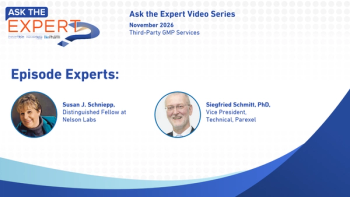
Paul Lopolito, Director, Technical Services and Brian Bosso, Technical Service Manager, both with STERIS Corporation, join Susan J. Schniepp, distinguished fellow at Nelson Labs, to explain the basics of sterile manufacturing and what cleaning validation regulations and processes should be applied.
In this episode of Pharma Fundamentals, Susan J. Schniepp, distinguished fellow at Nelson Labs, talks with Paul Lopolito, Director of Technical Services, and Brian Bosso, Technical Services Manager at STERIS Corporation, about the importance and fundamentals of cleaning validation in sterile pharmaceutical manufacturing.
Sterile manufacturing (also known as aseptic manufacturing) is the process of producing a drug, device, or combination product that is free of harmful microorganisms, according to the panelists. Traditional manufacturing of products, such as tablets and capsules, controls microbes as part of the process but does not produce a sterile product. The same contamination concerns (eg, residual product, cleaning agents, and bioburden) apply to both small and large molecules. While traditional manufacturing has historically placed less emphasis on low bioburden, there is a shift toward tighter control of both manufacturing and cleaning processes.
Cleaning validation is a core element of a facility's contamination control strategy, serving to remove microbial hazards before sterilization or final processing. However, sterilization alone is not enough. Killing gram-negative organisms can still leave endotoxins and cell debris behind. Raw materials, vials, and stoppers must also be controlled, either through cleaning before sterilization or through better upstream controls.
The most common reference addressing aseptic processing is the European Union’s, EudraLex, Volume 4, particularly Annex 1, which calls for a contamination control strategy built on critical control points, controls, and monitoring.
Annex 1 may extend cleaning validation to indirect product-contact surfaces, such as stopper bowls, chutes, and star wheels, and it is applied as a universal standard by auditors worldwide, including on the biologic drug substance side.
Annex 15 of the EU EudraLex, which covers qualification and validation, addresses health-based exposure limits, degradation as a risk-mitigation tool, and a lifecycle approach. In the United States, the FDA's cleaning validation guidance dates to 1993, while Annex 15 is under revision, and Health Canada has published more specific guidance.
The panel suggest that the first step to developing a cleaning validation program is understanding risk: whether the concern is residual product, microorganisms, or cleaning agents, and whether the facility handles 1 product or many. Cleaning parameters should then be chosen with long-term manufacturing needs in mind. Equipment with long idle periods may suit lower concentrations and temperatures over longer times, while equipment turned around daily may need faster, more aggressive cycles.
Selecting the right analytical method, establishing recovery factors for swab, rinse, or direct surface sampling, and considering visible residue limits, are imperative. Under a lifecycle approach, most effort goes into design, and validation becomes a confirmation of a well-understood, normal cycle rather than a worst-case challenge.
For shared production lines, toxicity differences and carryover are key concerns. Grouping products and validating against the hardest-to-clean, most toxic worst case simplifies validation but can force overly aggressive cleaning on easier products. Companies that use multiple cleaning processes need controls ensuring operators apply the right one, and analytical methods sensitive enough to detect failures.
Regulators expect cleaning procedures, a validation plan, executed protocols linked to equipment and utility qualifications and training, and design documentation covering cleaning studies, analytical method qualification, recovery studies, and permitted daily exposure values used to set limits. Scientifically justified risk assessments for product grouping and a defined monitoring program are essential.
When replacing a line with equivalent equipment, existing qualification data can often be leveraged, followed by a verification run, ideally with the hardest-to-clean soil. Looking ahead, Lopolito highlights continuous UV spectroscopy alongside conductivity for real-time cleaning monitoring, and the challenges of antibody-drug conjugates, which combine small- and large-molecule cleaning and require careful choices about analytical methods and degradation approaches.