News|Articles|April 4, 2025
Recapping INTERPHEX 2025: Pharma Looks Toward the Future
Author(s)Patrick Lavery
The yearly convention in New York City showcased new and emerging technologies and gave participating exhibitors a chance to unveil their strategies for the second half of the 2020s.
Advertisement
Advertisement
INTERPHEX 2025, an annual global pharmaceutical and biotechnology event, took place at the Jacob K. Javits Convention Center in New York City from April 1–3, 2025. Pharmaceutical Technology® Group covered the conference from multiple angles, publishing news about company offerings and exhibits, attending presentations and lecture sessions, conducting on-site interviews with subject matter experts and key opinion leaders, and keeping a finger on the pulse of breaking developments.

Related to this article

Shubhajit Paul, a senior research fellow in Boehringer Ingelheim’s Department of Material Analytical Sciences, spoke with PharmTech at AAPS PharmSci 360 to explain how tabletability prediction can be improved for roller-compacted formulations.

Mahmood Majeed, ZS, explains why measurable AI outcomes in pharma supply chain and manufacturing jumped from 29% to 53%, and how GMP limits and GxP validation shape adoption.

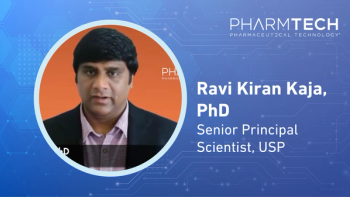
Ravi Kiran Kaja, PhD, USP, explains what harmonization of extractables and leachables standards looks like in practice.

Ravi Kiran Kaja, PhD, explains how USP’s industry-wide initiative aims to build confidence in trace-level extractables and leachables results.

Science, circularity, regulation, and technology are reshaping how the industry develops packaging for medicines.

Vibha Jawa, PhD, chief scientific officer at EpiVax, explains why the need for animal studies varies by modality and what it takes for organ-on-chip and other human-relevant models to replace these studies in IND-enabling toxicology work.

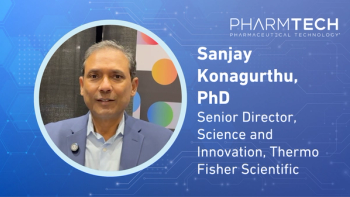
Sanjay Konagurthu, PhD, senior director of Science and Innovation at Thermo Fisher Scientific, explains what teams need to do to ensure the usefulness of AI and what strides have been made with AI in regulatory submissions.
Advertisement
Advertisement