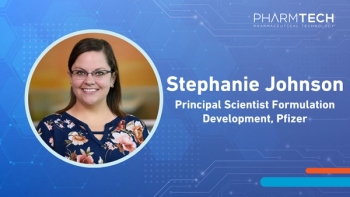
Stephanie Johnson, Pfizer, discusses how platform formulations moved 2 Pfizer protein programs to IND in 8 months by redistributing, not removing risk.
Mike Stenberg, LGM Pharma, notes rising FDA audits in China/India and supply chain risks forcing deeper vetting and stock.
PharmTech recently spoke with Mike Stenberg, Vice President – Business Development, LGM Pharma, to get his perspective on trends that shaped pharmaceutical development and manufacturing in 2025 and where things are headed in 2026. In this part 1 of our three-part interview, Stenberg, who brings over 30 years of experience to the CDMO sector, shares his insights on the shifting pharmaceutical landscape. Stenberg identifies two major trends defining the industry in 2025: a significant return to FDA inspections and a pervasive pessimism regarding supply chain resilience.
Stenberg highlights a notable shift in regulatory oversight. While overall FDA inspections remain approximately one-third lower than pre-pandemic levels from 2019, inspections in China and India have returned to or even exceeded those levels. Interestingly, he notes, the continued global reduction is primarily due to fewer inspections occurring within the United States.
A significant portion of the discussion focuses on supply chain uncertainty. Stenberg explains that industry-wide anxiety regarding growth and pricing pressures has created a "self-fulfilling prophecy” in which companies are reacting with caution and reduced investment, naturally leading to the slower growth they fear. To combat these risks, the industry is moving beyond just vetting primary suppliers. Companies are now auditing their entire supply chain, including the providers of key starting materials used in APIs.
To ensure stability, many are adopting strategies such as second and third sourcing and maintaining safety stock. However, Stenberg warns that safety stock ties up essential cash, further limiting a company's ability to invest. Additionally, while there is a growing demand for geographic diversification to move supply chains away from India and China, sourcing APIs from the US or Europe remains difficult and expensive due to limited supply.
Managing a modern pharmaceutical supply chain is like building a house during a storm; it is no longer enough to ensure the primary contractor is reliable; you must now inspect every nail and board from the sub-suppliers to ensure the entire structure remains standing.
Editor's note: This transcript is a lightly edited rendering of the original audio/video content. It may contain errors, informal language, or omissions as spoken in the original recording.
I have been in the CDMO industry for the last 30 plus years. I've worked for a variety of different CDMOs in the industry, worked with some discovery CDMOs, as well as finished product CDMOs. I’ve worked now for LGM for the last three years, and that's been a very exciting ride.
So a couple of major trends. We see so many things going on in 2025. It's been a rather exciting year, if you want to use that word. But we've definitely seen an increase in FDA inspections. You know, when we look back at what the inspection kind of landscape looked like pre-COVID, back in 2019, and we compare that—we're still waiting for results in 2025, but just our own lived experiences—we're seeing a growth or a return to normal in the number of FDA inspections. You would expect that. What's, significant or what's interesting about that is, overall, FDA inspections are still down about a third compared to 2019, but when we look at inspections in countries like China or India, the number of inspections in 2024 are at, or possibly even above what they were in 2019.
So, we still have that third reduction, and where's that reduction coming from? By far the most FDA inspections are occurring in the United States. So the reduction or the still decreased amount of inspections that are occurring are related to the United States. But it's interesting that when we look at China and India, they're at pre-COVID levels, and I expect in [2026] they'll be even higher than pre-COVID levels. So, we see that trend going on in a big way. In our industry we work a lot with India and China, so we're very cognizant of that.
The other thing we see going on is just a pervasive concern about the supply chain and uncertainty surrounding the supply chain. That has led to what we see, what we hear, what we feel is a pessimism around the ability for the industry to grow. It's interesting because in a way, you know, when you're pessimistic about your growth potential and you're worried about the supply chain then in an ever-increasing pressure on decreasing prices, your natural reaction to the industry is to slow down, be more cautious, invest less.
That becomes a self-fulfilling prophecy in that when you do those things, of course you grow slower. So you're concerned about slow growth and the actions you take slow your growth. We're seeing that pessimism and that concern about the supply chain cuts across the entire pharmaceutical industry, and we've noticed it in our business as well.
The supply chain's doing a lot of different things to try and deal with those kinds of things. The number one thing is people are really trying to secure their supply chain. So we see really this increased emphasis on vetting your entire supply chain. It's been pretty common that you would certainly vet your primary supplier.
When we look at APIs, for example, you're always looking into the quality history and trying to detect any potentials for future problems, but that's not enough anymore. Now we are vetting, and people want you to vet, their suppliers, so whatever pressures your primary supplier’s facing in their particular geography is exacerbated by who their suppliers are too.
So in the area of APIs, who's supplying the key starting materials and what are the risks associated with them? The other thing that we see going on in trying to secure supply chains is second sourcing, of course. Now third sourcing. We see people starting to lay in safety stock, which makes a lot of sense.
The safety stock means you carry more inventory, which inventory is equal to cash, so it reduces your ability to grow and invest. It has a whole range of attendant problems associated with that. People are trying to geographically diversify. We are commonly asked, routinely asked, to find and source APIs, but not in India or not in China; really difficult to do. It's possible, you can get some APIs from Europe and you can even get some from the US, but there aren't a plentiful supply of APIs from those sources, and they tend to be more expensive as well.