
The Portable, Continuous, Miniature, and Modular (PCMM) collaboration is alive and well, and the second generation of its modular continuous manufacturing equipment is now available.
Agnes Shanley is senior editor of Pharmaceutical Technology.
The Portable, Continuous, Miniature, and Modular (PCMM) collaboration is alive and well, and the second generation of its modular continuous manufacturing equipment is now available.
David McKelvey, director of TM Eye, a detective company based in the United Kingdom, provides insight into the counterfeit pharmaceuticals business.

It’s time to stop talking about “anticounterfeiting,” and move to integrated, collaborative supply chain security, experts say.
Emerging anticounterfeiting technologies offer pharmaceutical manufacturers more options for supply chain security.
PTSM: Pharmaceutical Technology Sourcing and Management
Industrial-scale continuous API manufacturing may offer cost and safety benefits.

Systems that discourage continuous improvement threaten pharma innovation, quality, and supply. Can the industry break through this deadlock?
FDA’s Emerging Technologies Team (ETT) team chair Sau Lee describes the reasons for the team and its structure.
Lawrence Yu, Deputy Director, Office of Pharmaceutical Quality at FDA’s Center for Drug Evaluation and Research (CDER), shares insights with Pharmaceutical Technology.

Requirements for early- and late-stage trial manufacturing may differ, but complying with good practices, maintaining blind studies, and considering logistics remain crucial at all times.
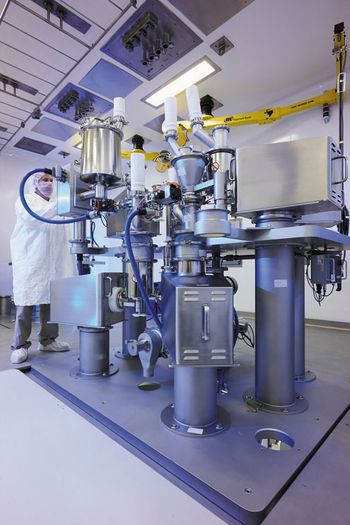
Eric Jayjock, Patheon’s director of continuous manufacturing, discusses the CDMO’s plans for its new continuous manufacturing business.
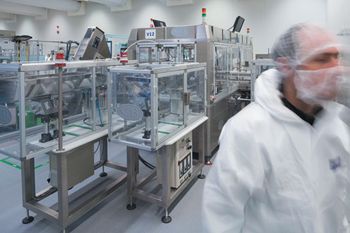
Successful development requires coordinating and aligning drug and device design, focusing on a complete drug delivery system that meets patients’ needs.
TraceLink’s Graham Clark, director of contract supplier relationships and cofounder, and Brian Daleiden, vice-president of industry marketing, shared insights into industry’s serialization readiness as well as recent trends and developments with Pharmaceutical Technology.

Advanced digital ledger technologies offer potential solutions, but are still several years away from practical use.
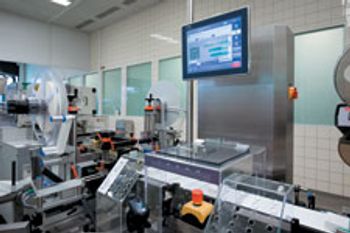
The contract development and manufacturing organization (CDMO) Aesica Pharmaceuticals has had a serialization program in place for the past five years, and recently installed capabilities for serialization at all its packaging facilities.
A June conference at Johns Hopkins examined the potential for digital ledgers and smart contracts in pharma and healthcare
A recent paper coauthored by FDA’s Lawrence Yu and Michael Kopcha describes how the industry might modernize drug manufacturing.
Industrial-scale continuous API manufacturing may offer cost and safety benefits.
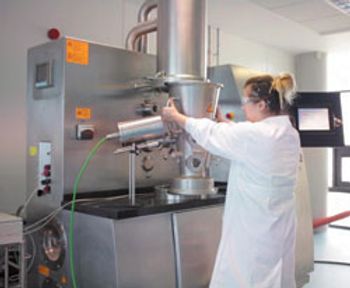
Real-time alternatives to dissolution testing are required for continuous manufacturing to reach mainstream use.

Pharma’s test of continuous manufacturing is starting with oral solid-dosage forms.
A recent meeting emphasized the need for more guidance and flexibility from regulators, as well as harmonization, standards and equipment interoperability.

Serialization and complementary authentication technologies are needed in order to meet DSCSA and FMD regulations.
PTSM: Pharmaceutical Technology Sourcing and Management
Due to weak penalties and lax enforcement, illicit pharmaceuticals continue to slip into the US, European and global supply chains.

Good project management, budgeting, planning, and clear documentation are the only ways to prevent overruns and project failure.
Samsung BioLogics’ aggressive growth strategy begs the question: Are there lessons that US and European pharma might still learn from the electronics industry?
Under US regulations, such as the Medicare Access and CHP Reauthorization Act of 2015 (MACRA), part of any US physician’s reimbursement will be based on patient outcomes.

Value-based medicine is putting patients at the center of pharmaceutical R&D and forcing the industry to move from treatment to prevention.
PTSM: Pharmaceutical Technology Sourcing and Management
In a pilot program, Johnson & Johnson Supply Chain and AmerisourceBergen demonstrated how data can be transferred between two partners.

As regulators strive for balance in cGMPs for cell, gene, and tissue therapies, risk-management principles must guide decisions involving process media and additives.

Continuous manufacturing will not work for all pharmaceuticals, but the right infrastructure, senior management support, and planning from the earliest stages of drug development could eventually allow up to 80-90% of small-molecule APIs to be made continuously, says Paul Sharratt, head of process science and modeling at Singapore’s Institute of Chemical and Engineering Sciences.
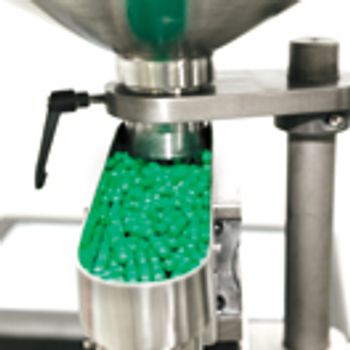
A venture between GEA and Siemens aims to familiarize more pharmaceutical companies with more modern control and continuous processing.