
PTSM: Pharmaceutical Technology Sourcing and Management
Bribery and corruption may be the latest challenge to supply chain integrity.
Agnes Shanley is senior editor of Pharmaceutical Technology.
PTSM: Pharmaceutical Technology Sourcing and Management
Bribery and corruption may be the latest challenge to supply chain integrity.

Airlines, airports, freight forwarders, and other cold-chain partners are taking a crash course in pharma cGMPs.

Recent revisions to the European Union’s good distribution practices, which were updated in 2013, reflect increased regulatory focus on the supply chain.

New approaches add flexibility and reduce risk for contract development and manufacturing organizations (CDMOs) and their clients.

Now past the “wait-and-see” standoff, most pharmaceutical companies and their contract partners are considering long-term requirements, including distributors’ needs.

Training and mock audits are the key to preventing data integrity issues with partners offshore, but the process must start at home. Compliance consultant John Avellanet shares best practices and ways to minimize costs.
China and India are also increasing inspections and becoming more exigent about data integrity and cGMPs.
Data integrity and cGMP issues demand closer scrutiny of suppliers. Bribery and corruption may become the next supply chain flashpoint.

PTSM: Pharmaceutical Technology Sourcing and Management
There are technical hurdles to clear in developing serialization and track-and- trace programs, but it’s the human ones that are proving most difficult to surmount.
Investment in talent and infrastructure, more quality-by-design skills, and increased communication with global regulators will be needed to combat compliance issues at API and drug manufacturing facilities in India.
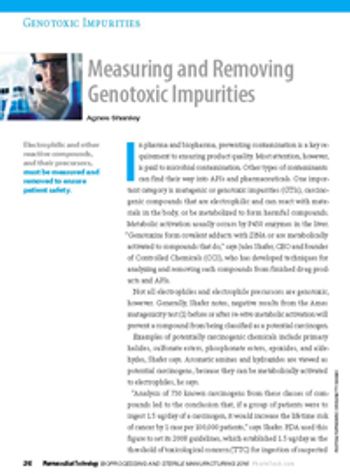
Electrophilic and other reactive compounds, and their precursors, must be measured and removed to ensure patient safety.
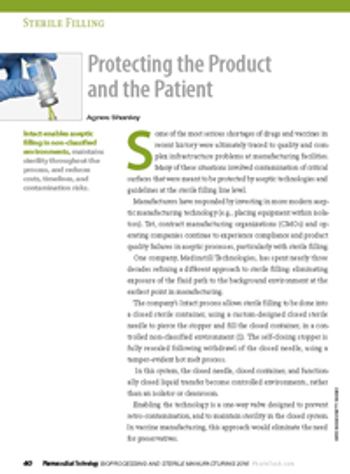
Intact enables aseptic filling in non-classified environments, maintains sterility throughout the process, and reduces costs, timelines, and contamination risks.

PTSM: Pharmaceutical Technology Sourcing and Management
Risk assessment may be the best defense when outmoded technology, complex transportation systems, and Murphy’s Law disrupt pharmaceutical supply chains.
PTSM: Pharmaceutical Technology Sourcing and Management
Progress is being made, but work remains to be done. Brian Daleiden, vice president of marketing at TraceLink, discusses the state of the industry, as companies attempt to meet complex, and changing, global requirements.
With deadlines only a few years away, some companies have not started serialization programs, while others are taking a tactical, short-term approach, losing out on potential business benefits.

PTSM: Pharmaceutical Technology Sourcing and Management
Pharma’s traditionally conservative approach to supply-chain management may be hindering its ability to adapt to changes in demand.

PTSM: Pharmaceutical Technology Sourcing and Management
Manufacturers and contract development and manufacturing organizations are developing processes and facilities to meet growing specialty API demand.
Technology is making it easier to stop problems before they can affect patients and the bottom line.
PTSM: Pharmaceutical Technology Sourcing and Management
Unsafe material may remain in the US supply chain, according to a March 29th letter to FDA Commissioner Califf
At DCAT 2016, IMS Health economist Graham Lewis noted that pharma is reliving trends last seen in the 1980s. Despite value-based medicine, he said, the blockbuster model is alive and well.
PTSM: Pharmaceutical Technology Sourcing and Management
At DCAT's annual meeting, Bill Downey, president of the market research firm High Tech Business Decisions, summarized results from its latest survey on biopharmaceutical outsourcing.

Although final product quality is the responsibility of the marketing company, achieving quality is a joint responsibility involving contract partners.

Equipment and Processing Report
Cold-chain shipping for sensitive pharmaceuticals benefits from real-time GPS technology, better IT connections, and more conservative, controlled shipping temperatures.
This article explores two commercial platforms, and touches on a new program underway in the UK.
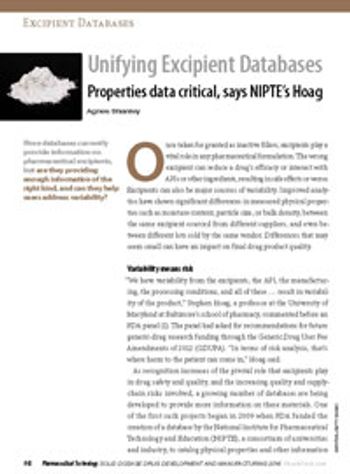
Stephen Hoag, a professor at the University of Maryland (Baltimore), and a member of the National Institute of Pharmaceutical Technology and Education (NIPTE) offers a brief update on issues, and NIPTE’s database project.
Matt Richardson of Capsugel and Michael Morgen of Bend Research, discuss improvements and results that have been seen in the second generation of hydroxypropyl methyl cellulose (HPMC) materials.
And so tax benefits doth make Irishmen of us all…

PTSM: Pharmaceutical Technology Sourcing and Management
Analytical laboratory equipment adapts for new realities of downsizing, outsourcing, and speed demands.
Supply-chain success is measured by how effectively new medications reach patients, and how swiftly manufacturers can react to internal and external changes.
As specialty API outsourcing grows, manufacturers and contract development and manufacturing organizations are investing for the long haul.