

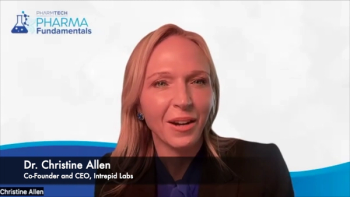
Dr. Christine Allen, Co-Founder and CEO of Intrepid Labs, and Dr. Andrew Lewis, Chief Scientific Officer of Quotient Sciences, explain how AI can be used in drug development to shorten development timelines.
Susan Haigney is lead editor of BioPharm International®.
Dr. Christine Allen, Co-Founder and CEO of Intrepid Labs, and Dr. Andrew Lewis, Chief Scientific Officer of Quotient Sciences, explain how AI can be used in drug development to shorten development timelines.
Increased regulatory flexibility for rare diseases, a critical shift toward automated, data-driven manufacturing, and strategic acquisitions in genetic medicine were some of the highlights this week.

Susan J. Schniepp, distinguished fellow at Nelson Labs, and Siegfried Schmitt, PhD, vice president, Technical at Parexel, provide advice on creating a robust out-of-specification procedure.
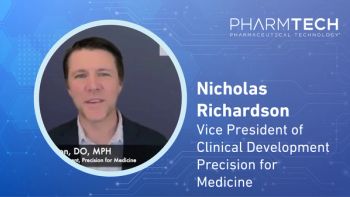
Nicholas Richardson, vice president of clinical development at Precision for Medicine, explains why radiopharmaceuticals are unique for patients with cancer and what makes them challenging to develop for those patients.

Deborah Smook, co-founder and co-owner of TurboFil Packaging Machines, explains some of the challenges involved with prefilled syringe manufacturing.
This week, the industry saw rapid technological integration on the factory floor, a strategic shift toward globalized development networks, and leadership upheaval at the FDA.
This week's roundup features coverage from Excipient World and INTERPHEX, including discussions on proactive risk management, the rise of advanced modalities, and the integration of flexible, tech-enabled infrastructure.
Visual inspection injectable products may be enhanced by the utilization of AI to analyze and link data to identify deviations, trends, or irregularities.
In part 4 of a multi-part series, David Schoneker, president, Black Diamond Regulatory Consulting, gives a preview of the workshop, Risk Based Framework for Development of New Excipient Products, at Excipient World 2026.
In part 3 of a multi-part series, David Schoneker, president, Black Diamond Regulatory Consulting, talks about the collaboration between the pharma company and the excipient supplier when different routes of administration are considered for an ingredient.
Virtual control groups, automation, novel excipients, and sustainability are some of the topics covered by PharmTech this week.
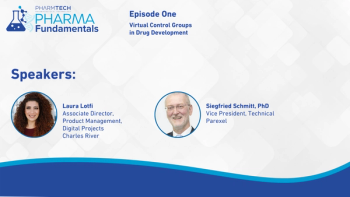
Alternative methods to the use of animals in pharmaceutical testing are becoming more used and accepted. Laura Lotfi of Charles River breaks down the basics of virtual control groups in drug development.
In part 2 of a multi-part series, David Schoneker, president, Black Diamond Regulatory Consulting, explains what drives the need for the development of a new excipient and how involved regulators are in the process.
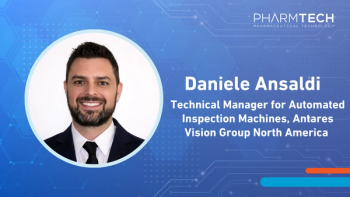
Daniele Ansaldi, technical manager for Automated Inspection Machines at Antares Vision Group North America, outlines some of the challenges of performing visual inspections on prefilled syringes.

The industry is feeling the push to modernize facilities and manufacturing processes.

Peter Makowenskyj, senior director of Design Consulting at G-CON, and Beata Sweryda-Krawiec, associate director at Boehringer-Ingelheim, discussed trends influencing the design of pharmaceutical manufacturing facilities during a Quick Fire Learning Lab at INTERPHEX 2026.

Panelists at INTERPHEX 2026 talked about the move to hybrid modeling for process development and the barriers to the adoption of artificial intelligence in pharmaceutical manufacturing.

Winners in 8 categories were announced at ISPE’s Europe Annual Conference.
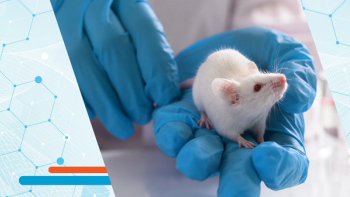
The agency is celebrating the achievement of key first year goals in implementing the Roadmap to Reducing Animal Testing in Preclinical Safety Studies.
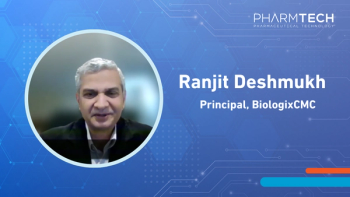
Ranjit Deshmukh, Principal, BiologixCMC, discusses how contract manufacturers can optimize their processes and plan for the future by optimizing facility design.
Rohan Kumar, laboratory analyst at CS Analytical, discusses how sustainability in pharmaceutical packaging can be improved.
This week, PharmTech discussed the use of AI in real-time monitoring, a strategic collaboration in radiopharmaceutical development, and navigating regulatory hurdles.
In part 1 of a multi-part series, David Schoneker, president, Black Diamond Regulatory Consulting, explains the difference between a new excipient and a novel excipient and what goes into developing a new excipient.
This week, PharmTech discussed proactive, data-driven contamination control, solving manufacturing hurdles, and the market entry of complex generics and biosimilars.

Malav Parikh, director, Quality Risk Management, Global Quality Compliance and Systems, Takeda, spoke with PharmTech about efforts in anticounterfeiting and the use of predictive modeling to validate transport conditions.
The industry is seeing a shift toward integrated process intelligence and new regulatory pathways.
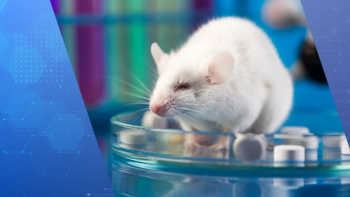
The agency has issued a draft qualification opinion on a new preclinical research methodology.

During its March 2026 meeting, the agency’s Committee for Medicinal Products for Human Use approved treatments for Bacillus Calmette-Guérin unresponsive non-muscle invasive bladder cancer, relapsed extensive-stage small cell lung cancer, activated phosphoinositide 3-kinase delta syndrome, and oedema of cardiac, renal, hepatic origin, and hypertension in children.
This week, three core themes have emerged: the digital transformation of quality systems through AI and hybrid cloud architectures; the pursuit of supply chain resilience via onshoring and advanced mapping; and a regulatory push toward real-time data and flexible approval pathways.
Tony Lakavage, USP, outlines pharma disruptions, pricing shifts, supply chain risks. As well as greening standards to build a resilient supply chain.