


PharmTech spoke with Tara Dougal, event director for pharma at Informa Markets, about what’s new for CPHI Milan this year, including 4 new zones and a Sustainability Summit.
Susan Haigney is lead editor of BioPharm International®.
PharmTech spoke with Tara Dougal, event director for pharma at Informa Markets, about what’s new for CPHI Milan this year, including 4 new zones and a Sustainability Summit.
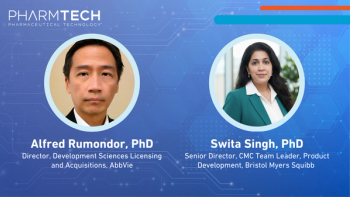
In a preview of their panel discussion at AAPS PharmSci 360 2026, Alfred Rumondor, PhD, AbbVie, and Swita Singh, PhD, Bristol Myers Squibb, discussed how CMC review practices are evolving and what that means for manufacturing strategy.

Robert Holt, PhD, associate director, Pharmaceutical Science, digiM Solution, discusses microstructure intelligence in more detail in part 2 of this preview of the company’s keynote presentation at AAPS PharmSci 360.

The finalists for the 2026 CPHI Pharma Awards span 15 categories including API development, digital transformation, manufacturing, supply chain, sustainability, and leadership, with winners revealed October 6 at CPHI Milan.
In August 2026, Heidi Overton was nominated for FDA commission, and a wave of oncology and neuro drugs were approved.
This week’s PharmTech.com content covered AI agent authority, hold-time and nitrosamine risk frameworks, biologics formulation, 3D bioprinting, and major oncology and dealmaking news.
In part 2 of his overview on hold times in biopharmaceuticals, Robert Dream details the regulations that govern hold times and how to mitigate risks that can occur during hold times.
In part 2 of his overview on hold times in biopharmaceuticals, Robert Dream details the regulations that govern hold times and how to mitigate risks that can occur during hold times.

In this episode of Ask the Expert, Susan J. Schniepp, distinguished fellow with Nelson Labs, and Siegfried Schmitt, PhD, vice president, Technical, with Parexel, clear up some of the confusion about what does and does not need to be complied with regarding standards set by international pharmacopeias.
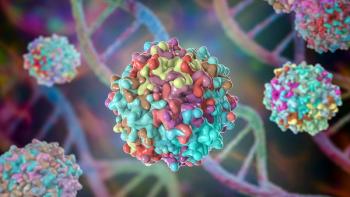
The collaboration will use Andelyn’s viral vector process to produce clinical-grade material for an upcoming gene therapy trial.
This week, a $2.3 billion manufacturing campus and a new fill-finish platform signal capacity is crucial; AI in pharma is still evolving; and CPHI Milan previews a new Sustainability Summit.
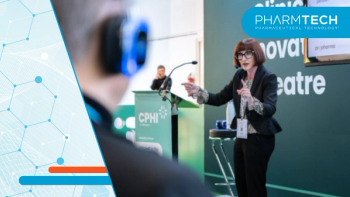
This year’s conference agenda includes more than 260 industry experts, a new Sustainability Summit, and zones targeting AI, cold chain, and labeling.
This week’s content included Moderna's mRNA flu approval, CMO governance tips, OSTP’s deregulation push, a $2 billion oncology license, and July's regulatory wrap-up.

The genetically modified oncolytic viral therapy, used in combination with nivolumab, was approved by the agency after data showed 1 in 4 patients responded to treatment.
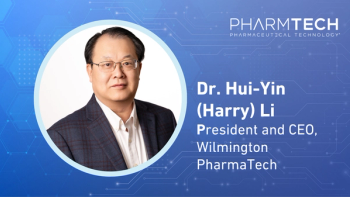
PharmTech spoke with Dr. Hui-Yin (Harry) Li, president and CEO of Wilmington PharmaTech, about steps that should be taken to build a productive relationship between sponsor and contract organizations.
Modernizing infrastructures, record drug approvals, and harmonization were all positive regulatory advancements in July 2026.
Content on PharmTech.com this week showed that while AI is being utilized in drug discovery, manufacturing execution still lags behind. However, manufacturers are rethinking where and how they build capacity, transfer technology, and monitor quality in real time.
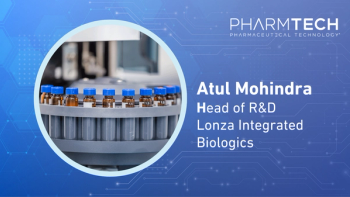
Atul Mohindra, head of R&D at Lonza Integrated Biologics, spoke with PharmTech about some of the recent advancements in analytical techniques for biopharmaceutical development and manufacturing.
This episode of Pharma Fundamentals provides an introduction to hold times in biopharmaceutical manufacturing and how they differ from hold times in small-molecule drug manufacturing.
This episode of Pharma Fundamentals provides an introduction to hold times in biopharmaceutical manufacturing and how they differ from hold times in small-molecule drug manufacturing.
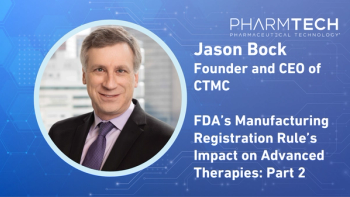
In part 2 of this 2-part interview, Jason Bock, founder and CEO of CTMC provides input on how the FDA's proposed manufacturing registration rule may impact personalized therapies.

In part 1 of this 2-part discussion, our panelists explain how to structure a tech transfer package, handle gaps in process understanding, and qualify analytical methods.
AI is reshaping discovery, manufacturing, and supply chain routing. Manufacturers are investing in capacity and resilience.
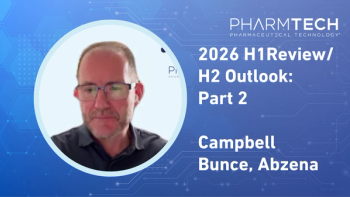
Campbell Bunce, chief scientific officer at Abzena, provides an update on the momentum in antibody-oligonucleotide conjugates development and the operational pressures shaping CDMO/CRO strategy for the rest of 2026.
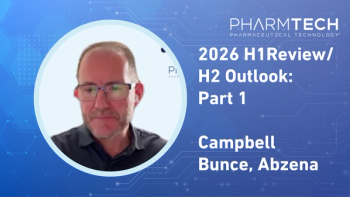
Campbell Bunce, chief scientific officer at Abzena, revisited his 2026 industry predictions on the direction of the biologics and bioconjugate market and gives an update on ADCs.

Susan J. Schniepp, distinguished fellow with Nelson Labs, and Siegfried Schmitt, PhD, vice president, Technical, at Parexel, explain a company’s regulatory affairs department is subject to inspections by regulators and should, therefore, be prepared.
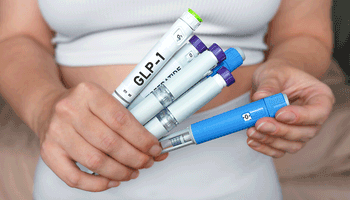
Novo Nordisk’s complaint contends that Lilly's campaigns leave out information about the most effective injectable doses of Wegovy (semaglutide) and Ozempic (semaglutide) currently on the market.
The use of artificial intelligence is facing harder questions of governance and data quality, and regulators in the United States and the European Union are streamlining pathways to market.

EMA and EISMEA have formalized their cooperation through a work program aimed at helping small biopharma and medtech innovators engage with EU regulatory requirements earlier in development, potentially reducing late-stage manufacturing and quality problems for complex modalities.
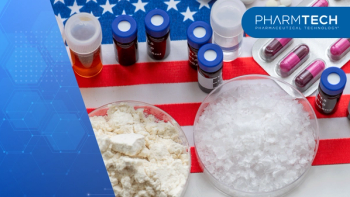
A proposed rule by the agency would create a streamlined registration pathway for advanced distributed manufacturing establishments.