Maggie Saykali, Cefic, reviews how the EU’s proposed Critical Medicines Act aims to curb supply dependence and shortages by reforming drug procurement.

Associate Editorial Director
Maggie Saykali, Cefic, reviews how the EU’s proposed Critical Medicines Act aims to curb supply dependence and shortages by reforming drug procurement.

Eva-Maria Hempe, NVIDIA, explains that accelerated computing, data governance, and “lab in the loop” are key to bio/pharma’s AI strategy for transforming drug discovery and R&D.
The 100% tariff on imported drugs will pressure pharma companies to build manufacturing sites in the US or face significant costs.

In the first-ever “Two-Minute Mysteries: BioPharma Stories,” Agilent’s Ken Boda shares the mystery of a low reading.
The week's pharma news includes FDA warnings for Lilly and Novo, new drug approvals for MASH and edema, and a look ahead at CPHI Europe.

This potential shift has profound implications for regulatory strategy, transparency, and internal quality systems, directly impacting the core concerns of industry professionals.
Pharma embraces AI for quality, supply chain, and training; navigates FDA compliance; and develops new treatments like an epinephrine nasal spray.

FDA experts at PDA 2025 urges pharma to adopt holistic quality systems, strengthening 483 responses & post-warning letter remediation for compliance excellence.

Glenn Wright previews the 34th PDA Regulatory Conference, spotlighting AI, quality culture, FDA trends, and collaboration shaping industry progress.
The PDA Regulatory Conference convenes more than 30 FDA experts to discuss cGMP excellence, compliance trends, and regulatory outlook, offering crucial insights for pharma manufacturing professionals.
Aficamten beat metoprolol for oHCM, EMA/WHO hit 10 yrs, Oxford and EIT collaborated on AI vaccine, Offit's FDA exit stirred policy, and Pistoia set agentic AI rule.
Paul Offit removed from FDA vaccine panel as RFK Jr. reshapes US immunization policy, raising concerns for bio/pharma and regulation.
Cereno's PAH drug got FDA Fast Track. Novo plant cited for contamination. Gilead's HIV PrEP approved in EU. Nelson Labs expanded testing.

At a critical turning point in the adoption of digital tools across the bio/pharma industry, we want to hear from industry professionals on where things actually stand.
This video clips offers topline findings from our survey of nearly 90 bio/pharma professionals on the impacts of Trump-era tariffs and trade policy.
FDA cites Indiana drug plant for contamination, pest issues, and unresolved equipment failures, raising concerns over pharma manufacturing quality.
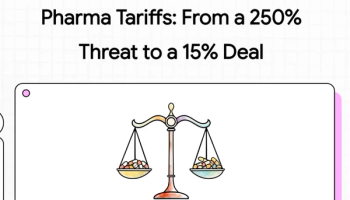
The US-EU pharma tariff cap has been finalized at 15%, impacting manufacturing, supply chain, and quality and promoting domestic production and resilience.
Survey responses indicate that bio/pharma faces tariff-driven rising costs and supply strain, with firms aiming to boost compliance and diversification and seeking stable trade and R&D support.

Dave Miller, PhD, explains how early formulation planning, novel platforms, and tailored approaches secure long-term protection against generics.
Dave Miller, PhD, explains how environmental audits, waste reduction, and supply chain security are reshaping priorities in pharmaceutical manufacturing.
Dave Miller, PhD, discusses how shifting drug manufacturing to domestic CDMOs can improve quality, reduce rework, and enhance long-term efficiency.
Dave Miller, PhD, explains how a development-first approach, scientific depth, and regulatory trust build lasting partnerships in the CDMO space.
Dave Miller, PhD, discusses how tailored solutions, trust, and lifecycle planning are redefining partnerships in bio/pharmaceutical development.

FDA reinstates Vinay Prasad to lead CBER as gene therapy safety concerns spotlight regulatory challenges in biotech manufacturing.

Help us get a better picture of how new tariffs and trade policy have impacted you and your organization.

Prasad’s short FDA tenure brought stricter review standards for gene and COVID vaccines, sparking biotech concern and political backlash.

Cross-functional trade compliance planning is critical as pharma braces for broad 232 tariffs and shifting United States-China-India supply dynamics.

Many companies face FDA complete response letters due to ongoing chemistry, manufacturing, and controls, or CMC, and analytical issues despite early regulatory guidance. Review key risk points in analytical and tech transfer to better ensure commercial readiness.

US pharma firms face higher drug costs, delayed launches, and compliance risks from proposed sectoral tariffs, prompting urgent supply chain reviews.