
Industry experts talk with PharmTech, Pharmaceutical Commerce, Applied Clinical Trials, and Pharmaceutical Executive about FDA's CNPV pilot program.

Associate Editorial Director
Industry experts talk with PharmTech, Pharmaceutical Commerce, Applied Clinical Trials, and Pharmaceutical Executive about FDA's CNPV pilot program.

With big moves and investments being made via pharma outsourcing, it’s important for industry professionals to stay on top of trends and innovations.

Five experts in the bio/pharmaceutical industry explore the FDA Commissioner’s National Priority Voucher (CNPV) pilot program.

Five bio/pharmaceutical industry experts discuss the impacts of the FDA Commissioner’s National Priority Voucher (CNPV) pilot program.

Industry experts weigh in on the CNPV's demands for flawless CMC pre-submission, affordable pricing, expanded communication, and more.


FDA’s CNPV pilot aims to speed drug reviews but raises questions about safety trade-offs, resource strain, and unclear incentives for sponsors.
Take our survey to voice your opinions on the bio/pharma industry impacts of the FDA Commissioner’s National Priority Vouchers program.
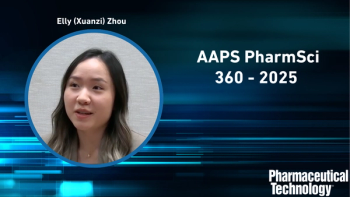
At AAPS PharmSci 360 2025, Elly Zhou says digital twins helped forecast the effects of drugs on human drugs via a digital control arm.

At AAPS PharmSci 360, Xialing Li, PhD, says 3D-printed budesonide tablets achieve precise, delayed delivery to the ileum for IgA nephropathy, lowering in vivo variability.

At AAPS PharmSci 360, Xuanzi Zhou says digital twins accurately predict ex vivo lung function, revealing therapeutic effects missed by conventional preclinical drug testing.

Siddhant Sojitra, Alexion, defines in an AAPS PharmSci 360 2025 presentation an agitation model to reliably test stability for early-stage biologics.

In a poster presentation at AAPS PharmSci 360, by Dineli Ranathunga, PhD, indicates that AI/ML in-silico modeling can accelerate poorly soluble drug development.
AI is transforming pharma R&D, bioanalysis, and manufacturing. The industry faces intense competition (obesity wars) and FDA regulatory instability.

Analysis of FDA 505(b)(2) data (2024–2025) shows 69 drug reformulations, with a focus on enhancing stability and patient comfort, utilizing new dosage forms, and innovative strategies.

With pharmaceutical tariffs fundamentally impacting costs, global supply chains, and more, it’s important for industry professionals to understand the basics.
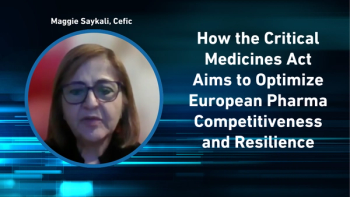
Maggie Saykali reviews the key points of her CPHI Frankfurt presentation on the potential game-changing opportunities of the Critical Medicines Act.

J.D. Mowery, Bora, says global sustainability standards are good, AI implementation demands data cleansing, and outsourcing must mature.
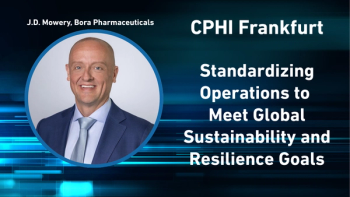
J.D. Mowery discusses boosting pharma supply resilience through localized manufacturing, AI innovation, and critical regulatory standardization.
J.D. Mowery, Bora, says tariffs localize biopharma supply chains, the "biotech freeze" mandates robust data, and AI rapidly optimizes operations.
Maggie Saykali, Cefic, explains that Western pharma vulnerability stems from market loss to Asia, caused largely by short-sighted offshoring due to environmental costs.


Gustavo Ferrer, MD, explains how AI accelerates drug development and manufacturing, streamlining clinical data into actionable pharma insights.

A panel at CPHI Frankfurt discussed how AI is transforming pharma talent, necessitating rapid upskilling, bias mitigation, and regulatory changes.
Nigel Langley of gChem stresses excipient innovation, safer solvents, and supply chain resilience for pharma’s future in part 2 of a 2-part interview related to his presentation at CPHI Europe 2025.

Eva-Maria Hempe, NVIDIA, says AI collaboration optimizes life science research via routine automation, freeing human experts for complex strategy, ethics, and exploring scarce data.
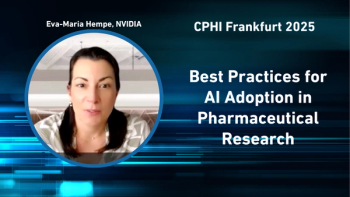
Eva-Maria Hempe, NVIDIA, says AI platforms must integrate R&D data, overcoming silos, with adoption demanding a centralized strategy and change management.
Maggie Saykali, Cefic, emphasizes the importance of competitiveness and innovation for European manufacturers to create added value and maintain environmental standards.
Nigel Langley of gChem discusses the company’s DMSO, proactive pharma strategies, and more in part 1 of a 2-part interview related to his presentation at CPHI Europe 2025.
Eva-Maria Hempe, NVIDIA, says bio/pharma must centralize AI strategy, tackle silos, prioritize process integrity, and balance quick wins with long-term drug design goals.