

Ginkgo Bioworks has acquired StrideBio's AAV capsid discovery and engineering platform and has formed a partnership with WARF for development of next-gen cell therapies.
Feliza Mirasol is the science editor for Pharmaceutical Technology and Pharmaceutical Technology Europe.
Ginkgo Bioworks has acquired StrideBio's AAV capsid discovery and engineering platform and has formed a partnership with WARF for development of next-gen cell therapies.
The acquisition of Cell Systems will bolster AnaBios’ portfolio of human tissue and cells for use in drug discovery.

Takeda received approval in Japan for a subcutaneous injection formulation of Entyvio (vedolizumab) for treating ulcerative colitis.

CDMO Exothera and biotech company Remedium are joining forces to scale up the manufacturing process for Remedium’s lead gene therapy candidate for treating osteoarthritis.
Takeda plans to build a new facility in Osaka, Japan, for the manufacture of plasma-derived therapies.
Under a new partnership, Invitae and Deerfield Management will harness genetic and clinical testing data from patients to discover potential novel therapeutics for treating rare diseases.

Sanofi intends to cut its US list price for Lantus (insulin glargine injection) by 78% and cap out-of-pocket costs at $35 for all patients with commercial insurance.
BioNTech will receive an exclusive worldwide license from OncoC4 to develop and commercialize its anti-CTLA-4 mAb candidate for solid tumor indications.
Sartorius BIA Separations and Teknova will collaborate to combine their technologies in an effort to streamline the downstream purification process.
Samsung Biologics plans to invest more than ₩1.9 trillion (US$1.5 billion) in the new Incheon, South Korea, facility, which will hold a manufacturing capacity of 180,000 L.
Sandoz, a Novartis division, is expected to invest at least $400 million to build a new biologics manufacturing facility in Lendava, Slovenia, to support growing demand for biosimilars.
Under a technology licensing agreement with Bhami Research Laboratory, Catalent intends to develop formulations that will allow for the delivery of high-concentration biologics subcutaneously.
The collaboration between Genuv and Celltrion will utilize Genuv's proprietary mouse platform for antibody discovery.

FDA has approved Acadia Pharmaceuticlas’ Daybue (trofinetide), the first treatment for Rett syndrome, a rare genetic disorder.
FDA has approved Pfizer’s ZAVZPRET (zavegepant), a new nasal spray treatment for migraine.

As the development of increasingly complex biologics grows, more robust bioassays are required to accurately characterize these molecules.
PK/PD studies are a crucial tool in the successful development of biologics.
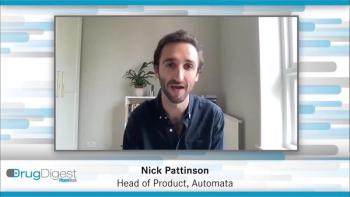
Pharmaceutical Technology editors interview an automation expert from Automata on the benefits of automating entire workflows in analytics versus automating only specific pieces of equipment or only certain processes.
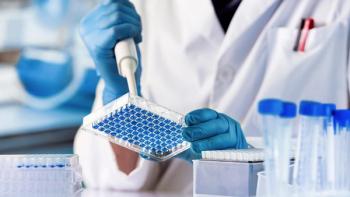
Although well known in R&D, PK/PD studies are an equally powerful tool for promoting successful biologic drug development.
A look back at challenge and innovation highlights in 2022 for oral solid dosage forms, this podcast episode will review industry experts’ takes on factors driving the evolution of OSD forms as well as innovations in APIs, technology, and methodology.

An early drug candidate screening strategy should incorporate clear targets to lessen late-stage failure.
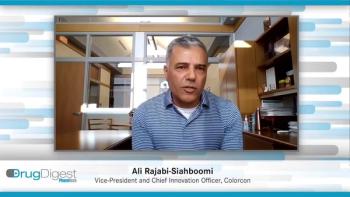
Pharmaceutical Technology editors interview oral solid dosage development experts from Syntegon and Colorcon, with discussions centered on continuous OSD production, containment safety, and authentication at the dose level.
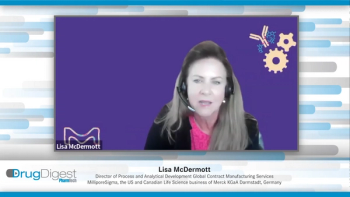
In this exclusive Drug Digest video, experts from Roche and MilliporeSigma divulge factors that could influence an organization to pursue specific biomolecules for development.
In this episode of the Drug Solutions Podcast, Feliza Mirasol, science editor, discusses the changing parameters for oral solid dosage forms as driven by APIs and new chemical entities with Deepak Thassu, vice-president R&D and Regulatory Submission, LGM Pharma, and Marco Gil, senior vice-president of Sales & Marketing, Hovione.

The struggle to implement continuous biomanufacturing at GMP level is slowly advancing.
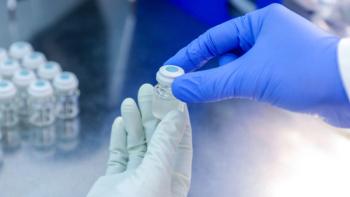
The need for sustainability and early considerations of a lyophilization strategy grow more pertinent on the back of growing biologics volume.
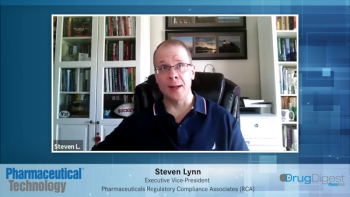
In this episode of Drug Digest, Pharmaceutical Technology editors, Felicity Thomas and Feliza Mirasol, examine the topic of emerging therapies in more detail, covering subjects such as the challenges of scale, the potential benefits of drug delivery innovation, importance of early analytical studies, the evolution of the regulatory landscape, and differences between regional regulatory requirements.
In this episode of the Drug Solutions Podcast, Feliza Mirasol, Pharmaceutical Technology’s science editor, discusses technologies enabling biologics and emerging therapies manufacturing and development with Barry Holtz, PhD, chief scientific officer of Phylloceuticals, and Professor Yaakov Nahmias, founder and chief scientific officer, Tissue Dynamics and founder and president, Future Meat Technologies.

Resolving operational bottlenecks makes mAb manufacturing more efficient.
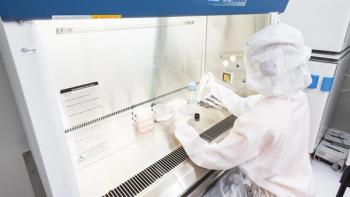
Testing cleanroom garments while in use and during daily cleanroom operations is vital for contamination control.