Pharmaceutical Technology's In the Lab eNewsletter
Synthetic biology can help researchers circumvent the challenges of traditional methods of antibody generation.
Pharmaceutical Technology's In the Lab eNewsletter
Synthetic biology can help researchers circumvent the challenges of traditional methods of antibody generation.

Pharmaceutical Technology's In the Lab eNewsletter
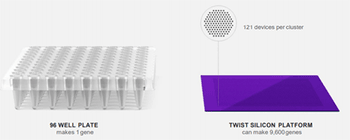
The partners will collaborate on developing scale-up chip-based technology to enable commercial-scale production of a third-generation DNA synthesis platform.
Pharmaceutical Technology's In the Lab eNewsletter
The license gives Daiichi Sankyo access to ERS Genomics’ genome-editing technology for internal R&D initiatives.
Pharmaceutical Technology's In the Lab eNewsletter
The company’s new Milliflex Oasis System provides enhanced result reliability, increased productivity, and advanced traceability.
Pharmaceutical Technology's In the Lab eNewsletter
Otsuka will use PhoreMost’s phenotypic screening platform to identify new targets for drug development, with a focus on gene therapy.
Pharmaceutical Technology's In the Lab eNewsletter
The system is the first SPR device to combine digital microfluidics, artificial intelligence, and nanotechnology into one instrument.
Pharmaceutical Technology's In the Lab eNewsletter
RedySmart mass flow meters and controllers and RedyCompact flow meters and regulators use micro-electromechanical systems (MEMS) technology and complementary metal oxide semiconductor sensors to improve OEM applications and replace antiquated rotameters.
Pharmaceutical Technology's In the Lab eNewsletter
The evaporators are designed to boost evaporation and lyophilization results while remaining environmentally friendly and maintaining high-throughput and speed.
Pharmaceutical Technology's In the Lab eNewsletter
The new 1800-m2 building houses more than 50 employees and features non-GMP laboratory space and a GMP analytical laboratory.

Pharmaceutical Technology's In the Lab eNewsletter
Concentrating on symptoms instead of root causes locks teams into a corrective, rather than precautionary, approach.