

Vibha Jawa, PhD, chief scientific officer at EpiVax, explains why the need for animal studies varies by modality and what it takes for organ-on-chip and other human-relevant models to replace these studies in IND-enabling toxicology work.
Vibha Jawa, PhD, chief scientific officer at EpiVax, explains why the need for animal studies varies by modality and what it takes for organ-on-chip and other human-relevant models to replace these studies in IND-enabling toxicology work.
Sanjay Konagurthu, PhD, senior director of Science and Innovation at Thermo Fisher Scientific, explains what teams need to do to ensure the usefulness of AI and what strides have been made with AI in regulatory submissions.
Pauric Bannigan, Intrepid Labs, explains where AI speeds formulation decisions, why data is the bottleneck, and how active learning trains models with far less data.

The new initiative aims to apply traceable AI and science to expand care worldwide by translating discovery into tools that accelerate drug development.
Sanjay Konagurthu, PhD, senior director, Science and Innovation at Thermo Fisher Scientific, provides an update on the progress of AI and machine learning used in drug delivery.
Stephanie Johnson, Pfizer, explains how off-platform triggers, single-owner risk registers, and traceable prior knowledge keep protein formulation programs on track.
Stephanie Johnson, Pfizer, discusses how platform formulations moved 2 Pfizer protein programs to IND in 8 months by redistributing, not removing risk.

Shubhajit Paul, a senior research fellow in Boehringer Ingelheim’s Department of Material Analytical Sciences, spoke with PharmTech at AAPS PharmSci 360 to explain how tabletability prediction can be improved for roller-compacted formulations.
Ravi Kiran Kaja, PhD, USP, explains what harmonization of extractables and leachables standards looks like in practice.
Ravi Kiran Kaja, PhD, explains how USP’s industry-wide initiative aims to build confidence in trace-level extractables and leachables results.
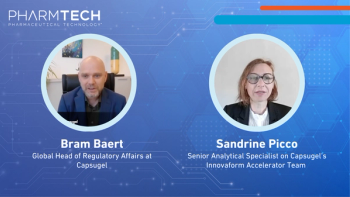
Mitigating nitrosamine risk requires assessing each product individually, says Bram Baert, Global Head of Regulatory Affairs at Capsugel, and Sandrine Picco, Senior Analytical Specialist on Capsugel's Innovaform Accelerator Team, in this interview with PharmTech.
Jason Bertola, executive director of Commercial Development for the Advanced Synthesis Platform at Lonza in North America, explains the demand for spray drying and the hurdles involved with scale up, in an interview with PharmTech.

The company is showcasing new development solutions and advanced digital technologies including its new OSD Express and Steriles Express solutions for drug development.
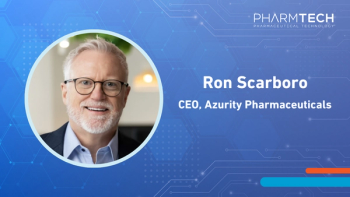
Ron Scarboro, Azurity Pharmaceuticals, explains when formulation robustness justifies added cost and which post-approval quality and supply metrics teams can track.

The winners of the CPHI Pharma Awards 2026 include a neurodegeneration platform, a track-and-trace packaging innovation, a enzymatic mRNA manufacturing technology, and a cell-free enzymatic biomanufacturing platform.
Capsugel's Bram Baert and Sandrine Picco argue that chasing zero nitrite in pharmaceutical excipients is often impractical and costly. They recommend setting scientifically justified, risk-based limits and consistently staying below them.
Ron Scarboro, Azurity Pharmaceuticals, claims drug reformulation that removes patient barriers must preserve efficacy, urging early cross-functional team alignment.
Ron Scarboro, Azurity Pharmaceuticals, explains why real-world usability belongs at product definition and how post-launch feedback should guide drug formulation.
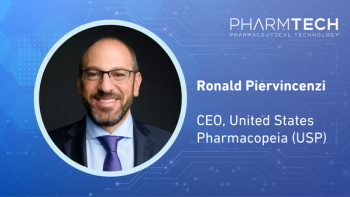
Ronald Piervincenzi, USP, explains why drug supply resilience needs a system approach, from procurement benchmarks to regulatory capacity building.

Gene manufacturing platforms, patient-centric formulations, contract services, packaging innovations, and sterile filling lines are in the spotlight at CPHI Milan 2026.
Ronald Piervincenzi, USP, explains why drug supply resilience needs a system approach, from procurement benchmarks to regulatory capacity building.

Michael Levy, senior vice president, Digital & Innovation, USP, explains the digital supply chain in a preview of his upcoming CPHI Milan panel presentation, The Next Phase of Pharma Supply Chains.
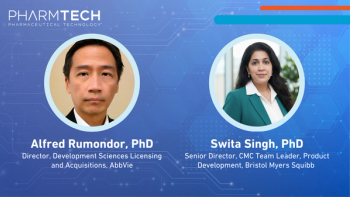
In a preview of their panel discussion at AAPS PharmSci 360 2026, Alfred Rumondor, PhD, AbbVie, and Swita Singh, PhD, Bristol Myers Squibb, discuss the implementation of risk-based approaches for CMC.
Ronald Piervincenzi, USP, urges drugmakers and purchasers to act on supply chain resilience to curb drug shortages and shape better policy.
Ronald Piervincenzi, USP, explains why manufacturers should act now and how benchmarking could reward reliable generic drug suppliers.

The Leadership Summit will bring senior pharma executives together to discuss supply chain resilience, medicine security, and manufacturing capacity amid growing geopolitical fragmentation.
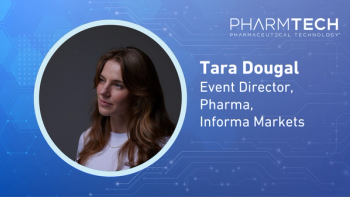
PharmTech spoke with Tara Dougal, event director for pharma at Informa Markets, about trends impacting the pharmaceutical industry and how CPHI Milan is addressing these areas this year.
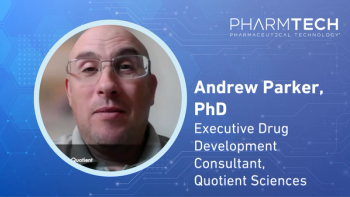
Andrew Parker, PhD, executive drug development consultant, Quotient Sciences, explains how AI is integrated into pharmaceutical development.

PDA/FDA 2026 session maps the GMP audit lifecycle, root cause to CAPA closure, plus a local vs. above-site decision framework and two case studies.

Lori Dingledine, QC Director Microbiological Control and GTIC Operations at Genentech, provided input on the regulations surrounding raw material manufacturing and use for ATMPs in a presentation at the 2026 PDA/FDA Joint Regulatory Conference.