

JIN-A02 is a fourth-gen EGFR inhibitor targeting EGFR C797S resistance in lung cancer, showing brain activity and tumor regression.
JIN-A02 is a fourth-gen EGFR inhibitor targeting EGFR C797S resistance in lung cancer, showing brain activity and tumor regression.

Suzanne Jansen, MSc, PharmD, ICON, says early-phase clinical success depends on flexible, simple formulations that support wide dose ranges, matching placebos, and robust stability.

New disease-modifying agents are being evaluated in the clinic that could change the course of treatment for Alzheimer’s disease patients.

Fujifilm’s £400m (US $547m) Teesside expansion adds 19,000L single-use capacity and an innovation center to boost global biopharma development.

IMA Group acquired ProSys to expand its global aseptic and containment portfolio for biopharmaceutical manufacturing.

Dr. Jennifer Levin Carter, CEO and founder of Medzown, shares her experience as a CEO in the biotech industry and gives insights on how women can succeed in the pharmaceutical industry.

Márcio Temtem, Hovione, discusses how to tackle pharma complexity via regional growth in the US, Ireland, and Portugal, using digital tools to accelerate development.

PharmTech spoke with women working in the pharmaceutical industry about the innovations they are seeing in bio/pharma and the role women play in the development of critical treatments for patients.

Merck KGaA optimized cooling by 21% at its Darmstadt site using autonomous AI, aiding sustainability without system changes.

Márcio Temtem, Hovione, discusses how his company integrates modular hardware and modeling software to accelerate pharmaceutical R&D and optimize manufacturing processes.

PharmTech spoke with Klaudia Lechowska, Business Development Specialist at Mabion Biologics CDMO, about how women working in STEM fields bring unique perspectives to the important work of rare disease treatment.

Takeda and Iambic partner to use digital tools for discovery. NeuralPLexer helps move oncology candidates toward clinical trials.

Fresenius Kabi and Phlow partner to onshore US epinephrine production, securing the domestic supply chain for essential medicines.

FDA granted priority review for Pfizer’s Marstacimab, a weekly subcutaneous anti-TFPI to treat pediatric and inhibitor hemophilia.

This week, we look at a cross-industry shift toward integrated automation, domestic resilience, and a critical focus on the human talent pipeline.

Integrated CDMO networks streamline complex drug development across advanced modalities like ADCs.

Marcio Temtem, vice president, Strategic Business Management, Hovione, addresses molecule complexity, speed, and regionalization via integrated manufacturing.
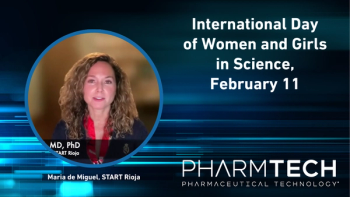
Oncologist Dr. Maria de Miguel, MD, PhD, MBA, Director, Clinical Research for START Rioja, spoke with PharmTech about the importance of STEM education in early phase drug development.
Strategic outsourcing utilizes external expertise to accelerate the biopharma pipeline, integrating specialized workflows that drive efficiency from discovery through early clinical trials.

In part two of this four-part series regarding rare diseases, the author examines how economic and structural forces are driving an access gap.

ACG’s Shirwal site is the first pharmaceutical packaging site in the WEF Lighthouse Network, using digital tools to cut defects and boost sustainability.

PharmTech spoke with Elisabeth Gardiner, chief scientific officer at Tevard Biosciences, about how hands-on, early exposure to STEM fields can demystify complex concepts.

Cellares is partnering with Stanford Medicine to automate gene-edited stem cell therapy for HIV and more than 19 rare diseases.
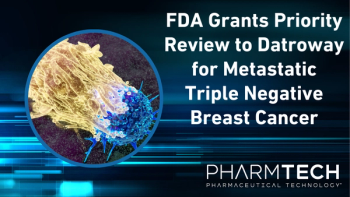
FDA has granted priority review to AstraZeneca's Datroway for the first-line treatment of metastatic TNBC treatment.

Walid Kamoun, PhD, and Alex Philippidis discuss AI’s Power to Lower Costs while Elucidating Tumor Progression, NVIDIA and Eli Lily’s Deal, and Revolution Medicine’s lack of a Deal.

PharmTech spoke with Dr. Stacy Lindborg, president and CEO of IMUNON, about her experience at IMUNON, which is developing a novel DNA-based approach to treat ovarian cancer.
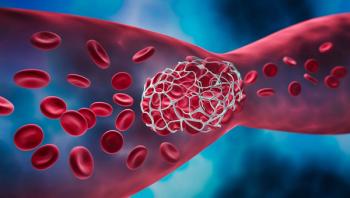
The companies’ “Change the Target. Change What’s Possible” targets the potential of Factor XIa inhibition in the development of treatments for thromboembolic disease.

Anthony Lakavage, executive vice president and head of Global External Affairs at USP, talks about how sustainability efforts are more than just protecting the environment and how pharmaceopeias are participating in the endeavor.

EMA recommends Kygevvi for rare thymidine kinase 2 deficiency. It is the first authorized treatment for this disease.

The EMA recommends a GLP-1 for MASH, a couple rare disease medications, and a flu vaccine among six new medicine and nine extension recommendations.