
ACG Engineering, which is a part of the ACG Group, has announced its acquisition of a German-based pharma processing equipment provider, Xertecs.
ACG Engineering, which is a part of the ACG Group, has announced its acquisition of a German-based pharma processing equipment provider, Xertecs.
Exscientia has revealed that Sanofi will be advancing an innovative bispecific small-molecule project that was discovered through the companies’ modality collaboration.
The latest research from GlobalData has revealed that more than two-thirds (69%) of CMOs high-containment facilities are based in the top five European Union countries and Switzerland.
Nemera has acquired a healthcare focused design and innovation consulting firm in Chicago, IL, Insight Product Development, strengthening its presence in North America.
Industry has responded favorably to the recent announcement from the UK's PM that immigration rules should be developed to ensure scientific talent is attracted to the country.
GNA Biosolutions has completed its latest round of Series C financing in which it raised US$13.5 million.
The European Commission has approved an extension of the use of Dupixent (dupilumab) within the EU to include patients aged 12 to 17 years old with moderate-to-severe atopic dermatitis.
The company is recalling the product because of potential microbiological contamination.
Optima Pharma opened a new assembly hall, the CSPE Center, that will give the company space to build complete, multi-story pharmaceutical manufacturing facilities.
Nephron Pharmaceuticals is partnering with Clemson University to create a robotic solution for syringe-filling automation to enhance sterile manufacturing.
The companies have entered into a manufacturing agreement for the production of Phase III clinical trial material.
The agency is planning to clean out its drug listing records and urges companies to update any inaccurate active drug listing submission.
Spectrum Laboratory Products received an FDA warning letter after violations were found at its New Brunswick, NJ facility.
A New Jersey court upheld the validity of patent claims for Amgen’s anti-inflammatory blockbuster biologic, Enbrel (etanercept).
AskBio’s acquisition of Synpromics will improve the efficacy of its adeno-associated virus gene therapy vectors.
Using Alternating Tangential Flow in a 3000-L perfusion bioreactor, the company expects to reduce production time by up to 30%
The acquisition strengthens BioLife’s position as a supplier of disruptive, enabling solutions used for manufacturing, storage, and distribution of cell and gene therapies.
The new facility will manufacture biopharmaceutical products under cGMP conditions.
The acquisition expands Eurofins Genomics’ gene portfolio while bolstering Blue Heron’s production capabilities.
Ridge Properties LLC DBA Pain Relief Naturally is voluntarily recalling four lots of 4% lidocaine topical cream and liquid gel products due to microbiological contamination and incorrect potency.
Jack Bailey, president, US Pharmaceuticals, GlaxoSmithKline, will step down from his position at the end of 2019 and will be succeeded by a Merck KGaA executive.
The acquisition will expand BioIVT’s disease-state portfolio by volume and product range.
The new position will expand the company’s large-molecule and protein therapeutics services by partnering with biopharmaceutical clients who are navigating the large-molecule product development life cycle.
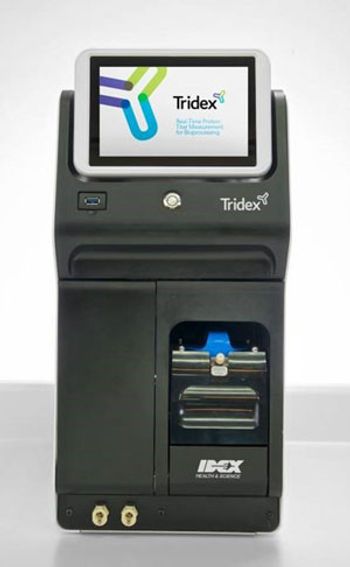
The Tridex Protein Analyzer from IDEX offers the ability to directly measure protein titer from a bioreactor in real time.
The acquisition will boost Bayer’s cell-therapy development programs, with an initial focus on neurology, cardiology, and immunology.
The facility will support gene therapy production and continued development of PTC’s pipeline of investigational medicines.
South Korea’s pharma/biotech space is projected to grow to $23.2 billion by 2022, and will likely attract foreign investment, according to a new market report by GlobalData.
The company has launched new services for mammalian cell bank manufacturing under GMP conditions.
The guidance answers questions about how the agency awards priority review vouchers to sponsors of treatments for rare pediatric diseases.
The guidance discusses clinical trial design features that can support approval of treatments of Fabry disease.