
The guidance addresses the development, analysis, and presentation of microbiology data during antibacterial drug development.
The guidance addresses the development, analysis, and presentation of microbiology data during antibacterial drug development.
The agency met to discuss its new temporary and permanent premises in Amsterdam.
Paratek has completed submission of two new drug applications for oral and intravenous omadacycline, a new antibiotic for pneumonia and skin infections.
Amgen plans to invest approximately $300 million in a new biomanufacturing plant in the United States.
New programs and initiatives by industry examine rising healthcare costs.
Pharmaceutical Technology's In the Lab eNewsletter
The company announced the winner of its 2018 Young Chemist Award.
Shire will receive exclusive license to develop and commercialize AB Biosciences' pan receptor interacting molecule program for autoimmune and inflammatory diseases.
Pharmaceutical Technology's In the Lab eNewsletter
Corning will become the exclusive supplier of CytoSMART's new cell counter device that simplifies mammalian cell counting.
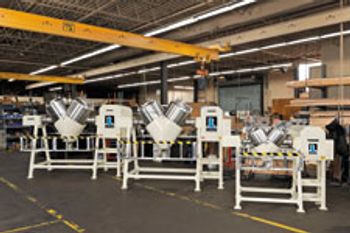
Ross, Charles & Son's Tumble Blenders now offer protective light curtains that provide automatic safety shutoff whenever an operator crosses a defined security boundary.
The NECC supervisory pharmacist at the center of the 2012 fungal meningitis outbreak was sentenced to 8 years in prison.
Hospitals form not-for-profit drug company to combat drug shortages and high prices.
The President described US drug costs as unfair and stated that prices will come down.
Pharmaceutical Technology's In the Lab eNewsletter
Federal agencies have partnered to develop a roadmap that offers a new framework for the safety testing of drugs and chemicals without the use of animals.
A collaboration between The Centre for Process Innovation and The Roslin Institute aims to develop commercially viable and scalable methods of producing biologics using transgenic animals.
FDA Commissioner Scott Gottlieb says FDA is committed to meet the challenges faced by the saline shortage during an aggressive flu season.
Cambrex invests in development and laboratory facilities and adds staff.
Avista Pharma's strengthens early phase drug development offerings with acquisition of Solid Form Solutions.
Biopharm industry veteran Ralf Otto named to lead development and manufacturing at Rentschler Biopharma.
FDA and industry weigh broader use of prior knowledge in biotechnology testing and production.
Pharmaceutical Technology's In the Lab eNewsletter
The new Acquity Arc Bio System by Waters is specifically engineered to enable efficient transfer and improvement of bioseparation analytical methods.
The acquisition will strengthen Sanofi's R&D strategy and expands its franchise for rare blood disorders.
A manufacturing disruption has led to an EpiPen shortage in Canada, which currently has no alternative auto-injectors available on the market.
EMA will be using temporary premises in the city while construction of the new building takes place, which is not ideal because it requires moving the agency's headquarters twice.
The companies will be integrated to form the newly-branded AGC Biologics, which will specialize in customized contract development and manufacturing organization services for the scale-up and cGMP manufacture of protein-based therapeutics.
The contract development and manufacturing organization has invested £30-million (US$42 million) at its Dundalk, Ireland site to offer expanded clinical trial services.
The company relocated its headquarters to Riverview, Florida.
Meissner Filtration Products has acquired PDC Aseptic Filling Systems, a supplier of aseptic filling systems and sealers, to expand Meissner's automated platform offerings.
Pharmaceutical Technology's In the Lab eNewsletter
Corning will feature its 3D bioprinting technology and tools to support 3D cell culture at booth #1029 during the SLAS 2018 conference on Feb. 3-7, 2018 in San Diego, CA.
Pharmaceutical Technology's In the Lab eNewsletter
The Fluent Gx Automation Workstation from Tecan is suited for a variety of clinical and regulated laboratory applications.
Pharmaceutical Technology's In the Lab eNewsletter
Formulatrix's Rover Laboratory Automation Platform to support sample preparation will be featured at booth #1335 during the SLAS conference in San Diego, CA, on Feb. 5-8, 2018.