





Meeting the Needs of Early-Phase Drug Sponsors with Highly Potent Active Pharmaceutical Ingredients (HPAPIs) in the Pipeline
ByCatalent
Webcasts
Webinar Date/Time: Tue, Aug 8, 2023 11:00 AM EDT
Accurately targeted immunotherapies through reliable neoantigen recognition enable personalized medicine development.

Activation and expansion are essential for success in both autologous and allogeneic therapies.

Continuous manufacturing and a quality-by-design development approach are a natural fit.

Webcasts
Webinar Date/Time: Tue, Aug 8, 2023 11:00 AM EDT

Thermo Fisher Scientific’s new tumoroid culture medium kit is designed to help cancer researchers better model the disease.
Eurofins Genomics Blue Heron’s novel mRNA synthesis service is designed for customizable applications.

Chime Biologics, Leads Biolabs, and BeiGene have formed a three-way collaboration to advance the development and global manufacturing of Leads Biolabs’ lead mAb candidate, LBL-007.

FDA’s new guidance on in-vitro permeation test studies published in October 2022 gives technical and statistical requirements for conducting these tests to compare topical generic drugs with their reference products.

Sample dilution, sensitivity, excipient interference, and containment are key issues that must be addressed.

Aenova has opened a new building for the production of highly potent APIs in Germany.

Sandbox AQ’s molecular simulation division is collaborating with companies like AstraZeneca and Sanofi to develop novel treatments for various disorders.

The new excipients manufacturing facility is expected to be completed in 2025.

Webcasts
Webinar Date/Time: Tue, Jul 25, 2023 9:00 AM EDT

Webcasts
Webinar Date/Time: Tuesday, June 27th, 2023 at 8am EDT | 1pm BST | 2pm CEST | 5am PDT Wednesday, June 28th, 2023 at 8am EDT | 1pm BST | 2pm CEST | 5am PDT Thursday, June 29th, 2023 at 8am EDT | 1pm BST | 2pm CEST | 5am PDT

invoX Pharma has made a second tranche of investment in pHion Therapeutics to support further development of next-generation mRNA vaccines.

Nanotech-based delivery technologies are receiving significant attention.

Webcasts
Webinar Date/Time: Wed, Jul 19, 2023 1:00 PM EDT
A partnership between Rentschler Biopharma and Ikarovec will support the accelerated development of novel gene therapies for the treatment of eye diseases.
The start of production of US engineering batches of NXC-201, a CAR-T cell therapy candidate in early clinical development, is the first step in transferring Nexcella’s existing manufacturing process to the United States.
Sandoz’s marketing authorization applications for a proposed biosimilar to denosumab are supported by a comprehensive analytical and clinical data package.

Webcasts
Webinar Date/Time: Wed, Jun 21, 2023 2:00 PM EDT

Webcasts
Webinar Date/Time: Thu, Jun 15, 2023 11:00 AM EDT
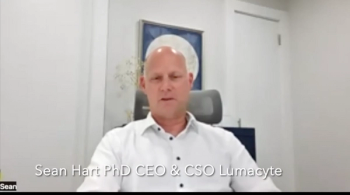
Sean Hart, CEO and SCO of LumaCyte, discusses rapid accurate mRNA potency assay possibilities.
ILC Therapeutics has entered into a strategic partnership with Dechra Pharmaceuticals to develop an atopic dermatitis treatment for dogs.
With $73 million in financing from investment firms, Myeloid Therapeutics plans to accelerate its lead clinical candidate into Phase I/II development for treating solid tumors.

Shabbir Mostafa, head of Business Development — Advanced Delivery Systems, Recipharm, sat down with Grant Playter, associate editor, during DCAT week to discuss the current state of inhalations forms and drug delivery.

Jane True, vice-president of mRNA Commercial Strategy & Innovation and Global Pandemic Security Lead, Pfizer, shares her perspective on how mRNA will shift commercial models in the pharmaceutical industry.

Sania Therapeutics has emerged from stealth mode and launched its technology platforms for enabling the development of novel therapeutics to treat neural circuit dysfunction.