

Sartorius Stedim Biotech will supply equipment for Penn State’s new Fermentation Facility in the university’s Center of Excellence in Industrial Biotechnology.
Sartorius Stedim Biotech will supply equipment for Penn State’s new Fermentation Facility in the university’s Center of Excellence in Industrial Biotechnology.
Pharmaceutical Technology will host a panel discussion focused on early drug development on April 24, 2018 at CPhI North America.
The contract development and manufacturing organization will discuss its capabilities in topical drug products at CPhI North America, taking place April 24–26, 2018 in Philadelphia, PA.
The new facility, to be built in Toronto, Canada, will significantly increase capacity for pediatric and booster vaccines.
The biopharmaceutical firm has chosen Rhode Island as the site of its next-generation biomanufacturing plant, which will offer flexibility, speed, and efficiency.
The new 300,000-square-foot facility is considered the largest dedicated cell and gene therapy manufacturing facility with fully integrated services.
Roche has acquired a program to develop regenerative therapies for multiple sclerosis.
Under this global collaboration, the companies will develop encapsulated cell therapies for treating Type 1 diabetes.
Celltrion received complete response letters from FDA for its rituximab and trastuzumab biosimilars.
Boehringer Ingelheim and OSE Immunotherapeutics have entered a global immuno-oncology partnership to develop a checkpoint inhibitor for treating advanced solid tumors.
The companies have created Syna Therapeutics, a joint venture that will develop biosimilars and new molecules.
The European approval marks the first approval for a biosimilar in that region resulting from the companies’ joint portfolio.
Fujifilm acquires cell culture media companies Irvine Scientific Sales Company and IS Japan.
The agency has accepted AstraZeneca’s biologics license application for an investigational leukemia drug candidate and granted it priority review.
Pfizer transfers CAR-T assets to Allogene Therapeutics under a new alliance to further develop immuno-oncology therapeutics.

Particle engineering using jet milling or spray drying can be used to obtain appropriate particle characteristics for inhalation drug products.

Access to multiple analytical techniques is essential for fully characterizing complex protein formulations.

CMOs/CDMOs that are easy to work with, have demonstrated performance track records, and plan for the future are preferred.
Accelerated development of new preventives raises challenges for efficient CMC evaluation and production.
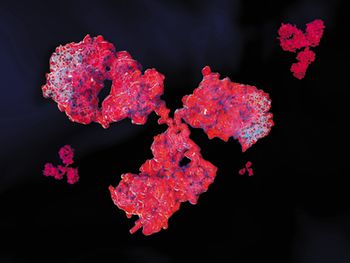
The high viscosity of highly concentrated monoclonal antibody formulations not only presents processing and storage difficulties, but also formulation and delivery challenges.
Researchers at MIT have discovered a new set of compounds that do not elicit a foreign body response when implanted. These biomaterials permit the development of a new category of treatment with the ability to deliver therapeutics either at a constant rate or under programmable conditions by using implantable cells as protein factories.
Research suggests that radiation can have a significant impact on the composition and rheology of hydroxyethyl cellulose-based medicinal gels.
The companies will co-develop and co-promote a CAR T cell therapy in the United States.
Novartis’ Sandoz is seeking approval of its biosimilar referencing Johnson & Johnson’s Remicade (infliximab) for all of Remicade’s indications across gastroenterology, rheumatology, and dermatology.
EMA has recommended approval of the biosimilar for the same indications as Roche’s Herceptin (trastuzumab).