
Equipment and Processing Report
As more continuous processes move toward commercialization, users and equipment vendors are working to speed changeovers and address other needs.
The evolution of therapeutic modalities drives the adoption of single-use technologies.
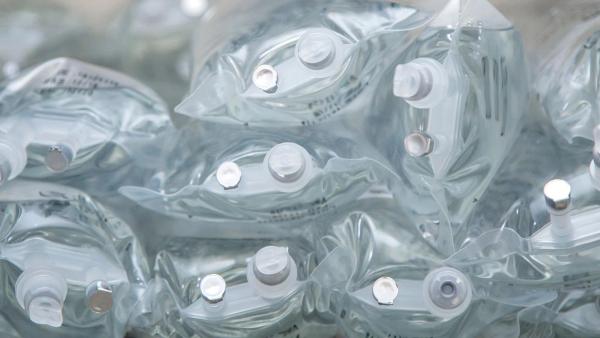
Despite its understandable hesitancy, the pharma industry is facing a need for more widespread adoption of cloud-based solutions.

Given the criticality of fill/finish processes, it is clear that automation is the next technological step.
Equipment and Processing Report
As more continuous processes move toward commercialization, users and equipment vendors are working to speed changeovers and address other needs.
The company is increasing its cell culture media production capacity at its facilities in Pasching, Austria, and Logan, Utah.
Valerius Biopharma will use Catalent’s GPEx technology to produce cell lines for biosimilar drugs.

Aerobic bioprocesses are highly dependent upon the oxygen transfer rate (OTR) from sparged to dissolved gas. The relatively low solubility of oxygen, however, makes the choice of mixer impeller configuration a critical design factor for the bioreactor vessel. This article describes a series of experiments and computational fluid dynamics (CFD) simulations to detail the effect of mixer configuration on the efficiency and effectiveness of a bioreactor vessel with respect to blend time and mass transfer.

Advanced data analytics tools are used by industry to find the golden nuggets in historical data, to aid in process development, to fine-tune production, and to achieve long-term improvements in product quality and throughput.
Choosing the right contamination control platform requires considerable research into what a product needs for an effective process design.
Ready-to-use components eliminate the need for component preparation by the drug product manufacturer, enabling them to streamline their processes and focus on their core competencies, such as drug product development and manufacturing.
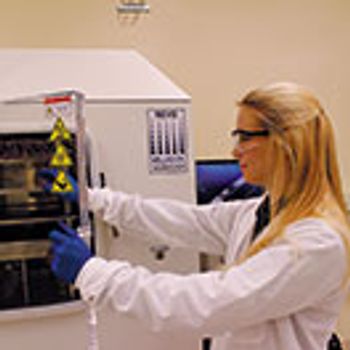
ASTM’s E-55.05 committee aims to turn best practices into industry standards in order to eliminate variability and allow a 70-year-old process to leverage 21st century tools, technologies, and practices.
Understanding the advantages and suitability of different methods to measure residual moisture content in lyophilized materials--and the respective limitations--aids in selecting the most appropriate method for testing.
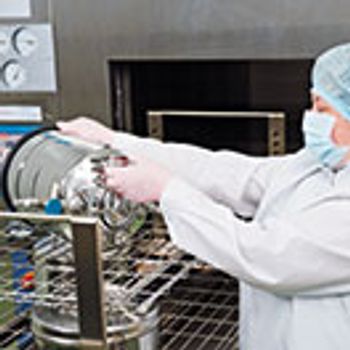
Environmental monitoring, which operates below the limit of detection, is little more than a rote exercise that provides limited real value. So why does it figure so prominently in current regulatory requirements for aseptic manufacturing?
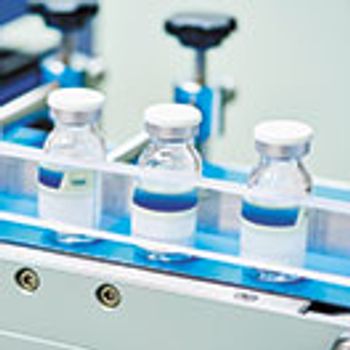
Recent technological advances help streamline the fill/finish manufacturing process.
Telstar has a dedicated process analytical technology (PAT) corner at its booth to display new developments for pharmaceutical freeze drying systems and aseptic manufacturing processes.
The companies have extended a contract agreement for the commercial manufacture of the active pharmaceutical ingredient for vonapanitase, an investigational drug intended to improve hemodialysis vascular access outcomes.
The tablet tooling manufacturer will showcase its products and services, which include an online training package and a tool management system for proactive monitoring of tooling rotations, inventory, and maintenance.
InstantGMP INV is a validated software for real-time material tracking and inventory control in biopharmaceutical manufacturing.
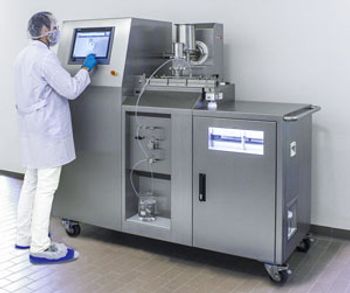
Pharmaceutical Technology's In the Lab eNewsletter
L.B. Bohle’s QbCon 1 laboratory-scale, continuous twin-screw granulator and dryer offers fully continuous drying for R&D in continuous solid-dosage manufacturing.
A new facility will allow Fette Compacting to double its production capacity for tablet presses in Nanjing, China.
Bosch’s Industry 4.0 solutions deliver full transparency for all process and machine data.
GE Healthcare’s new Sefia S-2000 cell processing system allows operators to conduct multiple cell therapy manufacturing steps with one instrument.
Romaco will display the IHD series for processing hot melt coatings at Achema 2018.
The company will invest EUR 325 million (US$389 million) in a new biomanufacturing facility in Ireland using single-use bioreactors.
The companies will partner to develop smart connected monitoring and support solutions for injectable drugs.
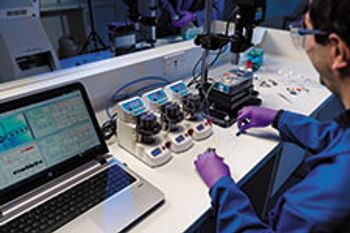
Dolomite Microfluidics has developed the Drug Encapsulation System to provide scientists with a simple and scalable way of encapsulating drug samples.
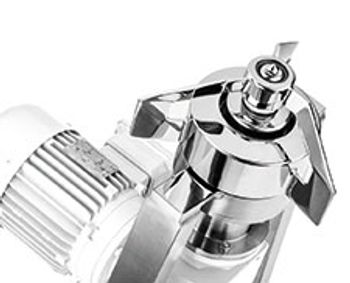
The MagMixer MBE Series from SPX Flow is suitable for low-viscosity blending, dissolving solids, and solid suspension in sterile applications.

Determining the right process conditions for a freeze-drying cycle requires an understanding of the effect of each step on the drug product.