


CMOs have been active over the past year in expanding their biologics production and capabilities.

The evolution of therapeutic modalities drives the adoption of single-use technologies.
Despite its understandable hesitancy, the pharma industry is facing a need for more widespread adoption of cloud-based solutions.

Given the criticality of fill/finish processes, it is clear that automation is the next technological step.
CMOs have been active over the past year in expanding their biologics production and capabilities.

This article provides a sampling of the latest investments, expansions, and acquisitions by small-molecule contract service providers.

Why shouldn’t biopharmaceutical manufacturers be able to leverage standardized construction practices to improve time to market?

A year’s worth of FDA warning letters suggest that API and finished drug manufacturers should strengthen their approach to continued process verification.

Pfizer will invest nearly half a billion dollars to build a sterile injectable facility in Michigan.
The acquisition will place Cambrex into the finished dosage form CDMO market.
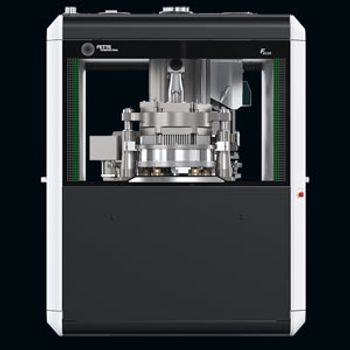
Fette Compacting’s FEC20 capsule filler for medium-sized batches is a smaller version of its FEC40 machine.
The company has run into a snag in producing Kymriah for the diffuse large B-cell lymphoma patient population, the second indication for which the therapy was recently approved by FDA.
The agency has issued a warning letter for cGMP violations at a drug manufacturing facility in Ahmedabad, India, that Baxter gained through its acquisition of Claris Injectables.
Equipment and Processing Report
Modern technologies, including Industry 4.0 and the Industrial Internet of Things, offer opportunities to increase biopharmaceutical manufacturing efficiency.
Equipment and Processing Report
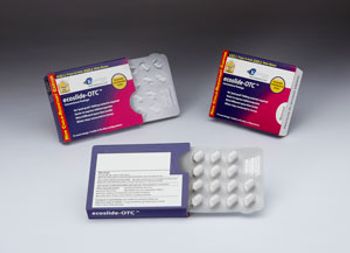
Pharmaceutical packaging designs evolve to protect children, while maximizing access for seniors.
CELLforCURE will produce cancer CAR-T treatments for Novartis at a manufacturing facility in Les Ulis (Essonne), France.
The media, by Tosoh Bioscience, is composed of calcium and phosphate buffers and offers mixed-mode properties for biomolecule purification.
Both parties have agreed to recognize each other’s inspection of manufacturing sites for a broader range of medicines, including sterile products, APIs, biologics, and vaccines.
Moderna’s new manufacturing plant in Norwood, MA gives the company capacity for preclinical and Phase I and II clinical manufacturing for its mRNA development candidates, including personalized cancer vaccines.
The agency is releasing six new draft guidances to provide a regulatory framework for handling gene therapies.
Pharmaceutical Technology's In the Lab eNewsletter
Catalent Biologics will adopt Berkeley Lights’ Beacon optofluidic platform for its cell-line development workflow.
The expansion at the company’s Gillingham, UK, site, worth EUR 9 million (approximately US$10.5 million), will improve the company’s distribution capabilities.
Certain blister card packages that do not meet US child-resistant packaging requirements are being recalled because they pose a risk of harm if the tablets are swallowed by children.
Findings from a survey show that some companies have not yet taken the necessary steps to ensure the continuity of medicine supply in the European Union after the United Kingdom’s departure.
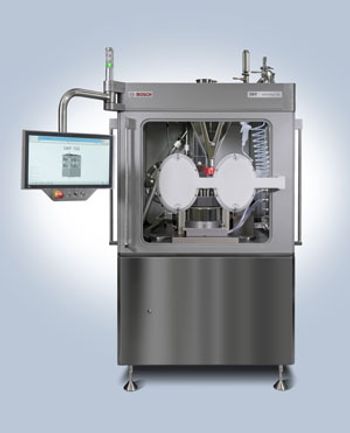
Bosch Packaging Technology’s GKF 720 capsule filling machine for small batches of hard capsules uses a fully automated, washable containment process.
Traditional glass and polymeric materials compete for market share in primary packaging for parenteral drug products.
The delivery device and drug form should be considered when choosing a test method for identifying and measuring particulates in inhaled drug products.
The acquisition of Flex Concepts adds custom, single-use products to Entegris’ single-use bag product line.
The PowerMix Model PDM-10 from Ross, Charles & Son offers high-shear mixing for hard-to-mix applications with low flowability.