






Quality Systems
Latest News
Advertisement
Latest Videos






Shorts

0:21
How Counterfeiters Are Fooling The System
6 months ago
by
Malav Parikh

0:18
The Struggle of Clinical Trials for Rare Diseases
7 months ago
by
Susan Haigney

0:24
The Truth About Competition in Rare Disease Drugs
7 months ago
by
Susan Haigney
0:20
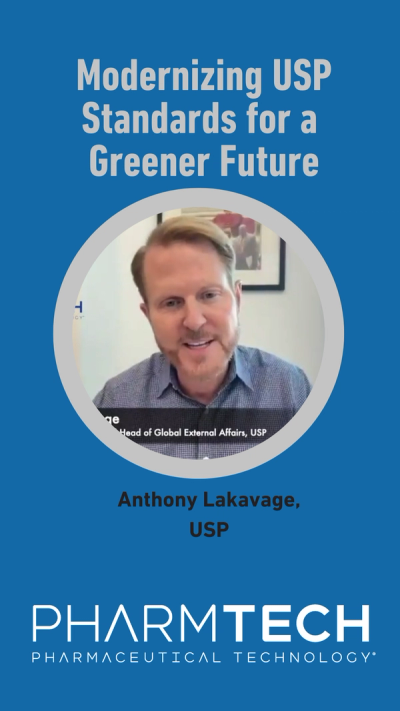
Modernizing USP Standards for a Greener Future
8 months ago
by
Susan Haigney

0:53
Why Will Two Labs Get Different Results for the Same Extractable Study
a year ago
by
Susan Haigney

0:51
Why Trying to Cut Corners on Leachable Studies Backfires
a year ago
by
Susan Haigney

0:47
How Do You Quantify Extractables?
a year ago
by
Susan Haigney

0:48
Why Misidentifying Compounds in Testing Can Be a Disaster
a year ago
by
Susan Haigney
Advertisement
More News

Rohan Kumar, laboratory analyst at CS Analytical, discusses how sustainability in pharmaceutical packaging can be improved.

New PRAC safety data link cenobamate to rare severe liver injury, prompting updated monitoring requirements and revised product labeling for prescribers.

This issue of PharmTech brings together perspectives from scientists, engineers, regulatory strategists, and industry veterans to chart where the field is headed.

The FDA approved the first generic dapagliflozin tablets, opening a competitive US market for pharma manufacturers and generic-drug developers.

This article highlights how quality control microbiology is evolving into a proactive, integrated component of modern contamination control strategies across the biopharmaceutical lifecycle.

Understanding how factors such as excipient choice affect nitrosamine formation is essential to developing safer, lower-risk pharmaceutical formulations.

Malav Parikh, director, Quality Risk Management, Global Quality Compliance and Systems, Takeda, spoke with PharmTech about efforts in anticounterfeiting and the use of predictive modeling to validate transport conditions.

Co-Processed Excipients: Practical Engineered Solutions for Modern Pharmaceutical Challenges
ByIPEC-Americas,Gina Marsee,Katherine Ulman,Joseph Zeleznik,Candy Reynolds Cummings ,Priscilla Zawislak,Bob Sulouff ,David Schoneker
Published: | Updated:
This article details what co-processed excipients are and how they are made.

New US pharmaceutical tariffs reach up to 100%, with exemptions for companies that strike pricing deals or commit to domestic manufacturing.

Indirect data suggest oral semaglutide outperforms orforglipron on weight loss and tolerability, with patients also favoring its treatment profile.

The agency has issued a draft qualification opinion on a new preclinical research methodology.

Contract development and manufacturing organizations can assist the sponsor company in ensuring sterility assurance in alignment with the EU’s Annex 1 guidelines.

The FDA approved a high-dose nusinersen regimen for spinal muscular atrophy, offering pharma teams key insights into dose optimization and lifecycle management.

During its March 2026 meeting, the agency’s Committee for Medicinal Products for Human Use approved treatments for Bacillus Calmette-Guérin unresponsive non-muscle invasive bladder cancer, relapsed extensive-stage small cell lung cancer, activated phosphoinositide 3-kinase delta syndrome, and oedema of cardiac, renal, hepatic origin, and hypertension in children.

Excipients contribute to more sustainable practices throughout the life cycle of a drug.

This article explores key engineering strategies that support this transformation, including hybrid reactor design, clean-in-place optimization, automation architecture, and modular scalability.

FDA approves first therapy for Hunter syndrome's neurologic symptoms via surrogate endpoint, signaling evolving rare disease development standards.

New legislation will improve patient access to innovative medicines in Europe and the United Kingdom.

Quality control for pharmaceuticals is evolving with the assistance of digital tools, sustainability practices, and a push to move manufacturing onshore.

The FDA approved higher-dose semaglutide (7.2 mg) in 54 days under its new priority voucher program, signaling faster reviews for drug developers.

FDA's March 2026 draft guidance outlines a validation framework for non-animal drug testing methods, signaling a shift in nonclinical submission expectations.

Industry experts explain how incorporating sustainability into the early development phase creates greener pharmaceutical manufacturing.

The FDA will evaluate tildrakizumab-asmn for psoriatic arthritis. A 2026 decision is expected based on Phase III clinical trial data.

This article reviews the use of Raman spectroscopy in a series of case studies to quickly identify the iron oxide compound(s), including magnetite and hematite, on the surface of representative endcaps or piping spool pieces. The article also provides a strategy using a detergent additive to remove magnetite without performing costly electro- or mechanical polishing.

The 2mg/kg every-4-weeks dosing regimen for pegunigalsidase alfa in adults with Fabry disease who are stable with an enzyme replacement therapy has been approved in Europe.
Advertisement
Advertisement