






Quality Systems
Latest News
Advertisement
Latest Videos






Advertisement
More News

Excipients contribute to more sustainable practices throughout the life cycle of a drug.

This article explores key engineering strategies that support this transformation, including hybrid reactor design, clean-in-place optimization, automation architecture, and modular scalability.
This week, three core themes have emerged: the digital transformation of quality systems through AI and hybrid cloud architectures; the pursuit of supply chain resilience via onshoring and advanced mapping; and a regulatory push toward real-time data and flexible approval pathways.

FDA approves first therapy for Hunter syndrome's neurologic symptoms via surrogate endpoint, signaling evolving rare disease development standards.

New legislation will improve patient access to innovative medicines in Europe and the United Kingdom.

In this episode of Ask the Expert, Susan J. Schniepp and Siegfried Schmitt discuss how companies should approach preventing product recalls.

Predictive Modeling, Validating Transport Conditions, and Anticounterfeiting
Published: | Updated:
Malav Parikh, director, Quality Risk Management, Global Quality Compliance and Systems, Takeda, spoke with PharmTech about the technologies being used to fight counterfeiting and how predictive modeling can be used to validate transport conditions.

Quality control for pharmaceuticals is evolving with the assistance of digital tools, sustainability practices, and a push to move manufacturing onshore.

The FDA approved higher-dose semaglutide (7.2 mg) in 54 days under its new priority voucher program, signaling faster reviews for drug developers.

FDA's March 2026 draft guidance outlines a validation framework for non-animal drug testing methods, signaling a shift in nonclinical submission expectations.

Industry experts explain how incorporating sustainability into the early development phase creates greener pharmaceutical manufacturing.

The FDA will evaluate tildrakizumab-asmn for psoriatic arthritis. A 2026 decision is expected based on Phase III clinical trial data.
This week, the industry experienced accelerated digital transformation, regulatory evolution, and a strategic shift toward complex, patient-centric modalities.

This article reviews the use of Raman spectroscopy in a series of case studies to quickly identify the iron oxide compound(s), including magnetite and hematite, on the surface of representative endcaps or piping spool pieces. The article also provides a strategy using a detergent additive to remove magnetite without performing costly electro- or mechanical polishing.

The 2mg/kg every-4-weeks dosing regimen for pegunigalsidase alfa in adults with Fabry disease who are stable with an enzyme replacement therapy has been approved in Europe.
Developments across the sector highlight a period of rapid acceleration and structural modernization.

The author discusses analytical techniques for cleaning and disinfection, clean room operation, packaging component preparation, water-for-injection production, sterile product preparation, and aseptic filling, stoppering, and sealing.

The companies have extended a commercial supply partnership for the manufacture of Sohonos (palovarotene), which is a treatment for the ultra-rare disease, fibrodysplasia ossificans progressiva.

It is necessary to search beyond the term “data integrity” to stay abreast of developments in this field, says Siegfried Schmitt, PhD, vice president, Technical at Parexel.

In this episode of Ask the Expert, Susan J. Schniepp, Nelson Labs, and Siegfried Schmitt, Parexel, discuss the benefits of orphan drug development and how a mid-sized company can work with regulators through the pathway to approval.

In part three of this four-part series regarding rare diseases, the authors examine how revenue concentration and accelerating patent cliffs undermine the traditional blockbuster model, whereas orphan drugs offer a structurally different strategy for stabilizing biopharma portfolios through more durable, predictable, and risk-adjusted long-term value creation.

PharmTech spoke with women working in the pharmaceutical industry about the innovations they are seeing in bio/pharma and the role women play in the development of critical treatments for patients.

In part two of this four-part series regarding rare diseases, the author examines how economic and structural forces are driving an access gap.
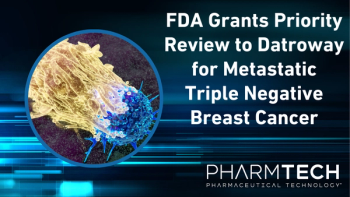
FDA has granted priority review to AstraZeneca's Datroway for the first-line treatment of metastatic TNBC treatment.

The PreCheck Pilot Program is designed to strengthen the US pharmaceutical supply chain by increasing regulatory predictability and streamlining the assessment of new domestic manufacturing sites.
Advertisement
Advertisement