




Quality Systems
Latest News
Advertisement
Latest Videos






Shorts
0:20
Modernizing USP Standards for a Greener Future
4 days ago
by
Susan Haigney

0:53
Why Will Two Labs Get Different Results for the Same Extractable Study
5 months ago
by
Susan Haigney

0:51
Why Trying to Cut Corners on Leachable Studies Backfires
5 months ago
by
Susan Haigney

0:47
How Do You Quantify Extractables?
5 months ago
by
Susan Haigney
0:48
Why Misidentifying Compounds in Testing Can Be a Disaster
5 months ago
by
Susan Haigney
Advertisement
More News

Ensuring quality, sterility, and regulatory compliance are essential when choosing analytical methods.

The development, quality, and procurement teams should work together to determine which materials and suppliers are needed, says Jane Zhang, Co-Founder & Co-CEO, ETCH Sourcing, and Susan J. Schniepp, distinguished fellow at Regulatory Compliance Associates, a Nelson Labs Company.

To combat growth and pricing pressures, companies are auditing their supply chains and API material providers.

China clears GSK’s Nucala (mepolizumab) for COPD, highlighting growing acceptance in the country for biomarker-driven therapies.

This paper provides a technical assessment of compendial tests commonly found in the European Pharmacopoeia, the United States Pharmacopeia–National Formulary, and the Japanese Pharmacopoeia, detailing differences between the methods and acceptance criteria, and the potential impact of these differences on multi-compendial compliance.

In this overview, PharmTech takes a look back at significant news in the development and approval of cancer treatment in 2025.

David Basile, VP Technical Operations, Americas, Hovione, highlights some common mistakes made by pharmaceutical companies when maintaining manufacturing facilities and equipment.

Pharmaceutical Technology®’s quality experts, Susan J. Schniepp, distinguished fellow at Regulatory Compliance Associates, a Nelson Labs company, and Siegfried Schmitt, PhD, vice president, Technical at Parexel discuss how pharmaceutical manufacturing training has evolved over the years and how the influx of new facilities is demanding a skilled workforce.

How will plans to rework medicines legislation in the European Union impact drug development, innovation, and market exclusivity?

Executive Director Emer Cooke presents EMA’s achievements for the year.

The author presents lessons from the front lines of oncology, rare disease, and cell and gene therapy submissions.

The authors detail a practical application of specification equivalence to excipients testing to achieve in-house harmonization.

Life sciences is a decade behind other industries in its optimization and strategic exploitation of data. This is perplexing, given how much companies profess their ambitions to exploit AI. An industry podcast brought together life sciences thought leaders to debate the subject. The panelists noted that really, by now, standardized data should be yielding greater intelligence, and powering pharma’s future, accelerated by AI. If only companies could find new momentum to finally sort out their underlying data. This article sets out some of the key points that arose from the panel.
FDA leadership initiated rapid drug review programs, enhanced transparency by publishing decision letters in real time, and strategically integrated AI into agency operations.
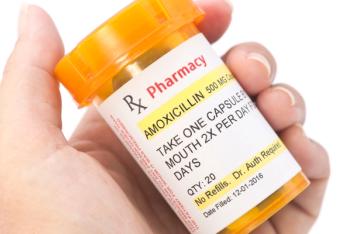
The approval was granted to USAntibiotics, with FDA saying it addresses pronounced antibiotic shortages in the past two decades.

The agency is approaching the new overhaul as a chance to reshape drug regulations in the European Union.

Co-legislators in Europe have reached a provisional agreement on a new pharmaceutical policy framework to help boost competitiveness, innovation, and supply chain security.

David Basile, VP Technical Operations, Americas, Hovione, explains what regulators expect for the maintenance of GMP facilities and equipment.

The articles in this issue reflect an industry in transition, committed to innovation while ensuring safe, reliable, and forward-looking pharmaceutical production.
Susan J. Schniepp, distinguished fellow at Regulatory Compliance Associates, a Nelson Labs Company, outlines the importance of batch recovery procedures in pharmaceutical manufacturing.

Counterfeit pharmaceuticals jeopardize public health worldwide, often leading to ineffective or dangerous treatments. Enter Raman spectroscopy: a rapid, non-destructive analytical technique that unveils the molecular secrets of medications. With its ability to identify counterfeit drugs through unique molecular fingerprints—even without unsealing their packaging—this technology is transforming pharmaceutical forensics and safeguarding global health.

Large-language models are excellent for general-use AI systems, but they don’t understand pharmaceutical companies’ proprietary documentation—the validated procedures and quality protocols that ensure drug safety. Smaller, domain-specific language models give companies more control and efficiency in their AI use.

FDA has granted orphan drug designation to FS2 (kynurenic acid) for the investigational treatment of idiopathic pulmonary fibrosis.

Starting with risk mitigation, GMP facility and equipment maintenance is all about anticipating problems before they happen and showing regulators a controlled environment.

The agency is expanding its use of artificial intelligence (AI) with the deployment of agentic AI for staff to create more complex AI workflows and harness AI models.
Advertisement
Advertisement
Trending on Pharmaceutical Technology
1
FDA Grants Priority Review For Pfizer’s Marstacimab for Hemophilia A or B
2
Drug Digest: Outsourcing Partnerships Fuel Global Biopharma Discovery and Scale-Up
3
PharmTech Weekly Roundup - February 6, 2026
4
Women in STEM: Early Phase Drug Development
5