
A new European Commission is likely, with the support of a new European Parliament, to give a higher profile to healthcare and pharmaceutical matters during its five years in office.
A new European Commission is likely, with the support of a new European Parliament, to give a higher profile to healthcare and pharmaceutical matters during its five years in office.
Falsified documents and manipulated test results prompt warnings and investigations.
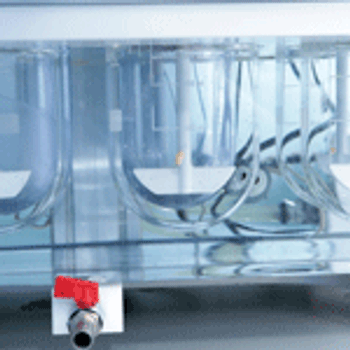
In this article, experts discuss the fundamentals of dissolution testing and highlight the challenges that are surfacing as a result of the increasing numbers of poorly soluble molecules entering the development pipeline.

Changing regulatory guidance on generic topical products is expected to lead to an increase in the number of market approvals in the near future.
Data supporting the quality and safety of product must meet the ALCOA+ elements in order to avoid regulatory citations for data integrity issues, says Susan J. Schniepp, executive vice-president of post-approval pharma and distinguished fellow, Regulatory Compliance Associates.

Automated, electronic systems for raw materials tracking improve efficiency and prevent mistakes in biopharma manufacturing.

Production and process controls, organization and personnel were the top problems found, while packaging and labelling citations increased in 2017 and 2018.

Software systems can help validate pharmaceutical manufacturing and steer the most appropriate design of processes in the right direction.

Sourcing hard-to-find ingredients and establishing a reliable supply chain can stretch the resources of a small- to mid-size pharma company.
AstraZeneca has received a complete response letter from FDA regarding its new drug application for a budesonide/glycopyrronium/formoterol fumarate triple-combination therapy for treating chronic obstructive pulmonary disease.
After months of planning and explaining, Janet Woodcock, director of the Center for Drug Evaluation and Research (CDER), finally gained approval for broad changes in its process and procedures for evaluating and approving new drugs.
The European Commission has approved the first plant-derived cannabis-based medicine for the treatment of seizures in patients suffering from two rare, severe forms of childhood-onset epilepsy.
Pharmaceutical Technology's In the Lab eNewsletter
A new educational platform by Quality Executive Partners offers on-demand digital courses with technical content, virtual reality, and real-time coaching with an initial focus on sterile product manufacturing and microbiology.
The inspections took place at the company’s Charnwood, UK, Craigavon, Northern Ireland, and Audubon, PA, locations.
Regulatory agencies published guidelines to advance drug development, streamline submission processes, and promote biosimilars.
FDA has approved Novo Nordisk’s Rybelsus (semaglutide), a glucagon-like peptide receptor protein treatment in oral tablet form for type 2 diabetes.
The European Medicines Agency’s Committee for Medicinal Products for Human Use has recommended the approval of AstraZeneca’s Qtrilmet (metformin hydrochloride, saxagliptin, and dapagliflozin) modified-release tablets for treating type-2 diabetes.
The Committee for Medicinal Products for Human Use of the European Medicines Agency has granted a positive opinion recommending marketing authorization for Bavencio (avelumab) in combination with axitinib for treating kidney cancer.
A request has been made to the CHMP by the executive director of EMA to provide guidance on how to avoid the presence of nitrosamine impurities in human medicines.
In parallel to the priority review designation for its biologics license application, Merck plans to scale up its doses of the investigational Ebola vaccine to meet global outbreak response needs.
In this series of articles, J. Mark Wiggins, owner and compendial consultant with Global Pharmacopoeia Solutions LLC, and Joseph A. Albanese, director of Analytical Strategy and Compliance at Janssen Research and Development, LLC, provide an understanding about the need for pharmacopoeia compliance.
This article examines the history and evolution of the pharmacopoeias and the particular challenges that must be overcome to achieve harmonization among the pharmacopoeias.
The authors take a closer look at these ongoing efforts to harmonize compendial standards, with perspective that may be helpful in considering the future direction of pharmacopoeias.
EMA plans to issue new guidance, as US and European regulators respond to reports of nitrosamine contamination in H2 blockers, including Zantac, that contain rantidine.
While overall industry performance is trending positive, quality failures continue to negatively impact patients and the bio/pharma industry.