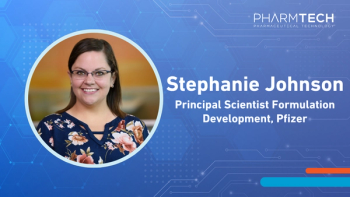
Stephanie Johnson, Pfizer, explains how off-platform triggers, single-owner risk registers, and traceable prior knowledge keep protein formulation programs on track.
Sanjay Konagurthu, PhD, senior director, Science and Innovation at Thermo Fisher Scientific, provides an update on the progress of AI and machine learning used in drug delivery.
PharmTech spoke with Sanjay Konagurthu, PhD, senior director, Science and Innovation, Thermo Fisher Scientific, at AAPS PharmSci 360 2026 about where machine learning (ML) is delivering value in small-molecule oral drug product development today, and where its promise remains unproven.
Konagurthu explains that some of the earliest promising work applied ML to formulation challenges such as amorphous solid dispersions. Thermo Fisher developed ML models to understand solubility and bioavailability and launched a platform that uses an API’s structural and physicochemical properties to predict which enabling technologies and formulation strategies are most likely to improve solubility and bioavailability. Published studies have examined how formulation properties influence dissolution.
The clearest current use of ML, according to Konagurthu, is selecting excipients and formulation and process parameters to predict in vitro performance. “That’s kind of where it’s shining pretty well, in terms of leveraging these machine learning models,” he states.
Its ability to predict clinical outcomes, however, has yet to be determined.
He points to recent studies in which research groups combined automated, robotic lab workflows with ML models that factor in excipient properties and process parameters to predict dissolution outcomes. One such study reported API savings of up to 65%. Thermo’s platform, which works entirely in silico, can likewise deliver significant time savings and cut API use by up to 50%, he says.
Konagurthu gave the keynote presentation, 3D Printing: Driving Digital Transformation from Dosage Form Design to Product Development and Manufacturing, at