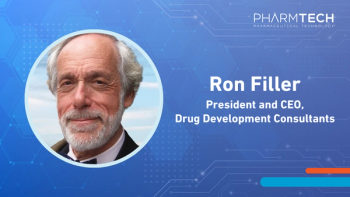
Ron Filler, Drug Development Consultants, explains how USP's 1074 revision brings human-relevant safety science to formulators and excipient makers.
USP’s Sheehan and Liu talk at AAPS PharmSci 360 abou getting novel excipients past the monograph hurdle through early engagement with FDA.
Novel excipients can be a stumbling block for pharmaceutical innovation. Under current rules, only excipients already used in FDA-approved drug products can become
In this interview, they preview that work. They cover the proposed revision of
Sheehan: General Chapter <1074> Excipient Biological Safety Evaluation Guidelines is an above <1000> nonmandatory informational chapter. The USP Novel Excipient Expert Panel, which includes toxicologists, is currently updating the chapter to reflect current scientific advances as they relate to the assessment of excipient toxicity. USP published a Stimuli article in Pharmacopeial Forum (PF) 52(3) with a proposed scientific framework and key changes to the chapter that are intended to introduce a more risk-based, weight-of-evidence approach to excipient safety assessment, while reducing reliance on unnecessary testing. The FDA determines whether the safety data provided as part of a new drug application are adequate.
The framework included in the Stimuli article considers scientifically justified use of new approach methodologies, including Weight of Evidence (WoE), read-across structure-activity relationship, and other alternative approaches where appropriate. The goal of the framework is to give industry clearer and more flexible scientific guidelines for designing safety programs while reducing unnecessary testing.
Liu: I would like to add that revisions to General Chapter <1074> are currently underway. USP welcomes stakeholder feedback on the Stimuli article published in PF 52(3). Stakeholder input is very valuable and will help the Excipients Expert Committee develop a formal revision proposal for the chapter. So please submit your comments on the stimuli article ASAP.
Sheehan: As background, only excipients used in FDA-approved drug products are eligible for inclusion in the USP–NF as compendial monographs, so novel excipients cannot be initially admitted as USP–NF monographs. To help address this challenge, USP is taking an iterative approach by developing Emerging Standards and analytical reference materials along with other tools to support novel excipient development.
Liu: USP’s iterative approach includes a comprehensive toolbox to support novel excipient development, including proposed updates to General Chapter <1074> to help build an excipient safety assessment program, the Novel Excipients Knowledge Exchange to share information and resources, and the Excipient Nomenclature Guidelines to support consistent naming.
Importantly, USP also plans to leverage Emerging Standards and Analytical Reference Materials to support novel excipient development.
Then what is an Emerging Standard? Emerging Standards are not official USP–NF standards. They are early-stage concepts intended to stimulate scientific discussion. So, they are flexible and not mandatory. Emerging standards enable early stakeholder engagement on novel excipients and their quality attributes.
By publishing an emerging standard on the USP website, USP can help raise awareness of the novel excipient, identify gaps, support evaluation of analytical methods, and gather data and feedback, before pharmaceutical companies commit to using the excipient in their drug formulation.
Sheehan: My recommendation is to engage early, ideally while the excipient and its analytical control strategy are still being developed. This may help reduce risk and avoid discovering late in development that a method, specification, or characterization strategy needs significant revision for the excipient. This early collaboration with USP can help facilitate adoption of novel excipients and address formulation challenges related to solubility, stability, bioavailability, and product performance.
Liu: The Novel Excipients Knowledge Exchange is part of the USP comprehensive toolbox. It is a new online community, coming soon from USP. It is designed to provide a mechanism for excipient manufacturers and users to connect with USP and informally share/exchange information on their new or novel excipients within the community.
I would like to clarify that the existing Novel Excipients Knowledge Hub will be moved to the forthcoming USP Knowledge Exchange, alongside other communities such as Nitrosamine and qNMR Exchanges. The platform will connect scientists for early, ongoing collaboration and help participants share best practices, develop ideas, and address scientific implementation challenges.
The real value is early scientific engagement. Companies can engage with USP in the early stage of developing or using a novel excipient around questions such as nomenclature, identity and characterization, analytical methods, etc.
Sheehan: Companies can engage USP and submit nonproprietary methods and data for USP to publish as an emerging standard at USP’s website to receive broader scientific input while still at an exploratory stage. Another good example of this type of engagement is the Nitrosamine Knowledge Exchange.
USP can help convene stakeholders and build the scientific and quality framework around a novel excipient, but we do not provide regulatory approval or predict FDA acceptance. For questions specific to a drug-development program, sponsors should engage FDA through the appropriate regulatory pathway.
Early engagement with USP can help strengthen the scientific foundation, while early dialogue with FDA can help clarify regulatory expectations.
Liu: If I had to identify one key step, it would be building early engagement pathways between excipient manufacturers and drug manufacturers to align on excipient quality and safety considerations. USP can play an important role in convening stakeholders and facilitating these connections.
What matters is whether the available evidence adequately supports the intended use of the new or novel excipient. Early scientific engagement with USP, together with appropriate regulatory dialogue with the FDA, can help identify uncertainties before substantial development resources have been committed.
Sheehan: Excipient suppliers and drug product developers should work together early to define exactly what the excipient is, how it will be manufactured and controlled, its proposed route and level of exposure, etc. This will help establish a common foundation for the analytical, quality, and toxicological work that follows.
Again, USP’s proposed updates to Chapter <1074>, Novel Excipients Knowledge Exchange, Emerging Standards, analytical reference materials, and nomenclature guidelines, are designed to foster early engagement and strengthen connections among excipient manufacturers, pharmaceutical companies, regulators, and other stakeholders. Reaching out to USP early is an important step to consider during your novel excipient development.
Sheehan: Naming complex excipients can be challenging because a simple chemical or commercial name may not adequately distinguish one material from another. For polymers, for example, characteristics such as monomer composition, molecular-weight distribution, polymer architecture, degree of polymerization, end groups, and manufacturing process can be important to define the material.
My advice to manufacturers is to start with comprehensive characterization rather than the name itself. Document the composition, source and manufacturing process, structural and molecular characteristics, specifications, impurity profile, and analytical methods, along with identifiers such as CAS numbers or UNIIs, etc.
I would also like to mention the 2019 FDA Guidance for Industry
Although the FDA’s Global Substance Registration System preferred terms for most types of single ingredient substances are generally consistent with USP-NF monograph titles, the titles may be inconsistent in some cases, such as mixtures.
Liu: In addition to the databases Catherine just mentioned, inconsistencies also exist in the nomenclature of complex excipients across naming systems, such as The United States Adopted Names Council, International Nonproprietary Names database, etc.
To help address this challenge, USP released the Excipient Nomenclature Guidelines in 2023 for excipient manufacturers and users. A well-supported scientific description helps establish clear and consistent nomenclature for both compendial and regulatory purposes. I hope you find the USP Excipient Nomenclature Guideline helpful.