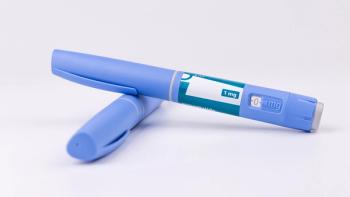
2026 approvals, clinical data, and licensing deals are advancing subcutaneous biologics, reducing patient burden, and reshaping biopharma drug strategy.
The author introduces a practical approach to determining the best estimate of probability for passing multiple stage dissolution tests.
Determining the probability of meeting content uniformity can be done through estimation by using probability vs. lot coverage charts and tables constructed from simulated probability and lot coverage 1 data, as discussed in
Submitted: Aug. 30, 2021
Accepted: March 4, 2022
Pramote Cholayudth, [email protected], is the founder and manager of PM Consult. He is an industrial pharmacist with more than 40 years of experience. He is a guest speaker on process validation to industrial pharmaceutical scientists organized by Thailand’s FDA.
Pharmaceutical Technology
Vol. 46, No. 4
April 2022
Pages: 40–45
When referring to this article, please cite it as P. Cholayudth, “Determining the Best Estimate of Probability of Passing Multiple Stage Tests: Part 2—Dissolution,” Pharmaceutical Technology 46 (4) 40–45 (2022).
over 4 years ago
Formulating the Best Approach for Tabletsover 4 years ago
Bringing Excipients into the Quality-by-Design Paradigmover 4 years ago
Breaking Through Barriers to Continuous Manufacturingover 4 years ago
Technology and CAPAover 4 years ago
Put a Cap on CAPAsover 4 years ago
Cleanroom Cleaning: Proper Methodology and Determining Efficacyover 4 years ago
A Future Investmentover 4 years ago
Expanding Viral Vector Manufacturingover 4 years ago
Scaling Up Capacity for Cell Therapies