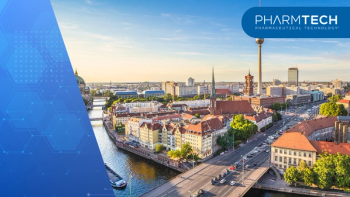
Germany is home to several prominent pharma companies and more than 1000 innovative biotechs.
OpenAI acquired Orchestra Bio to pair AI agents that track drug development timelines with its Rosalind life sciences tools, raising oversight questions for pharma teams.
On October 20, 2026, OpenAI acquired Orchestra Bio, a software platform that biopharmaceutical teams use to coordinate drug development programs, the company announced.1 OpenAI said it will combine Orchestra’s team and technology with Rosalind, its suite of AI models and tools for life sciences research. The company says the goal is to help scientists make discoveries and manage the work needed to turn them into approved treatments. Financial terms were not disclosed.
The deal extends OpenAI’s life sciences work beyond scientific reasoning and into program execution.1 Rosalind currently has 2 parts. GPT-Rosalind is a model designed to help scientists reason through biology and chemistry questions. Rosalind Workbench connects those capabilities to scientific tools and data so researchers can analyze results and plan experiments. Orchestra adds a team with backgrounds in biotech, software, and AI, along with a platform built to coordinate the studies, decisions, and handoffs that move a candidate forward. The combined group plans to build agents that connect scientific findings to those downstream steps.
Orchestra is a platform where people and AI agents work together to advance drug programs.1 Scientists and program leaders hand off the monitoring and tracking of studies and campaigns to agents. That frees them to guide the work, make decisions, and address problems before they cause delays. In the case of a failed batch that could delay the beginning of clinical trials, Orchestra’s agents identify which activities and timelines are affected, gather the relevant information, and compare possible responses. Scientists and program leaders then use that analysis to decide what to do next.
That division of labor is significant in regulated settings, where accountability for quality and release decisions rests with qualified people rather than software.1 As AI moves deeper into discovery, manufacturing, and evidence generation, the same question continues to emerge:
Drug programs rarely sit within a single organization.1 Development work is typically spread across internal functions and external partners such as contract manufacturers and clinical research organizations, and each group often runs on its own systems and timelines. When one milestone slips, such as a delayed batch release or a late stability result, the effects can ripple into clinical supply, site activation, and regulatory filings. Because no single group sees the whole schedule, those knock-on effects are often recognized late.
OpenAI also cited its existing collaborations.1 Its partnership with Novo Nordisk aims to translate that company’s scale and scientific expertise into faster research and commercial execution while maintaining strong governance. At Moderna, AI is helping teams turn insights from complex data into experimental workflows.
Much of the industry’s AI spending so far has gone to the earliest stages of development.1 Megha Sinha, founder and CEO of Kolter AI,
Academic research previews how multiagent systems perform.2 In a
References