
Sterile manufacturing of small batches, in facilities including hospital compounding pharmacies and 503b outsourcing facilities, benefits from automation.
Jennifer Markarian is manufacturing reporter for Pharmaceutical Technology.
Sterile manufacturing of small batches, in facilities including hospital compounding pharmacies and 503b outsourcing facilities, benefits from automation.
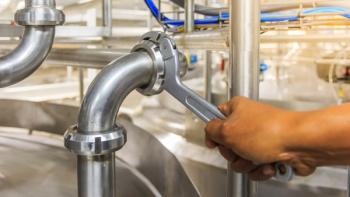
Consider best practices for manual or clean-in-place procedures.
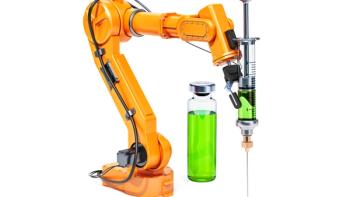
Automation offers benefits for sterile manufacturing in 503B outsourcing facilities.

Process intensification in continuous biopharmaceutical processing can change the way the equipment is used and thus affect cleaning methods.
Technology advances and pandemic environment drive increased use of automation and digital tools.

Aprecia and Glatt investigate manufacturing technologies to widen the formulation design space for oral delivery.
Material properties play a role in container closure integrity under frozen or cryogenic storage temperatures.

Intensified and distributed manufacturing approaches create flexible, local capacity.
Manufacturers in Europe and the United States have announced plans for new in-country API development and manufacturing capabilities.

Supply-chain visibility systems are proving their worth in the distribution of COVID-19 vaccines and may see broader use in the future.
Packaging and transporting large quantities of COVID-19 vaccines pose challenges for the cold chain.
Freezers, shipping containers, and tracking systems aid distribution of COVID-19 vaccines.
Pharmaceutical Technology spoke with Tania Pereira Chilima, Deputy CTO at Univercells Technologies about their technology and how it can be used in viral vector manufacturing, which is needed for production of some of the COVID-19 vaccine candidates.

Consider modular automation and cybersecurity when modernizing manufacturing processes.
Equipment and Processing Report
Filling and packaging of primary containers is a crucial piece of COVID-19 vaccine and therapeutic production.
Equipment and Processing Report
Manufacturers are adapting with virtual work, remote monitoring, and re-evaluation of facility design to ensure worker safety.
Equipment and Processing Report
US manufacturers focus on preparing capacity while vaccines and treatments for COVID-19 are being developed and tested.

Equipment and process optimization must be considered for scaling up these developmental technologies to commercial production.
Equipment and Processing Report
Analyzing process and equipment data provides insights that can improve quality and productivity of pharmaceutical manufacturing.
Equipment and Processing Report
Civica Rx plans redundant manufacturing capacity to relieve and prevent shortages of generic, sterile injectable drugs.

Whether refitting existing spaces or building new, the need for quick build times, flexibility, and production efficiency is driving trends in bio/pharma facility construction.
Civica Rx plans redundant manufacturing capacity to relieve and prevent shortages of generic, sterile injectable drugs.
Tools help improve understanding of excipient risk in formulating OSD drugs.

Understanding European GMPs and new rules from China for excipients are crucial for formulating solid-dosage drugs.
Equipment and Processing Report
Technologies and methods for new and refurbished manufacturing facility construction expand capacity for new modalities and to ease shortages.

Understanding of scale-up parameters and use of process analytical technology are important to meet demand for larger batch sizes.

Energy and water waste can be improved with new technologies, and sustainability can be considered in the design of new facilities.
Equipment and Processing Report
Energy and water waste can be improved with new technologies, and sustainability can be considered in the design of new facilities.
Consider equipment design, transfer systems, and maintenance when operating isolators for sterile manufacturing of pharmaceutical products.

Data collected through the Industrial Internet of Things enable predictive maintenance.