

The bio/pharmaceutical industry is struggling with the challenge of staffing and training.
The bio/pharmaceutical industry is struggling with the challenge of staffing and training.

Matching excipients to API properties is essential.

Collaboration is a key component to achieving long-term success with genetic medicines.

Digital transformation allows for smarter and connected biomanufacturing operations.

Sufficient stability studies show a drug product meets regulatory requirements, therefore ensuring the drug reaches the patients who rely on it.

By taking a strategic and evidence-based approach, companies can leverage the insights gained from stability studies to establish robust labeling.

Eradicating paper-based workflows and standalone solutions operating in isolation provides a good starting point to update quality management processes.

The rising complexity of clinical research protocols has necessarily expanded the CRO landscape.

The ICH Q9 revision clarifies QRM implementation for the pharmaceutical industry and expands descriptions of methodology, formality, and risk-based decision making to provide the industry with a solid base from which to build their own QRM programs.

Drug shortages across Europe are being exacerbated by increased demand, struggling supply chains, and manufacturer suspensions.

What does the 2024 VPAS mean for pharma?

FDA and industry face unprecedented political and policy challenges.

Pharmaceuticals are entering a transition into a far more complex era of patient therapies, and patient segmentation.

Final product inspection results should be included as part of the batch release documentation, says Susan J. Schniepp, distinguished fellow at Nelson Laboratories, LLC.
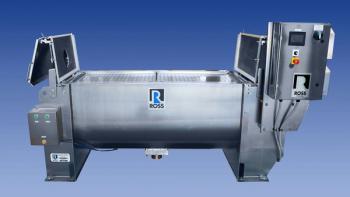
ROSS’ Ribbon Blenders are designed to handle a wide range of dry materials and effectively coat individual solid particles, keeping long-term performance and quality in mind.
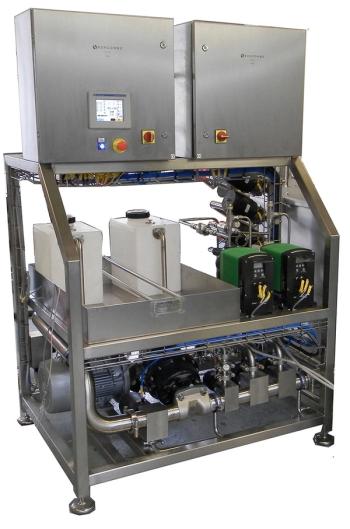
Suncombe’s IsolatorCIP automatic cleaning systems provide aqueous, detergent, and/or solvent cleaning of glovebox isolators.